4 Points Strategy
Problem, Insight, Advantage, Strategy on One Page
The 4 Points Strategy is the OG of strategy frameworks, and the one most likely to expose how little you actually know about your customer. Four points on a diamond - Problem at the top, Insight on the left, Advantage on the right, Strategy at the bottom - and a single rule connecting them: the strategy only counts if it collides a real human insight with something your brand can genuinely do. Done well, it turns a fuzzy business goal into a brief a creative team would actually fight for. Done badly, it's four boxes of corporate noise with the word innovation sitting where an advantage should be. The framework comes from Mark Pollard, founder of Sweathead and author of Strategy Is Your Words, and its whole job is to stop you from confusing motion with progress.
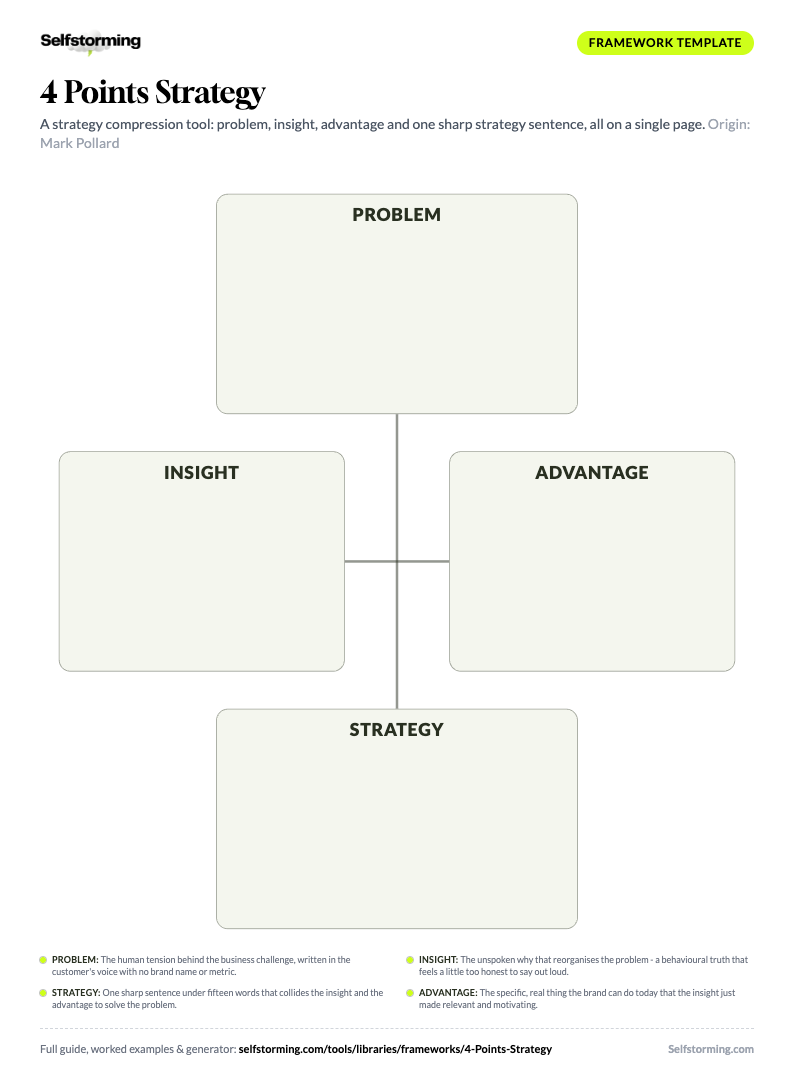
Print it. Fill it in.
The 4 Points Strategy as a printable A4 worksheet - write straight into the framework, on paper or in any PDF app.
Download the PDF templateKnowledge Worth Paying For
A working library of brand strategy frameworks - with worked examples on real brands, sources, and decision criteria. Not vibes.
One good deck covers the subscription. The rest is profit.
Four points on a diamond. Problem: the human tension behind the business challenge, not your low market share. Insight: an unspoken why that reorganises how you see the problem. Advantage: the specific thing your brand can do that the insight makes relevant. Strategy: one sharp sentence that collides insight and advantage to solve the problem. The rule that makes it work - if the strategy could belong to any brand in your category, you haven't finished.
Burger King
Fast-food chain (global, QSR)A clean demonstration of colliding a human insight with a real, ownable asset. The business problem was getting people into a sluggish app; the diamond surfaced a mischievous truth about rivalry and turned Burger King's own store network into the lever, with a competitor's doorstep as the stage.

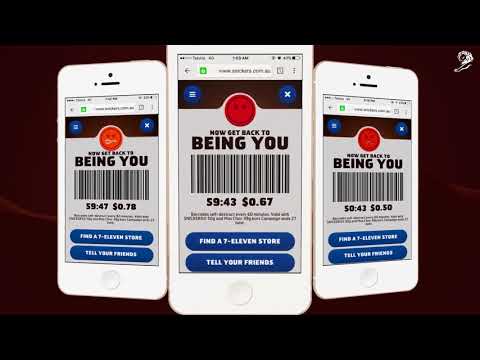
Snickers
Confectionery (global, FMCG)Shows the framework rescuing a tired brand line by tying it to a real, ownable mechanic. 'You're not you when you're hungry' is a slogan; the diamond forced a behavioural insight about online rage and connected it to a feature only a tech-powered promo could deliver.
KFC
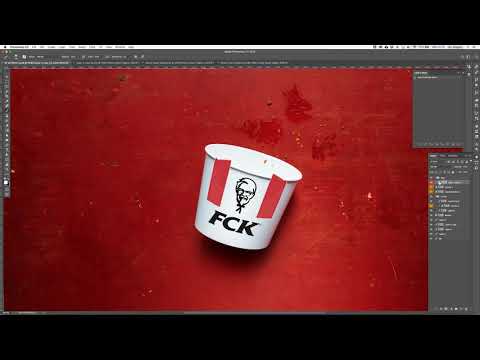
Fast-food chain (global, QSR)An example of an advantage that only becomes interesting once the insight is in place. A supply-chain meltdown is a disaster, not a brief; collided with an insight about how people forgive, the honest mistake became a strategy that won the room instead of losing it.
Burger King, Snickers, KFC - filled in, line by line. Unlock to read them.
Burger King (Fast-food chain (global, QSR))
A clean demonstration of colliding a human insight with a real, ownable asset. The business problem was getting people into a sluggish app; the diamond surfaced a mischievous truth about rivalry and turned Burger King's own store network into the lever, with a competitor's doorstep as the stage.
Problem: People have a dozen burger apps they never open, and Burger King's was just another icon gathering dust on a back screen.
Insight: Nothing makes ordering a Whopper feel like a win quite like buying it from inside the enemy's car park.
Advantage: Burger King has thousands of locations sitting near McDonald's, plus an app that knows exactly where you are.
Strategy: Unlock a 1-cent Whopper, but only if you order it standing inside a McDonald's.
Snickers (Confectionery (global, FMCG))
Shows the framework rescuing a tired brand line by tying it to a real, ownable mechanic. 'You're not you when you're hungry' is a slogan; the diamond forced a behavioural insight about online rage and connected it to a feature only a tech-powered promo could deliver.
Problem: The internet is in a permanent bad mood, and a 'you're not you when you're hungry' line on a wrapper does nothing to break the spiral.
Insight: People don't read hunger as hunger - they read it as the world being annoying, and they want relief priced like a reward for their suffering.
Advantage: Snickers can run an algorithm that watches the mood of social media and changes the bar's real price in stores accordingly.
Strategy: The angrier the internet gets, the cheaper a Snickers becomes.
KFC (Fast-food chain (global, QSR))
An example of an advantage that only becomes interesting once the insight is in place. A supply-chain meltdown is a disaster, not a brief; collided with an insight about how people forgive, the honest mistake became a strategy that won the room instead of losing it.
Problem: A chicken chain ran out of chicken and shut most of its UK restaurants, leaving furious customers and a brand bracing for a kicking.
Insight: People don't forgive a brand that spins a screw-up - they forgive the one that owns it before they've finished being angry.
Advantage: Three letters everyone already knows can be rearranged into the exact word every customer was thinking.
Strategy: Apologise by saying out loud the thing everyone's already muttering: FCK.
1. Problem
What human tension is quietly making your customer's life slightly worse - the one your category usually ignores?
The top point of the diamond. Not the business problem (share, awareness, churn) but the human one underneath it. If there is no tension a real person feels, there is no campaign to make. Frame it from inside the customer's head, in their words, about their life.
Good answer: I have rebuilt this same dashboard at three different jobs and nobody noticed I existed. A specific, slightly raw human tension that a B2B analytics brand can actually move on.
Wrong answer: Our market share has dropped 4 points year on year. That is your problem, not the customer's. No human being has ever lain awake worrying about your share figures.
2. Insight
Why do people really behave this way - the unspoken truth that reorganises how you see the problem?
The left point. An insight is your escape route from the problem: a why, not a what. It should feel slightly uncomfortable to say out loud, because it names something true about human behaviour that brands usually tiptoe around. Data points to it; the insight is the human meaning behind the data.
Good answer: People do not want a tidy spreadsheet - they want proof to a sceptical boss that the chaos was never their fault. That reframes the whole brief.
Wrong answer: Customers value reliability and ease of use. True of every product ever made, useful to no one. That is a survey result wearing an insight costume.
3. Advantage
What can your brand actually do, today, that the insight just made relevant and motivating?
The right point. The specific, real thing your brand brings - a product capability, a proof point, a way of behaving - that connects to the insight. The discipline here is honesty: list what you genuinely have, not what the PR team wishes you had. The advantage is only an advantage if it answers the insight.
Good answer: Every chart auto-generates a one-line plain-English caption you can paste straight into a status email. Specific, ownable, and it speaks directly to the insight.
Wrong answer: We are the most innovative platform in the space. Innovation is not an advantage, it is a mood. Name the tool, not the adjective.
4. Strategy
In one sharp sentence, how does colliding the insight with the advantage solve the problem?
The bottom point, and the whole reason the other three exist. The strategy is the bridge: it takes the insight and the advantage and slams them together into a single, aggressive sentence that a creative team can act on. If it is longer than fifteen words, or if it could belong to any brand in your category, it is not done.
Good answer: Make the analyst the hero who saw it coming, not the clerk who logged it. One line, collides insight and advantage, impossible to confuse with a rival.
Wrong answer: Increase engagement, build trust, and drive conversions. Three goals stapled together is not a strategy - it is a wish list pretending to have made a decision.
Decide your starting point. You do not have to fill the diamond from a blank page. Right here on Selfstorming you can pull inspiration and direction, or generate a first-draft 4 Points Strategy in minutes. Treat that draft as a head start, then pressure-test it against the real customer and the real market with the steps below.
Write the business problem once, then delete it. Put your actual commercial goal (share, churn, awareness) on a sticky note so everyone sees it, then physically remove it from the diamond. Its only job was to point you at the human tension underneath. Keep it in the room as context, never as the Problem.
Find the Problem in the customer's voice. Spend the first block of work writing the tension as a first-person sentence the customer would actually say. If you cannot write it without using your brand name or a metric, you have not found the human problem yet.
Dig for the Insight by asking why until it gets awkward. Take the Problem and ask why people behave that way, then why again. Stop when the answer makes the room go quiet because it is a little too honest. That discomfort is the signal you have left fact territory and entered insight.
List every Advantage honestly, then cut the fantasies. Write down everything your brand can genuinely do today. Strike anything aspirational, anything that is a roadmap item, and any abstract noun (innovation, quality, trust). What survives is your real ammunition.
Collide the two into one Strategy sentence. Force the Insight and the strongest Advantage into a single sentence under fifteen words. Write five versions. The right one usually feels slightly reckless, because a real strategy commits to one fight and abandons the others.
Run the swap test. Cover your brand name and ask whether a competitor could lift your Strategy wholesale. If they could, it is a category truth, not a strategy. Rewrite until only you could own it.
Hand it to a creative as a brief. The final proof is whether someone can make work from it. If a creative reads the four points and immediately has an idea, the diamond holds. If they ask clarifying questions, you have homework to do before anyone opens a design file.
Best for: Cracking a creative brief, reframing a category, and turning a fuzzy business goal into one sharp strategic sentence a creative team can act on. / Media planning, channel mix, audience segmentation, or any work where the answer is in the numbers, not the human tension.
Output: A one-page diamond and a single strategy sentence under fifteen words, with every point traceable to a real human insight and a real brand advantage. / A multi-page positioning document, a segmentation matrix, or a full annual plan - the diamond is a spine, not the whole skeleton.
Time to complete: A focused half-day workshop with the right people, or minutes for a first AI draft you then pressure-test against the real customer. / Multi-month strategy engagements with primary research waves - the diamond assumes you already have customer truth to organise.
vs Get Who To By: Use 4 Points to find the strategic idea - the collision of insight and advantage that defines what fight to pick in the first place. / Use Get Who To By once the idea is set, to turn it into a specific behaviour-change brief (get whom, to do what, by doing what).
vs SWOT: Use 4 Points when you need a sharp creative direction grounded in a human insight, not a balanced inventory of the business. / Use SWOT for a wide situational audit of internal and external factors - it maps the landscape but never tells you which hill to take.
vs Playing to Win: Use 4 Points at campaign and brief altitude, where the unit of work is a human tension and a single sharp idea. / Use Playing to Win for corporate strategy - where-to-play and how-to-win choices across a whole business, not a single creative brief.
The 4 Points Strategy comes from Mark Pollard, the Australian-born strategist who founded the global strategy community Sweathead and wrote Strategy Is Your Words. Pollard built it as a deliberately simple antidote to the bloated strategy templates floating around adland and consulting - four points (Problem, Insight, Advantage, Strategy), each a single sentence, taught through his masterclasses and the Sweathead podcast. It sits in the lineage of single-minded-proposition planning that ran through agencies like JWT and BBH, but Pollard's version strips it back to the one move that matters: colliding a human insight with a real brand advantage. It is craft, taught hands-on, not an academic model with a citation trail.
The honest criticism of the 4 Points Strategy is that its simplicity flatters the user. Because the diamond is so easy to fill, teams mistake completing it for having done strategy - four neat boxes of confident-sounding language with no real insight inside any of them. Critics also note it depends entirely on the quality of thinking you bring: it organises insight beautifully but generates none, so a team with no customer understanding just produces tidier guesses. And its single-fight discipline, while the whole point, makes some stakeholders nervous, because committing to one human tension means consciously ignoring audiences and messages the business would rather not abandon. The fair way to use it is as a forcing function for honesty, not as proof that strategy happened.
What is the 4 Points Strategy?
The 4 Points Strategy is a one-page strategy framework that organises a brief into four points on a diamond: Problem (the human tension behind the business challenge), Insight (the unspoken why that reorganises it), Advantage (the real thing your brand can do about it), and Strategy (one sharp sentence that collides insight and advantage). It exists to turn a fuzzy business goal into a creative brief a team can actually act on.
Who created the 4 Points Strategy?
It was created by Mark Pollard, founder of the strategy community Sweathead and author of Strategy Is Your Words. He teaches it through his masterclasses and podcast as a deliberately simple alternative to bloated strategy templates.
What is the difference between a Problem and a business goal in the 4 Points Strategy?
A business goal is yours - more share, more awareness, less churn. The Problem in the 4 Points Strategy is the customer's: the human tension quietly making their life worse. The trick is to write your business goal down, then delete it from the diamond and find the human problem sitting underneath it.
How do I know if my Insight is actually an insight?
Say it out loud. If the room nods politely, it is a fact. If the room goes briefly quiet because it is a little too true about how people really behave, you have an insight. In the 4 Points Strategy the Insight is a why, not a what - your escape route from the problem, not a data point about it.
What if my brand's Advantage is genuinely boring?
Then find a boring problem to solve, because boring is profitable when it is reliable. The 4 Points Strategy does not need a dazzling advantage - it needs an honest one that answers the insight. Do not dress a hammer up as a magic wand; just go find the right nail.
Is the Strategy point just a tagline?
No. In the 4 Points Strategy the Strategy is the internal logic that drives the work; the tagline is the lipstick that might sit on top of it later. If the logic is broken, no amount of clever copy will save the campaign. Keep it under fifteen words and make sure no competitor could own it.
Does the 4 Points Strategy work for B2B?
Yes, and it often works harder there, because B2B briefs drift into generic capability-speak faster than anything. The 4 Points Strategy forces a B2B team to name a real human tension (the analyst who fears being blamed, the buyer who fears looking naive) instead of hiding behind feature lists and the word innovation.
How is the 4 Points Strategy different from Get Who To By?
The 4 Points Strategy finds the idea - it tells you which fight to pick by colliding insight and advantage. Get Who To By turns that idea into action - get whom, to do what, by doing what. Use 4 Points first to set the strategic direction, then Get Who To By to brief the specific behaviour change.
A strategy compression tool: problem, insight, advantage and one sharp strategy sentence, all on a single page.
Generate this for your brief - or grab the template
Generate a ready 4 Points Strategy from your brief straight into editable slides, or start from the free template.