Build a Creative Strategy: Celebrate the Subculture
What is the Celebrate the Subculture Strategy and when should I use it?
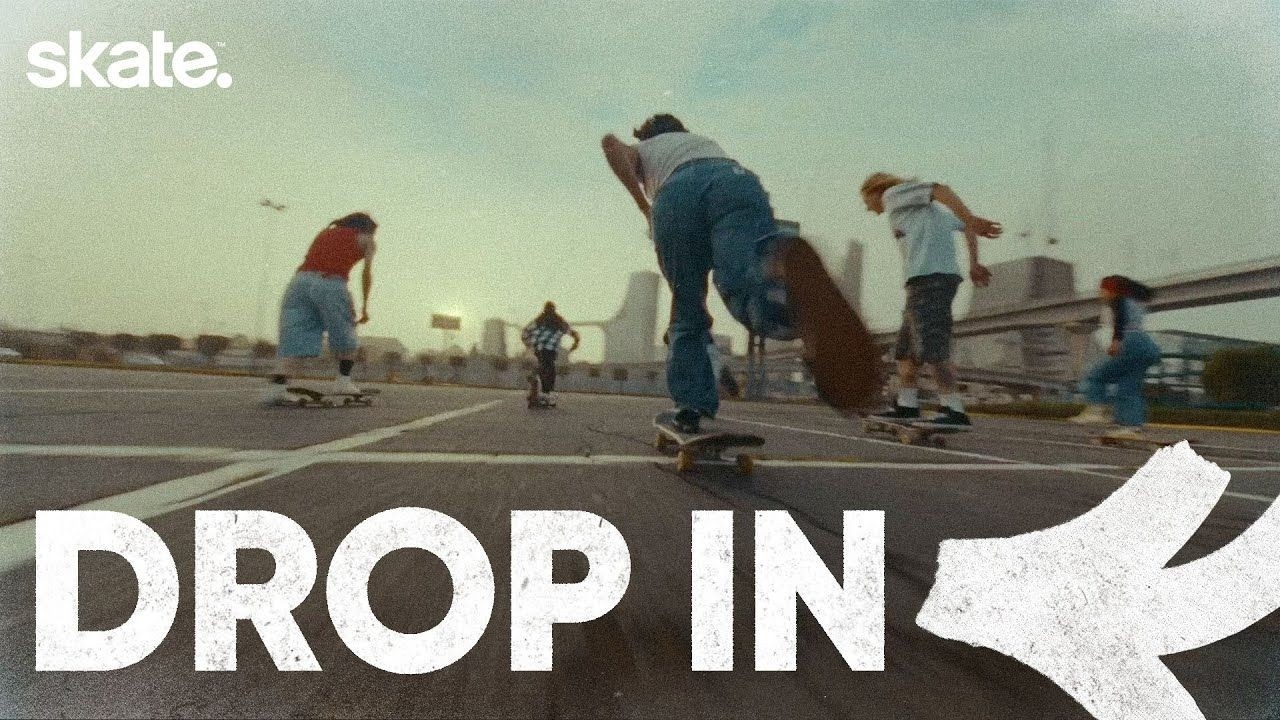
Listen up. The Celebrate the Subculture strategy is about ignoring the bland, beige masses who don't care about you anyway. Instead, you find the weirdos, the niche obsessives, and the people who actually have a personality. You use it when your brand is drowning in a sea of generic competitors and you need some actual soul. If you try to please everyone, you please nobody. By elevating a specific subculture, you gain authenticity that money can't buy. The mainstream eventually gets FOMO and follows the cool kids anyway. It is about depth, not breadth. Stop being a coward and pick a side. Go.
How to execute this strategy effectively
You start by actually talking to people who don't work in marketing. Find a group that lives and breathes something specific—whether it is underground racing or competitive knitting. Don't just slap your logo on their stuff; that is called being a parasite. You need to contribute something of value to their world. If you can't be useful, be entertaining. PUMA didn't just sell shoes; they celebrated the "After Hours Athlete" who treats a 2 AM game of pool like the Olympics. It works because it feels real. If the subculture hates you, you failed. If they embrace you, you've won. Good luck. Cheers.
Example: PUMA - After Hours Athletes
PUMA realized they couldn't out-perform Nike, so they stopped trying. Instead of professional sprinters, they looked at the "After Hours Athlete"—the people playing pool, darts, and foosball in dive bars until sunrise. They created the Social Shoe and celebrated the legends of the 2 AM league. It wasn't about sweat and glory; it was about beer and bragging rights. By owning the late-night social scene, PUMA became the uniform for the real world!
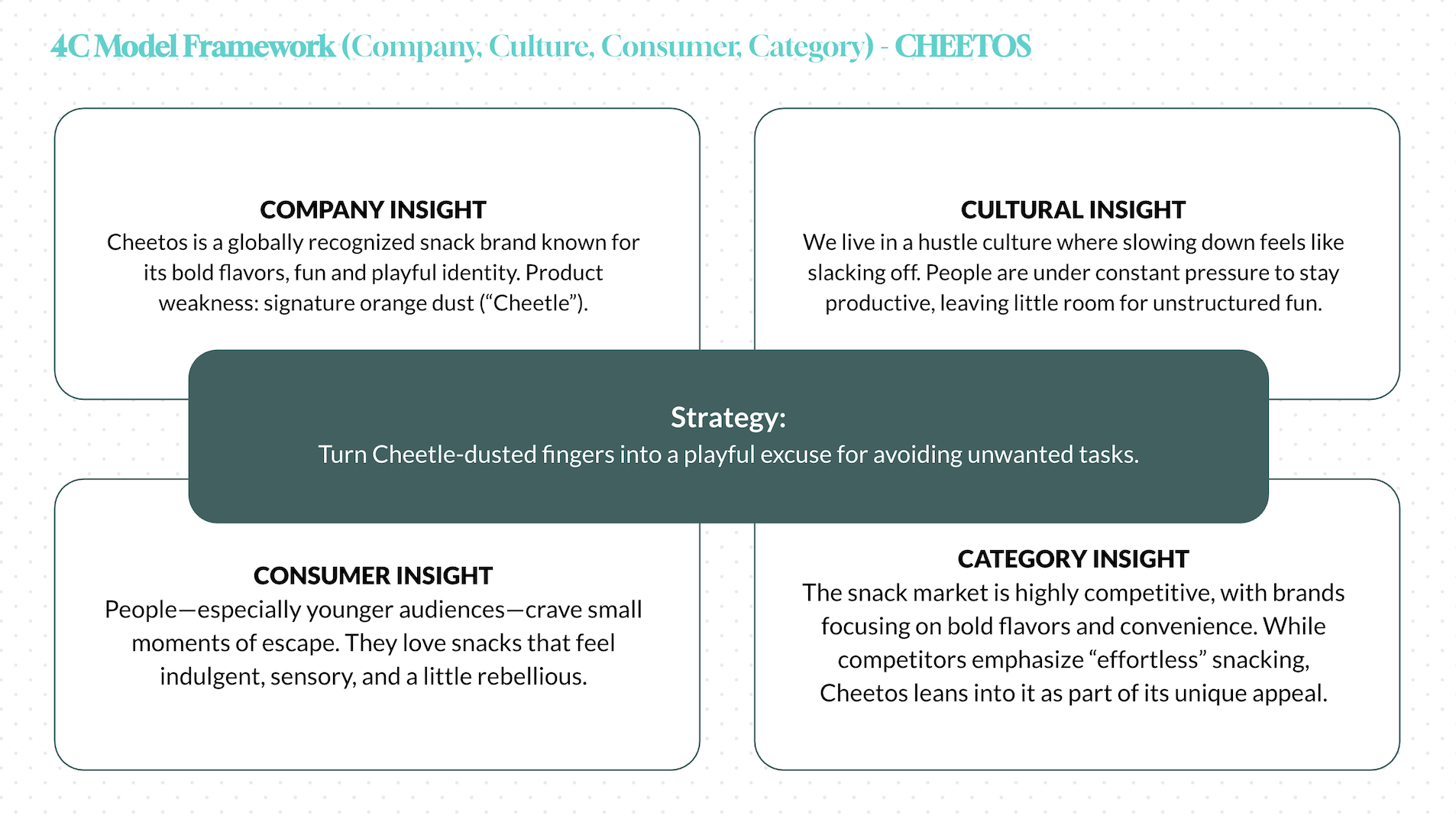
Creative Strategy Deconstructed in 4C Framework
Company INSIGHT
PUMA had a rich heritage in sports but lacked the R&D budget to beat Nike at pure performance. They needed a playground where style mattered as much as stats.
Category INSIGHT
The athletic category was obsessed with elite performance, sweat, and professional glory. It was a humorless arms race of 'faster, stronger, better' that felt out of reach.
Strategy:
Position PUMA as the official outfitter of the 'After Hours Athlete,' celebrating the competitive spirit of late-night social sports.
Customer INSIGHT
Casual socializers wanted to be recognized for their skills in the bar. They viewed their late-night activities as a legitimate form of competitive sport, even with a beer.
Culture INSIGHT
There was a growing movement of people rejecting the 'hustle' of traditional gym culture in favor of social, late-night bonding and niche competitive hobbies.
Strategy:
Position PUMA as the official outfitter of the 'After Hours Athlete,' celebrating the competitive spirit of late-night social sports.
Company INSIGHT
PUMA had a rich heritage in sports but lacked the R&D budget to beat Nike at pure performance. They needed a playground where style mattered as much as stats.
Category INSIGHT
The athletic category was obsessed with elite performance, sweat, and professional glory. It was a humorless arms race of 'faster, stronger, better' that felt out of reach.
Customer INSIGHT
Casual socializers wanted to be recognized for their skills in the bar. They viewed their late-night activities as a legitimate form of competitive sport, even with a beer.
Culture INSIGHT
There was a growing movement of people rejecting the 'hustle' of traditional gym culture in favor of social, late-night bonding and niche competitive hobbies.
Why is Celebrate the Subculture a Great Strategy?
Subcultures are the only places left where people actually give a shit about something.
Niche communities have higher loyalty than masses
Authenticity cannot be faked or bought cheaply
Mainstream audiences crave the 'cool' by association
Specific insights lead to much sharper creative
When you stop trying to be everything to everyone, you finally become something to someone. This strategy builds a moat of genuine culture around your brand that no budget-heavy competitor can just buy their way into. It’s about being the guest who actually brought a bottle of wine to the party instead of just showing up and eating all the snacks.
! When not to use the "Celebrate the Subculture" Strategy
If your brand is too corporate to handle a little dirt or if you’re just planning to 'borrow' the aesthetic without actually contributing, this Strategy will backfire horribly.
Steps to implement: How to infiltrate a scene without looking like a narc.
Identify a group with actual passion
Look for people who do things for the love of the game, not for the clout. Whether it’s late-night bowling or vintage synth repair, find a subculture that has its own language, rules, and heroes. If they don't have a 'vibe' yet, they aren't a subculture; they are just a demographic. Avoid demographics like the plague.
Listen until your ears actually bleed
Stop talking and start observing. What do these people actually care about? What are their inside jokes? What do they hate? PUMA didn't guess that pool players wanted to look cool; they saw the environment. You need to understand the nuances before you even think about opening your laptop to design a single slide.
Find the tension you can solve
Every subculture has a problem the mainstream ignores. For 'After Hours Athletes,' it was being treated like slackers instead of competitors. Your brand needs to validate their existence or solve a specific niche frustration. If you aren't adding value, you’re just another annoying ad they’ll skip. Don't be the guy who ruins the party.
Create something they actually want
This isn't just about a logo swap. Build a product, an event, or a piece of content that feels like it was made by one of them. PUMA’s 'Social Shoe' wasn't for the track; it was for the pub. If the people in the subculture wouldn't spend their own money on it, you’ve already lost the game.
Step back and let them lead
Once you’ve provided the platform, get out of the way. Let the subculture take ownership of the narrative. If it looks too polished, it’s fake. If it looks a little messy, it’s probably working. The goal is to be the brand that 'gets it,' not the brand that tries to control the whole conversation.
Related Creative Strategy Techniques
Explore Strategy Frameworks
Use these proven frameworks to build your creative strategy and implement the Celebrate the Subculture approach effectively.