Build a Creative Strategy: Create a New Mental Shortcut

What is the Create a New Mental Shortcut Strategy and when should I use it?

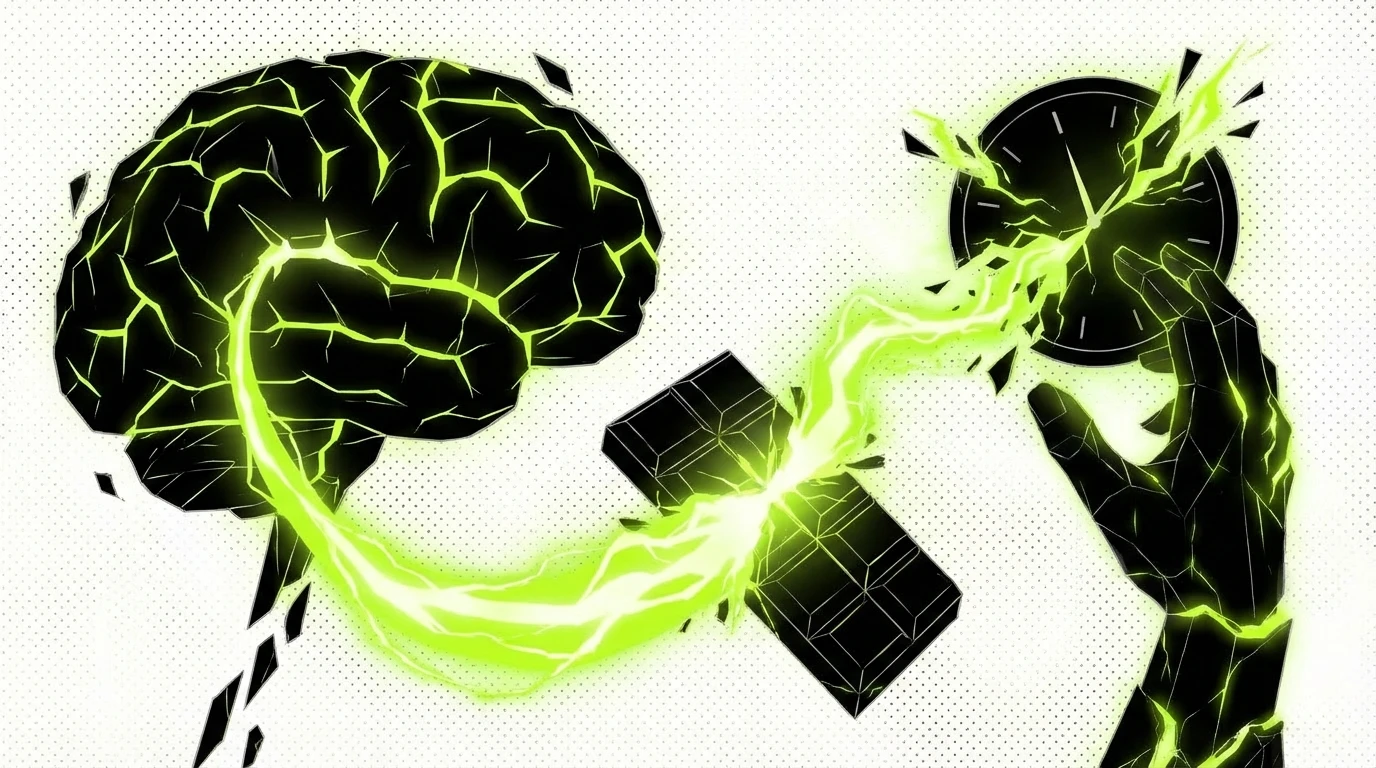
People are lazy. Their brains are fried from scrolling absolute garbage, so they rely on heuristics. This strategy is about hijacking a specific moment or feeling and planting your brand’s flag there before the competition wakes up. You use it when your category is a sea of sameness and you need to become the default answer to a recurring problem. It’s not about features; it’s about Pavlovian conditioning. If you want people to reach for you without thinking-because thinking is hard and they’re tired-this is your play. Stop selling specs and start selling a reflex. Do it now. Go. Really. Yes. OK.

How to execute this strategy effectively

You don’t just ask for attention; you demand a permanent lease in their subconscious. Start by finding a universal micro-moment-a tiny, annoying, or boring slice of life that everyone experiences. Then, weld your brand to it with a phrase so simple a toddler could repeat it. KitKat didn't invent the concept of taking a break, but they sure as hell claimed it. To win, you must be relentless. Consistency is the only thing that turns a tagline into a trigger. If you change your message every six months, you’re just making noise. Find your hook, sink it deep, and never, ever let go of it. Do it. Go.!!

Example: KitKat – "Have a break, have a KitKat"

KitKat didn’t try to convince you their chocolate was the finest in the world. Instead, they hijacked the "break." By linking their four-fingered bar to the universal human need for a five-minute escape, they created a mental shortcut that triggers every time you sigh at your desk. It’s Pavlovian marketing at its peak. You’re not craving sugar; you’re craving the ritual they claimed. Simple, repetitive, and annoyingly effective. It works. OK.

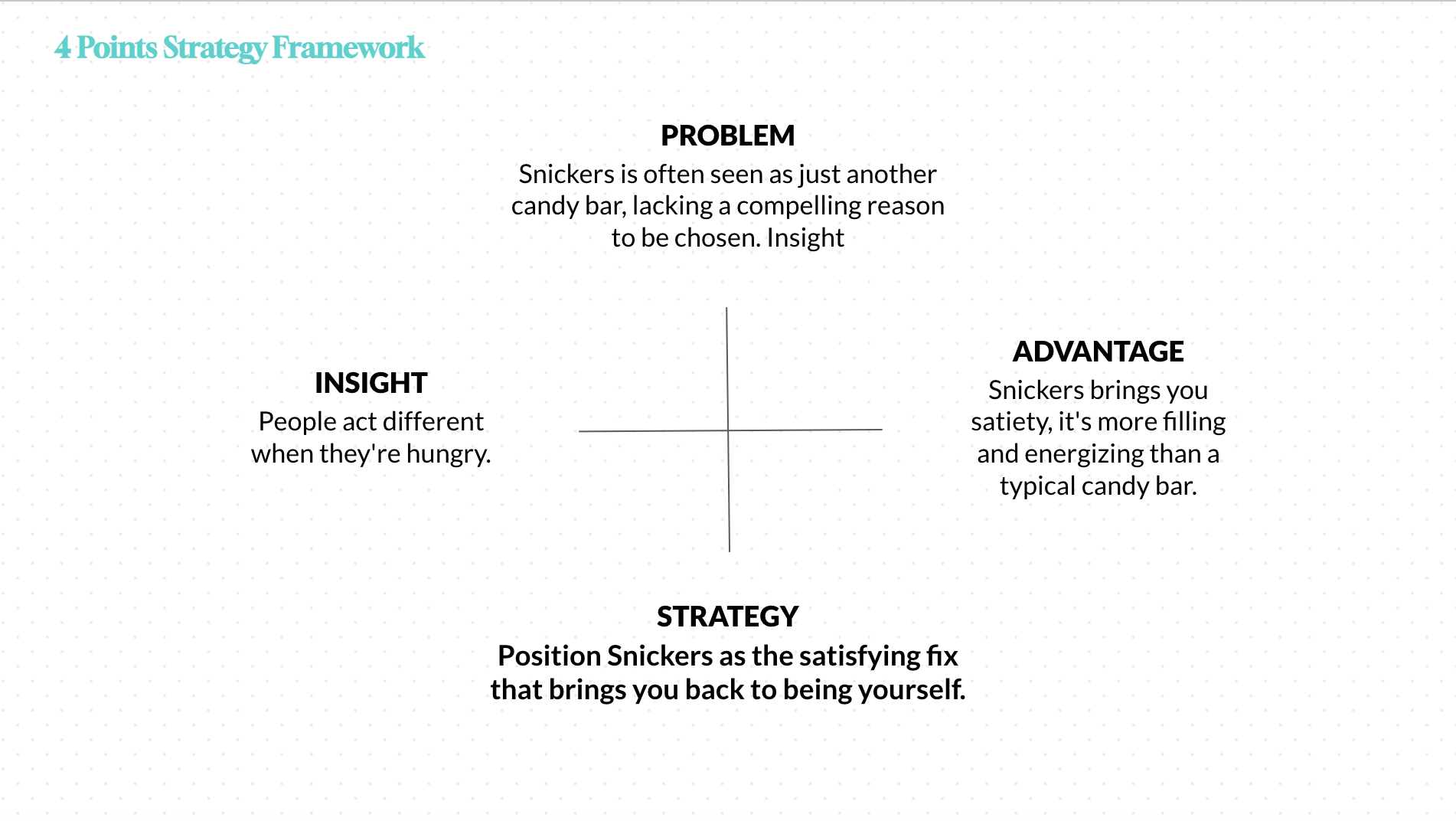
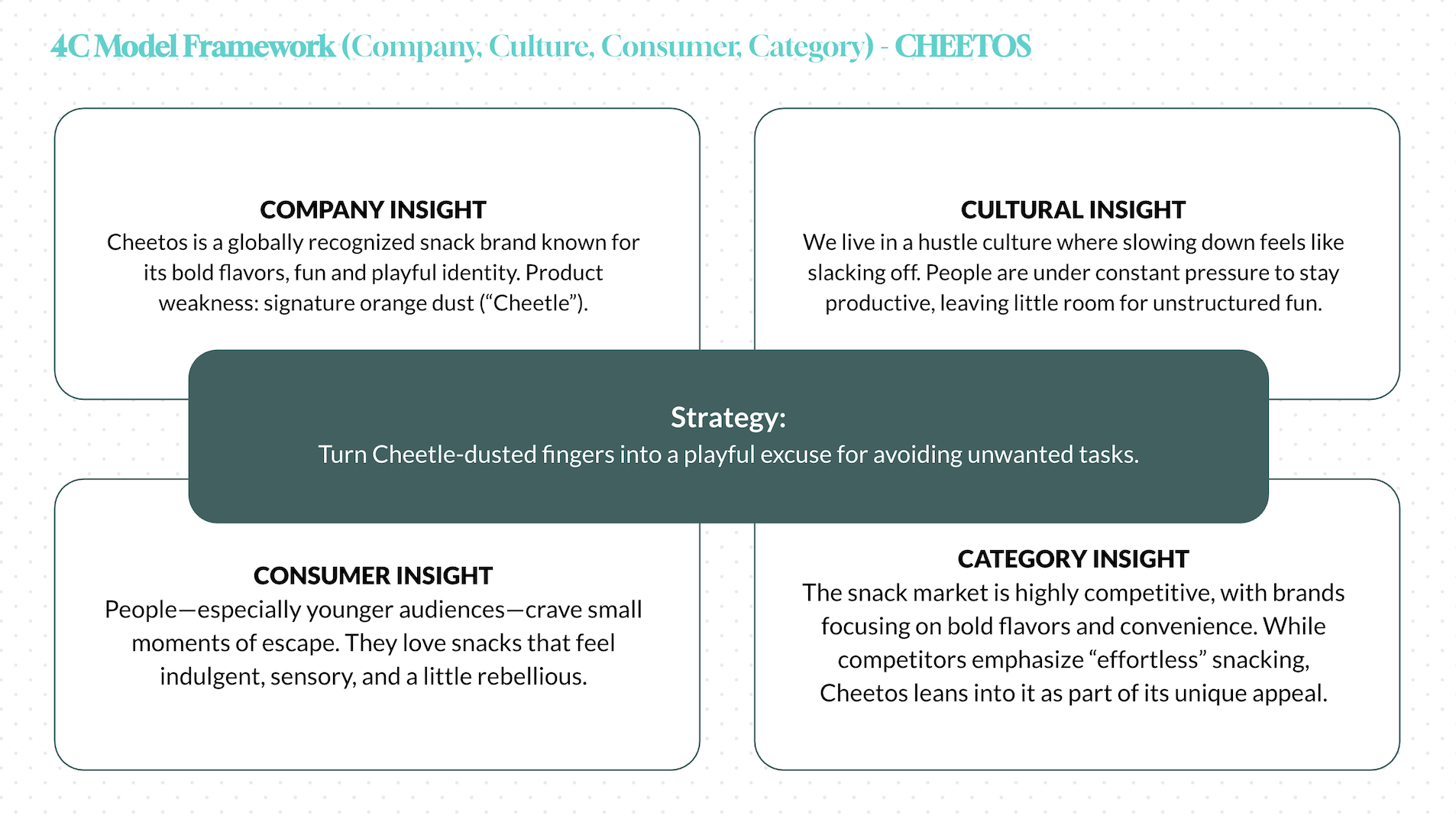
Creative Strategy Deconstructed in 4C Framework

Company INSIGHT

A simple, portioned chocolate snack designed for easy consumption. The physical 'snap' of the bar provides a tactile ritual that signals the start of a pause.

Category INSIGHT

Most confectionary brands focused on indulgence, taste, or 'energy.' They were selling the product's ingredients rather than the consumer's occasion.

Strategy:

Position KitKat as the essential, ritualistic companion to the universal daily break.

Customer INSIGHT

A momentary escape from the grind of daily work. People don't just want chocolate; they want a socially acceptable reason to stop working for five minutes.

Culture INSIGHT

The rise of the modern, structured workday and the industrialization of 'breaks.' Taking a break became a universal, daily ritual across the global workforce.

Why is Create a New Mental Shortcut a Great Strategy?

It turns your brand into a reflex instead of a choice, which is why this strategy works.

Bypasses the consumer's logical, over-analytical brain

Owns a specific, repeatable moment in time

Requires zero cognitive load from the audience

Builds massive long-term brand equity via repetition

When you own the shortcut, you stop competing on price or features. You’re just the thing they do when a specific moment happens. It’s the closest thing to legal mind control you’ll find in a brief.

! When not to use the "Create a New Mental Shortcut" Strategy

Don't use this Strategy if your brand lacks the budget or the stomach for the decade of repetition required to actually wire a new circuit in someone's brain.

Steps to implement: How to hardwire their brains without being a creep.

1

Find a high-frequency micro-moment

Look for a specific, recurring moment in your customer's life. It shouldn't be 'buying a car.' It should be 'that first sip of coffee' or 'the 3 PM slump.' KitKat chose the break. It happens every day, multiple times. If the moment is too rare, the shortcut never forms. You need volume. If you aren't showing up constantly, you're just a ghost in the machine.

2

Identify the core emotional trigger

What are they feeling in that moment? Boredom? Stress? Relief? You need to understand the emotional landscape so you can position your brand as the bridge to a better state. If they're stressed, you're the calm. If they're bored, you're the spark. Don't overthink it; just be the solution. If you miss the emotion, you miss the person.

3

Craft a dead-simple verbal hook

If it’s longer than five words, you’ve already lost. Your hook needs to be a linguistic virus. 'Have a break, have a KitKat' is genius because it uses the noun as an invitation. It’s sticky, it’s rhythmic, and it’s impossible to forget. Write fifty versions, then pick the shortest one. If you can't say it in one breath, it's garbage.

4

Visualise the brand ritual consistently

The shortcut isn't just words; it’s a visual cue. KitKat always shows the 'snap.' That sound and motion are part of the shortcut. Whatever your brand’s version of the snap is, show it every single time. Repetition isn't boring; it’s how you build a habit. Don't change the lighting. Keep the visual cues identical so the brain doesn't have to work.

5

Commit until you’re sick of it

Most strategies die because a new CMO wants to 'refresh' the brand. If you want to own a mental shortcut, you have to stay the course for years. By the time you’re absolutely tired of hearing your own tagline, the public is finally starting to notice it. Don't blink. Consistency is the difference between a legacy and a footnote.

Related Creative Strategy Techniques

Explore Strategy Frameworks

Use these proven frameworks to build your creative strategy and implement the Create a New Mental Shortcut approach effectively.
We use cookies on our site to enhance your user experience, provide personalized content, and analyze our traffic. Cookie Policy