Build a Creative Strategy: Create Contrast
What is the Create Contrast Strategy and when should I use it?
Look, humans are simple creatures with short attention spans. The Create Contrast Strategy is the art of making your product look like a miracle by highlighting the absolute dumpster fire that exists without it. You use it when your audience is comfortably numb or when your USP is too subtle for their tired brains to process. It’s about manufacturing a 'before' so miserable that the 'after' feels like a religious experience. If your brand doesn't solve a glaring problem, don't bother. But if you have a solution, stop being polite and start showing the gap. It works. It really does.
How to execute this strategy effectively
You don't just put two pictures side-by-side and hope for the best. You need to dial the drama up to eleven. First, identify the most painful, annoying, or boring part of the current reality. Then, exaggerate it until it’s almost a caricature. Your product shouldn't just be 'better'; it should be the only logical escape from that nightmare. Think of the 2024 Reese’s Big Cup with Caramel ad. They didn’t just say 'it’s new.' They yelled 'YES' against a backdrop of 'NO' until the contrast was burned into your retinas. Be loud, be visual, and for heaven's sake, don't be subtle here. Got it?
Example: Reeses - REESE'S Cups + Caramel YES (2024)
Reese’s 2024 Super Bowl spot for the Big Cup with Caramel is a masterclass in aggressive contrast. The ad swings wildly between extreme despair ('NO!') when people think the recipe is changing and manic euphoria ('YES!') when they realize it’s just adding caramel. By oscillating between these two emotional poles, they make a simple product iteration feel like a global triumph. It’s loud, stupidly simple, and impossible to ignore. Pure genius.
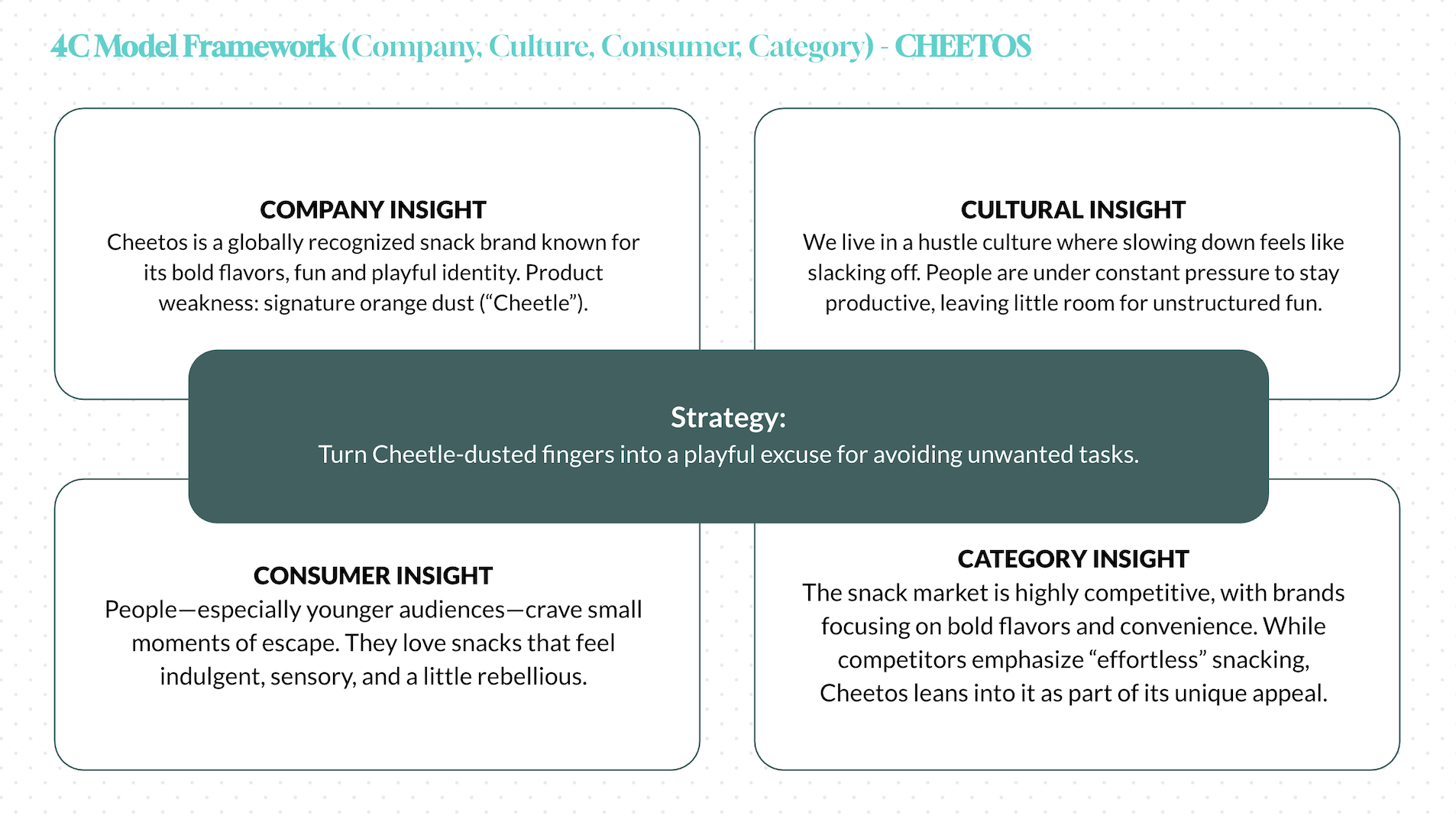
Creative Strategy Deconstructed in 4C Framework
Company INSIGHT
Reese's owns the peanut butter and chocolate category but needed to prove they could innovate without ruining the classic formula their fans worship.
Category INSIGHT
Candy ads usually focus on slow-motion ingredient pours and generic joy, which everyone ignores because it is predictable and boring as hell.
Strategy:
Use the binary of 'YES' and 'NO' to turn a minor ingredient addition into a high-stakes emotional rollercoaster.
Customer INSIGHT
Fans are fiercely protective of the original recipe and terrified of 'new and improved' actually meaning their favorite snack is being ruined.
Culture INSIGHT
We live in an era of extreme reactions and 'stan' culture where everything is either the best thing ever or a total disaster.
Strategy:
Use the binary of 'YES' and 'NO' to turn a minor ingredient addition into a high-stakes emotional rollercoaster.
Company INSIGHT
Reese's owns the peanut butter and chocolate category but needed to prove they could innovate without ruining the classic formula their fans worship.
Category INSIGHT
Candy ads usually focus on slow-motion ingredient pours and generic joy, which everyone ignores because it is predictable and boring as hell.
Customer INSIGHT
Fans are fiercely protective of the original recipe and terrified of 'new and improved' actually meaning their favorite snack is being ruined.
Culture INSIGHT
We live in an era of extreme reactions and 'stan' culture where everything is either the best thing ever or a total disaster.
Why is Create Contrast a Great Strategy?
Contrast creates instant cognitive friction that forces a brain on autopilot to actually pay attention.
Highlights the problem with painful clarity
Makes the solution feel absolutely inevitable
Bypasses the need for complex logic
Triggers an immediate, visceral emotional reaction
It works because humans are wired to notice change, not consistency. If you show a flat line, they sleep; show a spike, and they wake up. Stop trying to be smooth and start being jagged.
! When not to use the "Create Contrast" Strategy
Don't use this strategy if your product is a marginal improvement that requires a microscope and a PhD to actually notice the difference.
Steps to implement: Stop being subtle and start being loud
Identify the absolute worst status quo
Find the most annoying thing about the current state of affairs and poke it with a stick until it bleeds. Don't be polite about it. If the current category standard is boring or frustrating, you need to articulate that pain so clearly that the audience actually feels the discomfort in their bones.
Amplify the misery of the before
Don't just describe the problem; make it look like an unbearable tragedy that no sane person would ever tolerate. If you are selling a vacuum, the dust shouldn't just be there; it should be an invading army. Exaggeration is your friend here because nuance is where good creative strategies go to die.
Introduce the product as the hero
Bring in your solution like a search light in a cave, making it the obvious and only source of relief. The transition needs to be jarringly positive. If the 'before' was a funeral, the 'after' should be a carnival. The goal is to make the choice between the two feel like a total no-brainer.
Use sharp visual or sonic cues
Like Reese's 'YES' and 'NO' screams, use sensory triggers to hammer home the difference between the two distinct states. Use colors, sounds, or pacing to differentiate the misery from the magic. If they look the same, you've failed. The audience should be able to tell which side is which even with the sound off.
Cut the fluff and end fast
Once you've shown the contrast, get out. Explaining the joke or the strategy kills the impact immediately. Just stop talking. Your job was to show the gap, not write a thesis on it. If the contrast is strong enough, the customer will fill in the blanks themselves. Now go delete those extra slides.
Related Creative Strategy Techniques
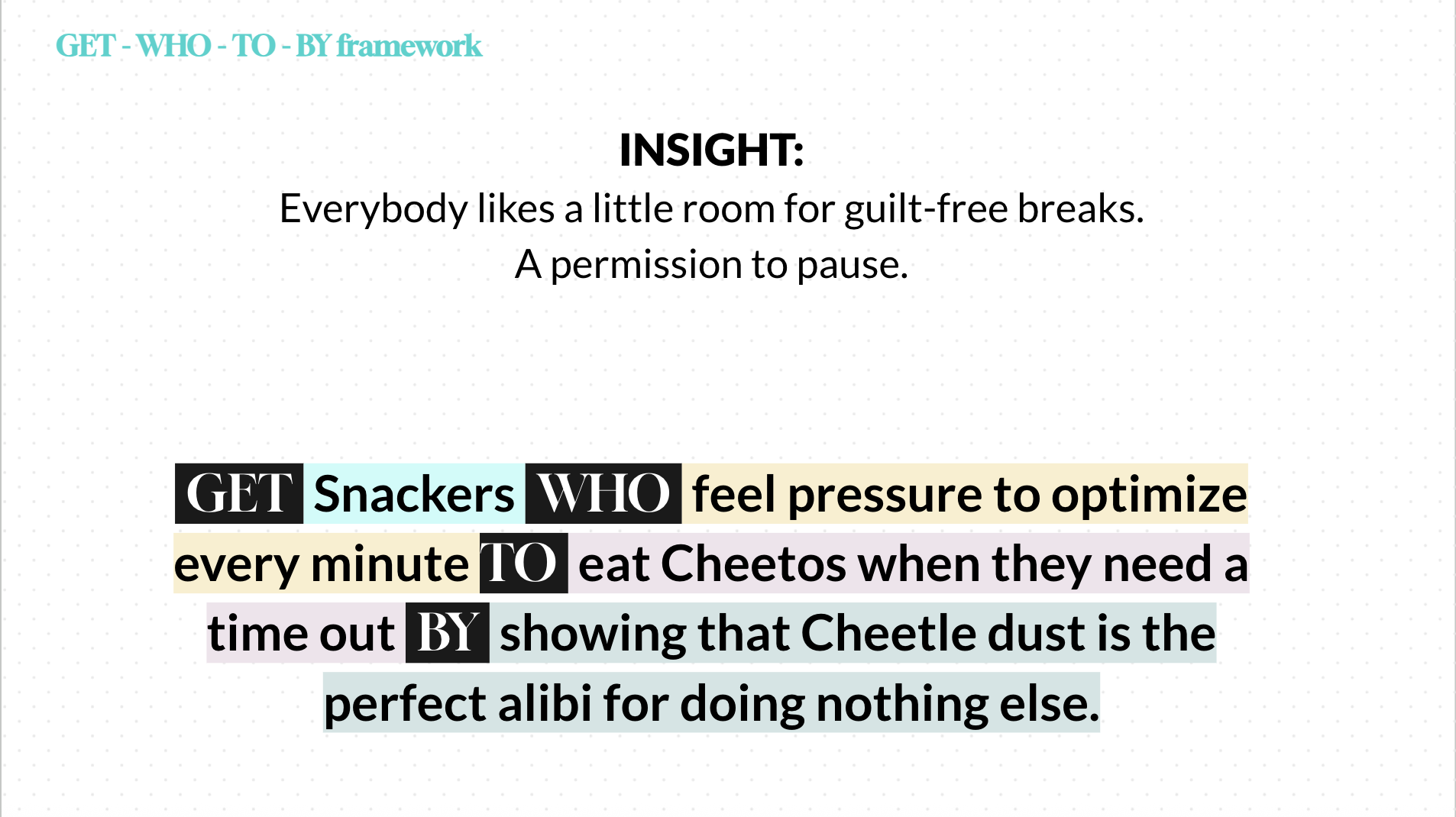
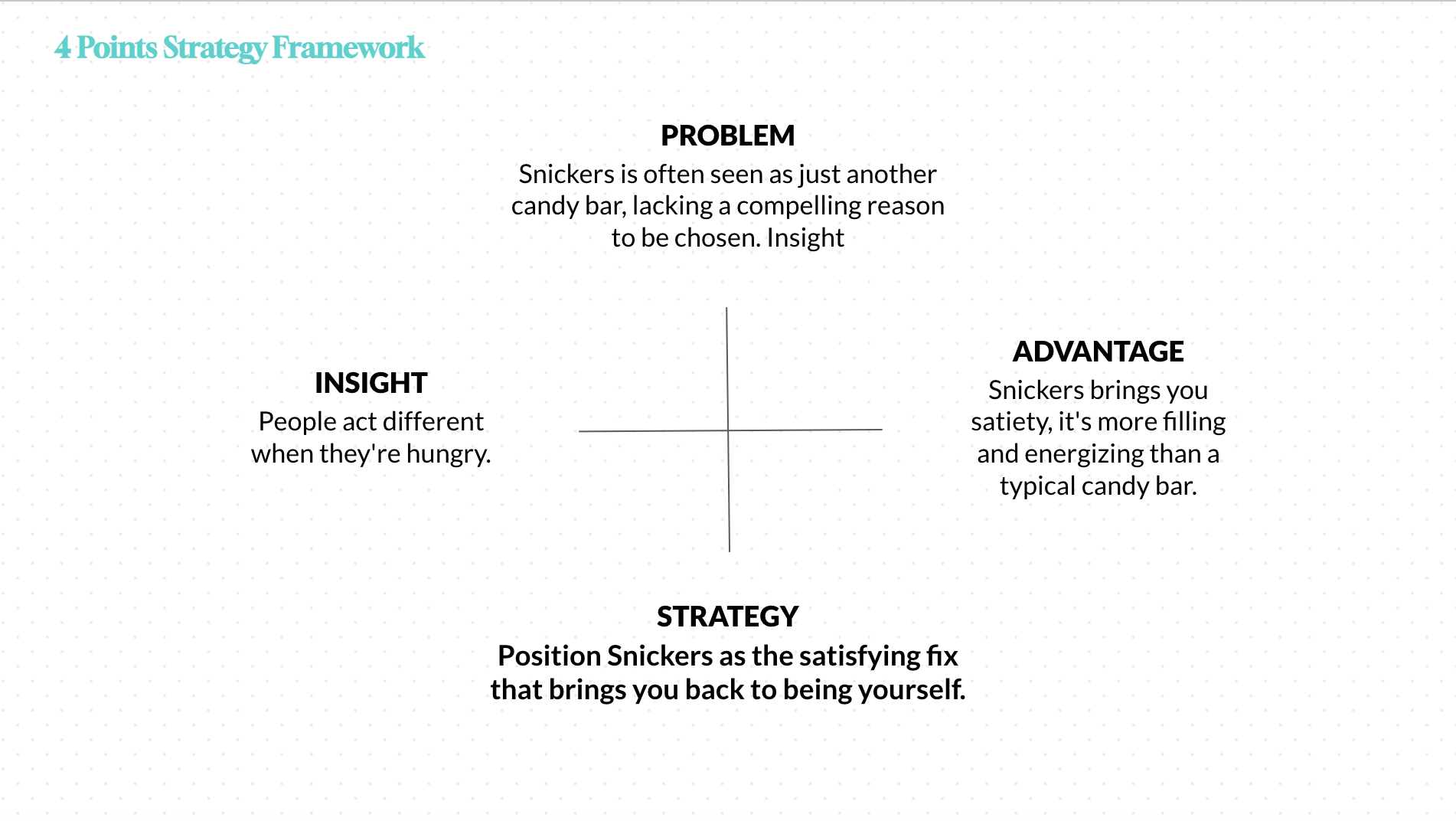
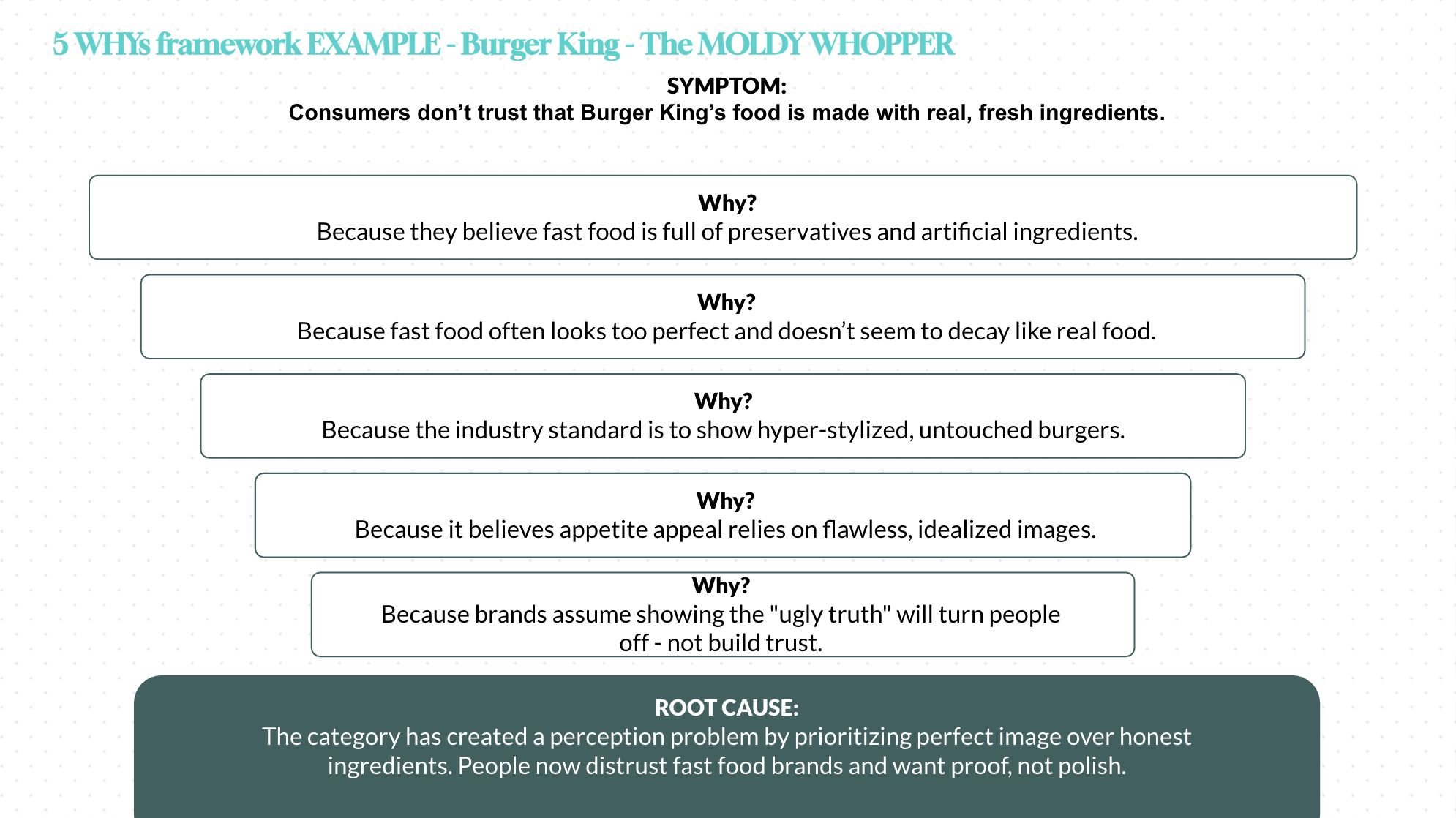
Explore Strategy Frameworks
Use these proven frameworks to build your creative strategy and implement the Create Contrast approach effectively.