Develop a Creative Strategy: Make the Product the Punchline
What is the Make the Product the Punchline Strategy and when should I use it?
Look, the world is a dumpster fire of ads trying to be your best friend. This strategy stops the begging. It sets up a scenario everyone already knows—a cultural moment, a common frustration, or a massive event—and lets the product walk in as the final word. You use it when you have a product that actually does something simple and you’re tired of over-explaining features to people who don't care. It’s for when you want to stop being the annoying guy at the party and start being the one with the perfect comeback. Just don't use it if your product is actually the joke. Got it? Cool.
How to execute this strategy effectively
First, stop trying to be clever; be observant. You need a setup that is universally understood so you don't waste time explaining the premise. If you have to explain the joke, you’ve already lost. The product shouldn't just be there; it should be the resolution. Speed is your only friend here, especially in real-time marketing. You need a team that can move without waiting for three layers of middle management to approve a tweet. It’s about timing, brevity, and having the guts to let the product speak for itself. If it feels forced, it is. If it feels like an ad, start over again. No.
Example: Oreo – "Dunk in the Dark"
During Super Bowl XLVII, the lights went out. While other brands were busy crying into their expensive media buys, Oreo’s team sat in a war room and fired off a single tweet: a dimly lit cookie with the caption "You can still dunk in the dark." It was simple, immediate, and turned a massive technical failure into the ultimate setup for their product. It didn't try too hard. It just showed up, said the thing, and won the entire night. Period.
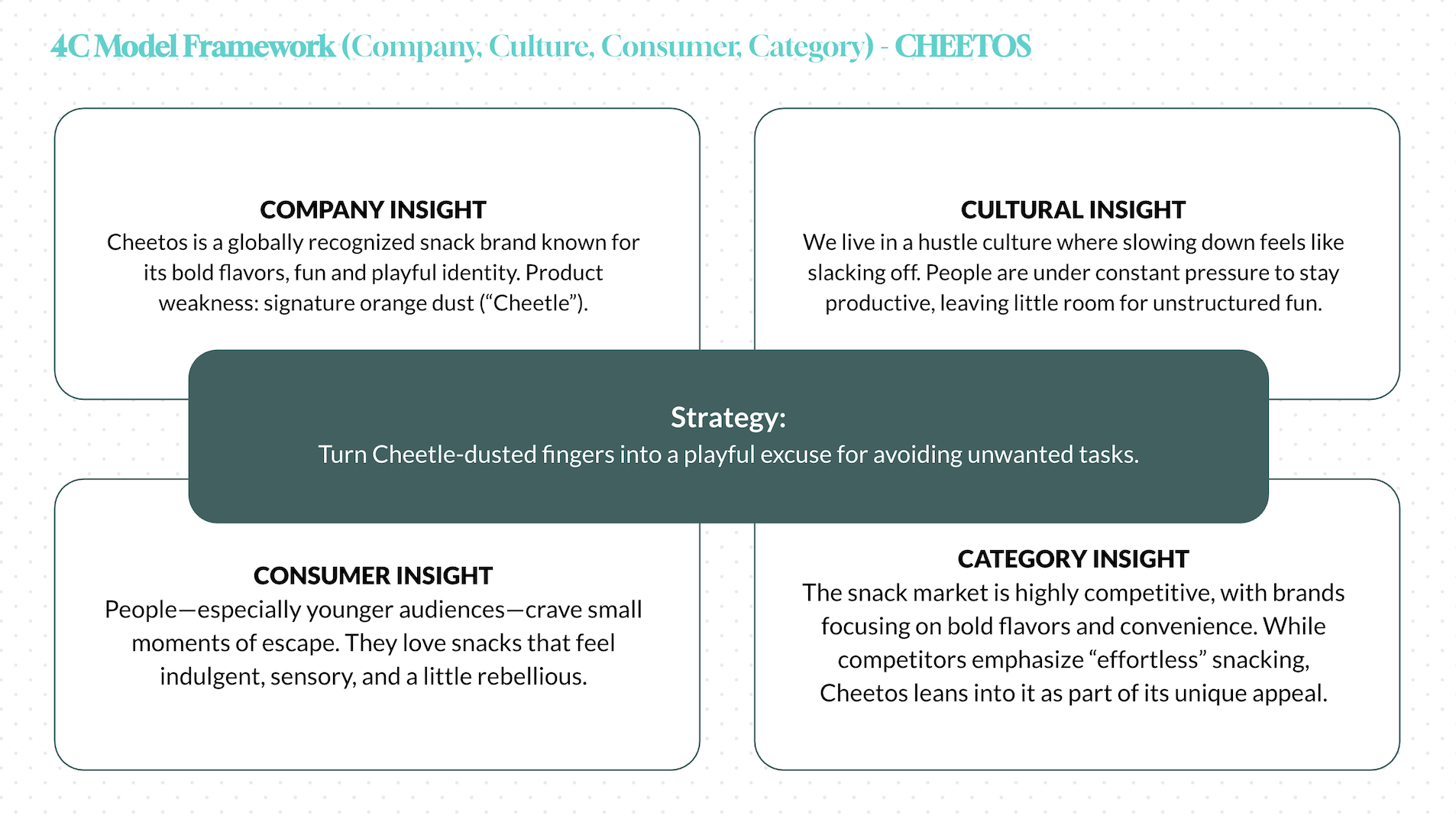
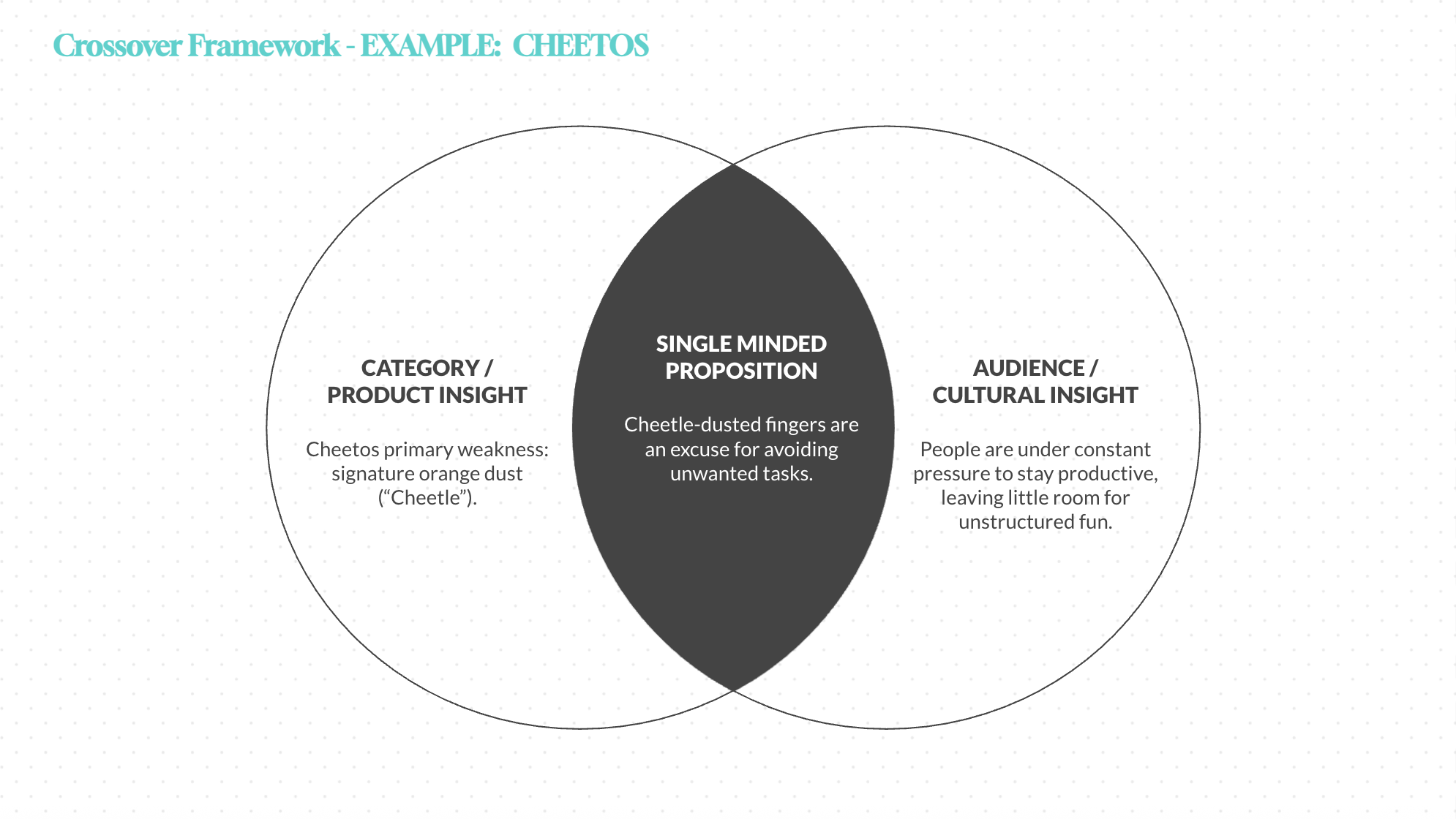
Creative Strategy Deconstructed in 4C Framework
Company INSIGHT
Oreo has a simple, iconic product usage—dunking. They knew their strength wasn't in complex storytelling but in being a constant, reliable snack.
Category INSIGHT
Most snack brands spend millions on pre-produced, glossy Super Bowl ads that feel disconnected from the actual live experience of watching the game.
Strategy:
Leverage real-time cultural disruptions to position a simple product habit as the perfect solution to an unexpected moment.
Customer INSIGHT
People watching the game are looking for entertainment and shared connection, especially during unexpected interruptions like a stadium-wide blackout.
Culture INSIGHT
The rise of the "second screen" meant everyone was on Twitter reacting to the blackout in real-time, creating a massive, captive audience waiting for a reaction.
Strategy:
Leverage real-time cultural disruptions to position a simple product habit as the perfect solution to an unexpected moment.
Company INSIGHT
Oreo has a simple, iconic product usage—dunking. They knew their strength wasn't in complex storytelling but in being a constant, reliable snack.
Category INSIGHT
Most snack brands spend millions on pre-produced, glossy Super Bowl ads that feel disconnected from the actual live experience of watching the game.
Customer INSIGHT
People watching the game are looking for entertainment and shared connection, especially during unexpected interruptions like a stadium-wide blackout.
Culture INSIGHT
The rise of the "second screen" meant everyone was on Twitter reacting to the blackout in real-time, creating a massive, captive audience waiting for a reaction.
Why is Make the Product the Punchline a Great Strategy?
It cuts through the noise because it respects the audience's intelligence for once.
It turns cultural chaos into brand equity.
Brevity prevents the usual marketing eye-roll.
The product becomes the hero, not fluff.
High memorability with minimal production costs.
This strategy works because it mimics how actual humans communicate. We don't give speeches; we make observations. By positioning your product as the natural conclusion to a shared experience, you stop being an intruder in the conversation and start being the highlight. It's efficient, it's brutal, and it's impossible to ignore if you get the timing right.
! When not to use the "Make the Product the Punchline" Strategy
If your product is a complex B2B software suite that requires a forty-page whitepaper to explain, this Strategy will just make you look desperate and confusing.
Steps to implement: Stop overthinking it and just land the joke.
Find a relatable cultural tension point.
Look for a moment where everyone is looking at the same thing—like a power outage or a weird awards show gaffe. You need a setup that doesn't require a backstory. If the audience has to think for more than a second to understand the context, your punchline is going to land like a lead balloon in a vacuum.
Strip away the unnecessary brand jargon.
Nobody cares about your "innovative flavor crystals" when the lights are out. Oreo didn't talk about their supply chain; they talked about dunking. Identify the one core action or benefit your product provides that fits the situation. If you try to jam three messages into one punchline, you’re writing a brochure, not a strategy.
Assemble a high-speed decision team.
You can't do this with a standard approval workflow. You need the people who can say "yes" in the room while the event is happening. If your tweet has to go through legal, compliance, and the CEO’s nephew, the moment will be dead and buried by the time you hit send. Speed is the only currency here.
Execute with extreme visual simplicity.
The "Dunk in the Dark" graphic was basically a shadow and a cookie. It didn't need 4K rendering or a celebrity voiceover. Use high-contrast visuals that communicate the idea instantly on a small screen. Your audience is distracted; don't give them a puzzle to solve. Give them a clear image that delivers the payoff immediately.
Shut up after you win.
The biggest mistake is trying to turn a punchline into a sequel. Once you've landed the hit, walk away. Don't spend the next week "engaging" with every bot in the comments or trying to explain why it was funny. The power of this strategy is in its brevity. Leave them wanting more, or at least leave them before they get bored.
Related Creative Strategy Techniques
Explore Strategy Frameworks
Use these proven frameworks to build your creative strategy and implement the Make the Product the Punchline approach effectively.