Build a Creative Strategy: Shift the Context

What is the Shift the Context Strategy and when should I use it?

Look, your product is probably fine, but your category is a total snooze-fest. The Shift the Context strategy is the art of dragging your brand out of its boring natural habitat and dropping it into a world where people actually feel something. You use it when your features have plateaued and your USP is as unique as a white t-shirt. It is for when you are tired of competing on price or specs and want to hijack a different emotional wavelength. Instead of selling a chair, you sell the feeling of a living room from a show everyone loves. It is the ultimate shortcut for relevance. Try it now! Just do it!

How to execute this strategy effectively

Stop looking at your product and start looking at where your customers actually live. Execution requires you to find a cultural anchor—a movie, a specific time of day, or a mood—that your brand can inhabit without looking like a desperate gatecrasher. You need to map your product’s utility to a new environment that carries its own emotional weight. If you’re selling coffee, don’t talk about beans; talk about the 3 AM deadline. It’s about borrowed interest done right. If you do it poorly, you just look like a brand in a costume. If you do it well, you look like you have always belonged. Go now.

Example: IKEA - Real Life Series

IKEA stopped showing us sterile catalogs and instead recreated iconic living rooms from The Simpsons, Friends, and Stranger Things using only their furniture. By shifting from "furniture store" to "pop culture curator," they made their mass-produced items feel like part of a beloved story. It wasn't about the price of a rug; it was about living in Monica’s apartment. It turned a shopping trip into a scavenger hunt for nostalgia. Nice job, folks!

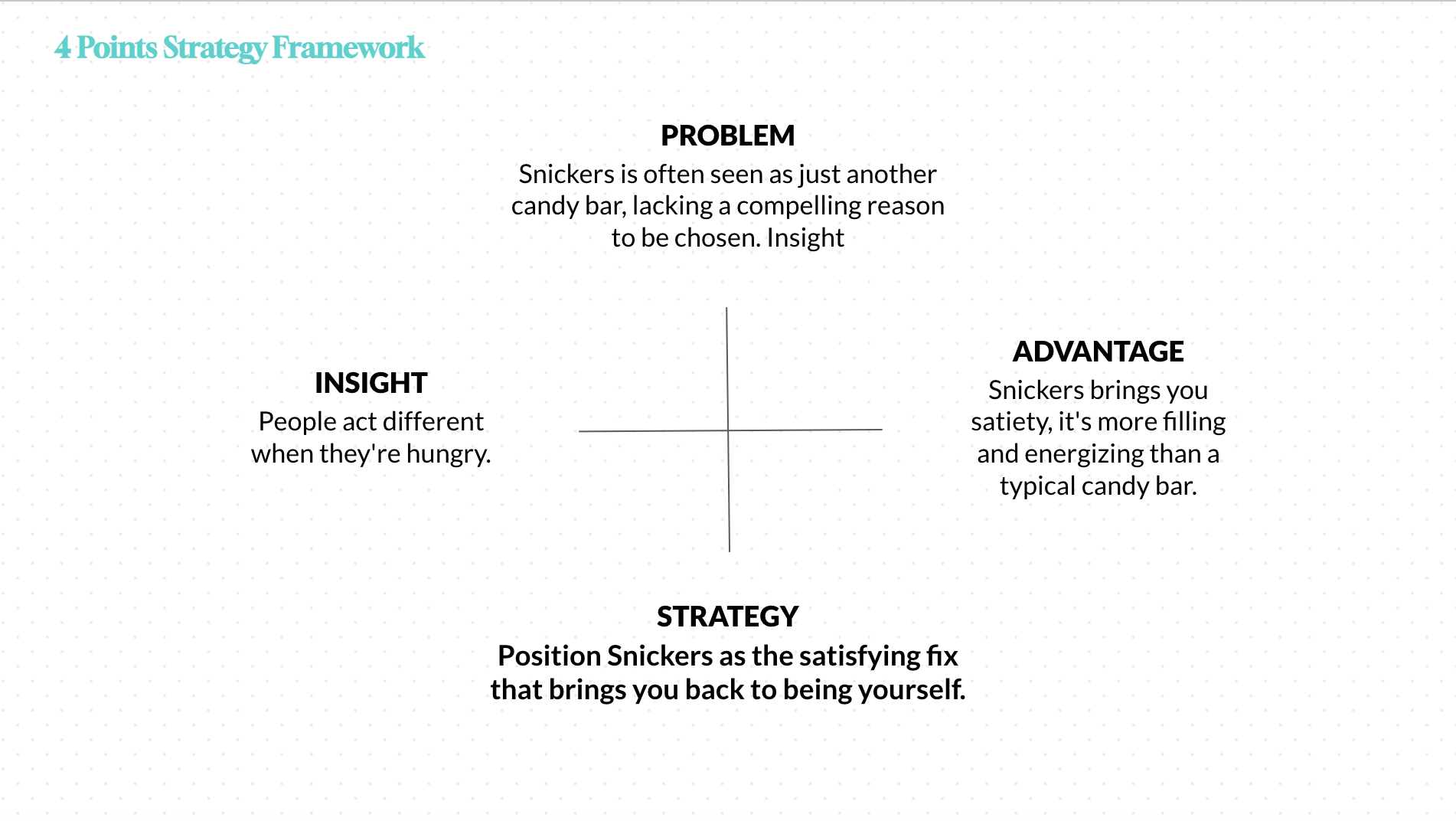
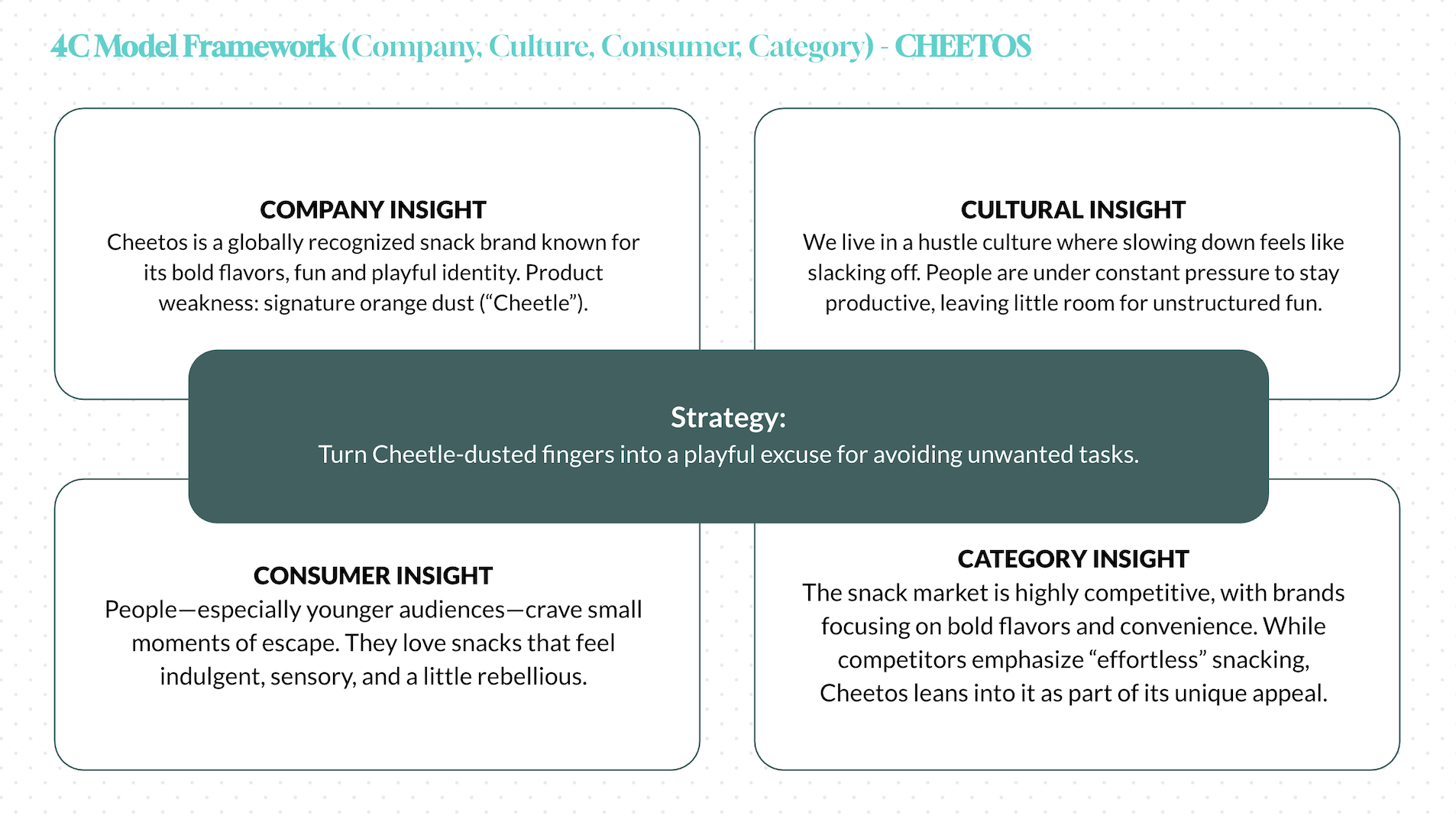
Creative Strategy Deconstructed in 4C Framework

Company INSIGHT

IKEA possesses a massive, versatile catalog of affordable furniture that can mimic almost any interior style if curated with enough precision.

Category INSIGHT

Furniture retailers usually focus on clean, aspirational, but ultimately soulless showroom setups that feel like nobody actually lives there.

Strategy:

Recreate legendary TV living rooms using only IKEA products to prove the brand can build any dream, no matter how fictional.

Customer INSIGHT

Customers want their homes to reflect their personalities and passions, often finding more comfort in fictional worlds than in minimalist catalogs.

Culture INSIGHT

We are living in an era of peak nostalgia where people find deep comfort and connection in the iconic settings of their favorite television shows.

Why is Shift the Context a Great Strategy?

It bypasses the logical brain and hooks directly into the "I recognize that" part of the skull.

Borrowed interest saves your boring marketing budget.

Perception is reality when you change scenery.

It makes mass-market products feel curated.

Emotional anchors beat feature lists every time.

When you stop shouting about your specs and start showing up in places people actually care about, you stop being an ad and start being a vibe. It's the difference between a salesman at your door and a guest at your party. Choose to be the guest.

! When not to use the "Shift the Context" Strategy

Use this strategy only if your brand actually fits; forcing a luxury watch into a dumpster fire context just makes you look like a confused intern.

Steps to implement: Stop Selling Stuff and Start Stealing Vibes

1

Find the one thing you actually do

Look at your product. Strip away the marketing fluff. What does it actually do? Does it hold things? Does it make things hot? IKEA realized they don't just sell wood; they sell the building blocks of a home. You need to find that core utility before you can dress it up in a new context. Don't lie to yourself here; honesty is the only way this works.

2

Find a world people actually like

Find a setting, a show, or a moment that your audience obsesses over. IKEA chose iconic TV living rooms because everyone knows them. This isn't about being trendy; it's about being familiar. You're looking for a context that has more emotional weight than your brand currently carries. If people don't recognize the world you're moving into, you're just wasting everyone's time and money.

3

Play dress up with your product line

This is where the work happens. You have to prove your product belongs in the new context. IKEA didn't just say "we're like The Simpsons"; they found the exact lamp that looked like the one in Springfield. You need to show, with painful detail, how your boring stuff fits perfectly into the cool world you've chosen. If the fit is clunky, the whole strategy falls apart instantly.

4

Stop acting like a thirsty brand

To shift context effectively, you have to adopt the visual language of the new world. If you're recreating a 90s sitcom, it better look like 1994, not a 2024 corporate slide deck. IKEA used the lighting and angles of the shows, not their usual catalog style. You have to commit to the bit. If you keep your brand's safe guidelines, you'll never actually leave the store.

5

Drop it where they will see it

Don't just dump this on your LinkedIn and hope for the best. Put it where the fans of that context hang out. If you're shifting into a gaming context, go to Discord. IKEA put their "Real Life" series in places where pop culture junkies would trip over it. The goal is to get people to say, "Wait, that's IKEA?" instead of "Ugh, another IKEA ad." That's the win.

Related Creative Strategy Techniques

Explore Strategy Frameworks

Use these proven frameworks to build your creative strategy and implement the Shift the Context approach effectively.
We use cookies on our site to enhance your user experience, provide personalized content, and analyze our traffic. Cookie Policy