Build a Creative Strategy: Solve the Tension, Not the Category

What is the Solve the Tension, Not the Category Strategy and when should I use it?

It’s the strategy for when you realize nobody gives a damn about your product’s features or your category’s boring-ass conventions. Instead of acting like a management consultant trying to optimize a supply chain, you find the knot in the consumer’s stomach and you pull on it. Use this when your category is a sea of sameness where everyone is selling the same generic benefits. If your brand is stuck in a commodity trap, stop talking about the category and start talking about the human messiness that the category ignores. It’s about emotional resonance, not a feature list. Go. Done.
How to execute this strategy effectively
You start by admitting that your product is probably boring, but the people buying it are definitely not. Look for the friction. What makes them feel small, annoyed, or misunderstood? Once you find that tension, you make your brand the antidote. Don’t just mention the problem; own the solution with a point of view that feels almost too honest for a boardroom. This strategy requires guts because you have to stop leaning on safe category tropes. If you’re not making someone at the client’s office slightly uncomfortable with the truth, you aren’t solving the tension; you’re just fluffing. Done.
Example: Always - Like a Girl
Always stopped talking about leak protection and started talking about the moment girls lose their confidence. By reclaiming the insult "like a girl," they pivoted from selling pads to solving a systemic drop in self-esteem during puberty. They didn't fix the feminine hygiene category; they addressed the psychological tension of growing up. It turned a commodity purchase into a badge of empowerment. It’s brilliant because it’s true. Yes.
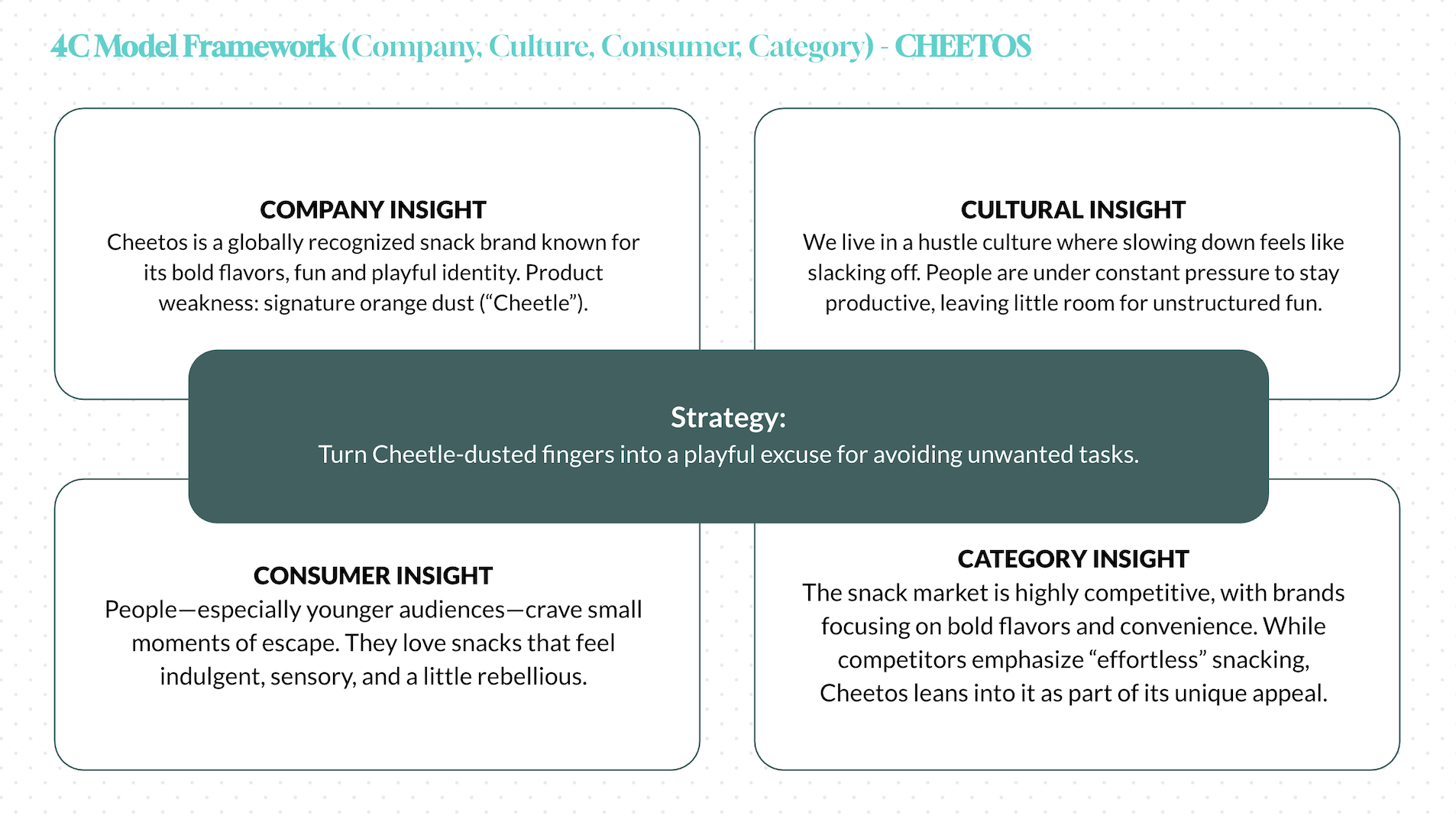
Creative Strategy Deconstructed in 4C Framework
Company INSIGHT
Always had massive market share but was seen as a functional heritage brand. They needed to move from being a utility to being a brand that girls actually liked.
Category INSIGHT
The feminine hygiene category was obsessed with blue liquid and white pants. It was a sterile, clinical environment that ignored the actual lived experience of puberty.
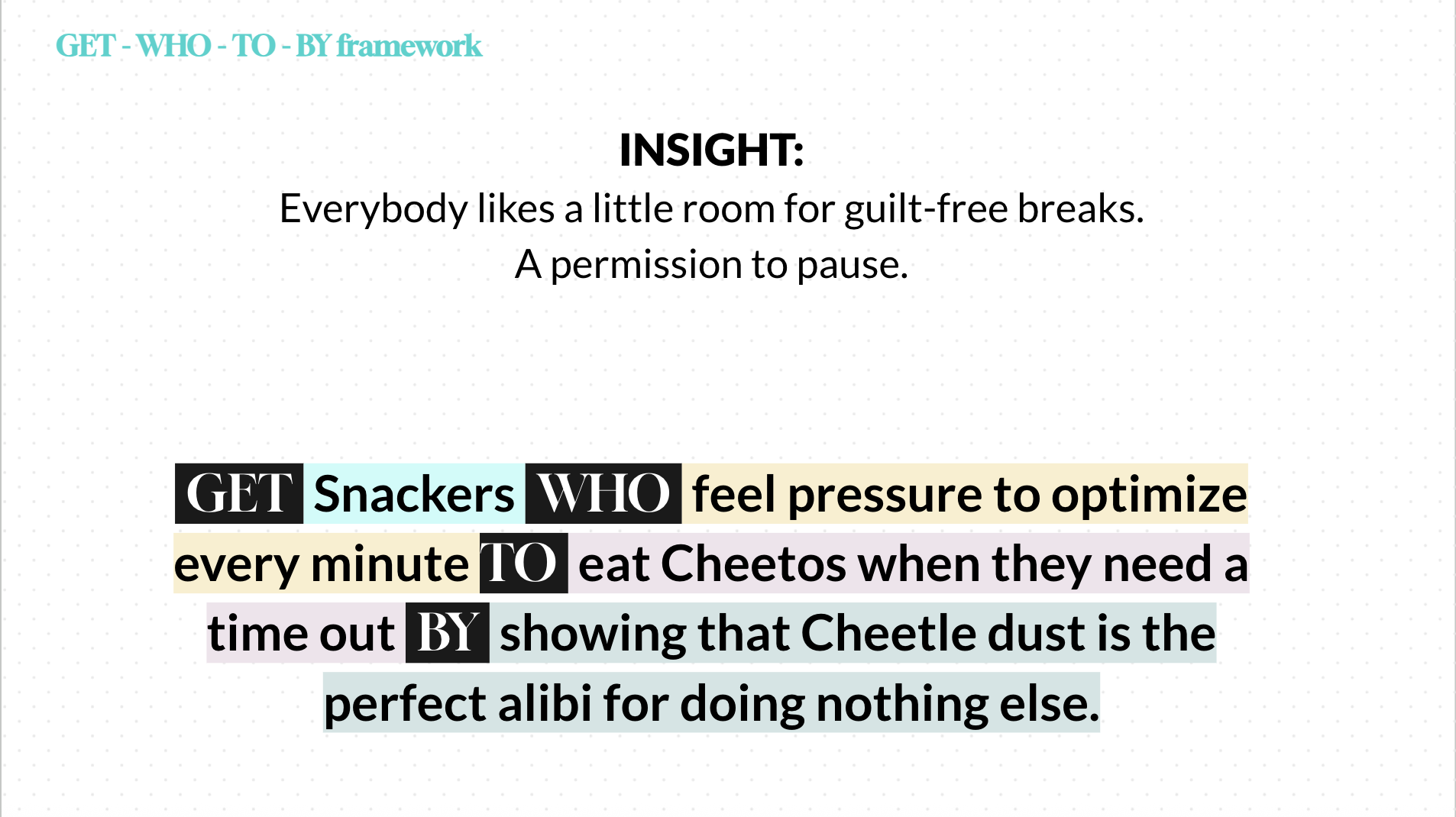
Strategy:
Reclaim the phrase "like a girl" from an insult to a point of pride to build a lifelong emotional bond with the next generation of consumers.
Customer INSIGHT
Young girls experience a massive drop in confidence during puberty. They feel the weight of societal expectations and the subtle insults embedded in everyday language.
Culture INSIGHT
The culture was starting to wake up to the damaging effects of gender stereotypes. There was a growing movement to empower young women and challenge outdated norms.
Strategy:
Reclaim the phrase "like a girl" from an insult to a point of pride to build a lifelong emotional bond with the next generation of consumers.
Company INSIGHT
Always had massive market share but was seen as a functional heritage brand. They needed to move from being a utility to being a brand that girls actually liked.
Category INSIGHT
The feminine hygiene category was obsessed with blue liquid and white pants. It was a sterile, clinical environment that ignored the actual lived experience of puberty.
Customer INSIGHT
Young girls experience a massive drop in confidence during puberty. They feel the weight of societal expectations and the subtle insults embedded in everyday language.
Culture INSIGHT
The culture was starting to wake up to the damaging effects of gender stereotypes. There was a growing movement to empower young women and challenge outdated norms.
Why is Solve the Tension, Not the Category a Great Strategy?

It works because humans are driven by unresolved angst, not by your shiny new 3D-printed widget.
Bypasses the boring feature-comparison death spiral
Real human tension creates instant recall
Makes your brand feel actually necessary
Competitors are too scared of honesty
When you solve a tension, you stop being a line item and start being a lifeline. People don't remember the specs, but they never forget how you made them feel understood in a world that usually ignores them.
! When not to use the "Solve the Tension, Not the Category" Strategy
If you’re selling a generic commodity with zero soul and your legal team has already neutered every interesting thought you’ve ever had, don't bother with this Strategy.
Steps to implement: Stop Playing It Safe and Find the Friction
Identify the unspoken category-wide lie
Every category has a lie. In insurance, it's that they actually care. In beauty, it's that everyone is naturally flawless. Find the thing everyone pretends is true but everyone knows is a load of crap. That’s your entry point. If you can’t find a lie, you aren't looking hard enough at the data. Stop being lazy and dig deeper into the cultural muck.
Stalk your customer’s actual emotional baggage
Get out of the focus group and into their heads. What keeps them up? What makes them feel like a failure? For Always, it was the realization that "like a girl" becomes an insult right when girls need confidence most. You’re looking for a wound, not a "pain point" some intern wrote in a deck. If it doesn't hurt a little, it isn't a real tension.
Pick a side and stay there
You can’t solve a tension by being neutral. You have to take a stand that might actually alienate the people who weren’t going to buy from you anyway. Always took a stand for girls everywhere. It wasn't a suggestion; it was a manifesto. If your strategy doesn't have a backbone, it’s just a generic suggestion, and suggestions don't win Lions or market share.
Translate the tension into a provocation
Turn that emotional knot into a question or a statement that demands a reaction. "Like a girl" was a provocation. It forced people to re-evaluate their own language. Your creative execution should feel like a slap in the face followed by a hug. It needs to be sharp enough to cut through the digital noise. Don't let the art director bury the lead with pretty pictures.
Kill the features in your copy
If you start talking about "absorbent cores" or "patented technology," you’ve already lost the war. Keep the focus on the resolution of the tension. Your product is the tool that facilitates the emotional win. If the product is the hero, you’re doing a demo. If the customer’s feeling is the hero, you’re doing strategy. Stop acting like a brochure and start acting like a brand.
Related Creative Strategy Techniques
Explore Strategy Frameworks
Use these proven frameworks to build your creative strategy and implement the Solve the Tension, Not the Category approach effectively.