Build a Creative Strategy: Start With a Human Flaw

What is the Start With a Human Flaw Strategy and when should I use it?

Look, stop pretending your customers are enlightened monks living in a state of perpetual grace. They aren't. They’re petty, impatient, and occasionally act like absolute toddlers when they haven’t had a snack. This strategy is about finding that ugly, relatable truth and leaning into it. You use it when your brand feels like a soulless corporate brochure and you need people to actually pay attention. It works because it’s the only thing in their feed that doesn’t feel like a lie. If you want to build a real connection, start with the mess. It is the only honest way to market anything.

How to execute this strategy effectively

First, kill your ego. You can't find a human flaw if you're too busy sniffing your own brand purpose. Look for the friction—the moments where life gets annoying or embarrassing. Then, position your product as the only thing standing between them and a total meltdown. Don’t make it a hero; make it a tool. Snickers didn't claim to solve world hunger; they just stopped you from being a jerk to your friends. Keep the tone light but the insight heavy. If it doesn't make the brand manager slightly uncomfortable, you probably haven't gone deep enough into the dirt yet. Now go find some real dirt.

Example: Snickers – "You're Not You When You're Hungry" (2015–2023 iterations)

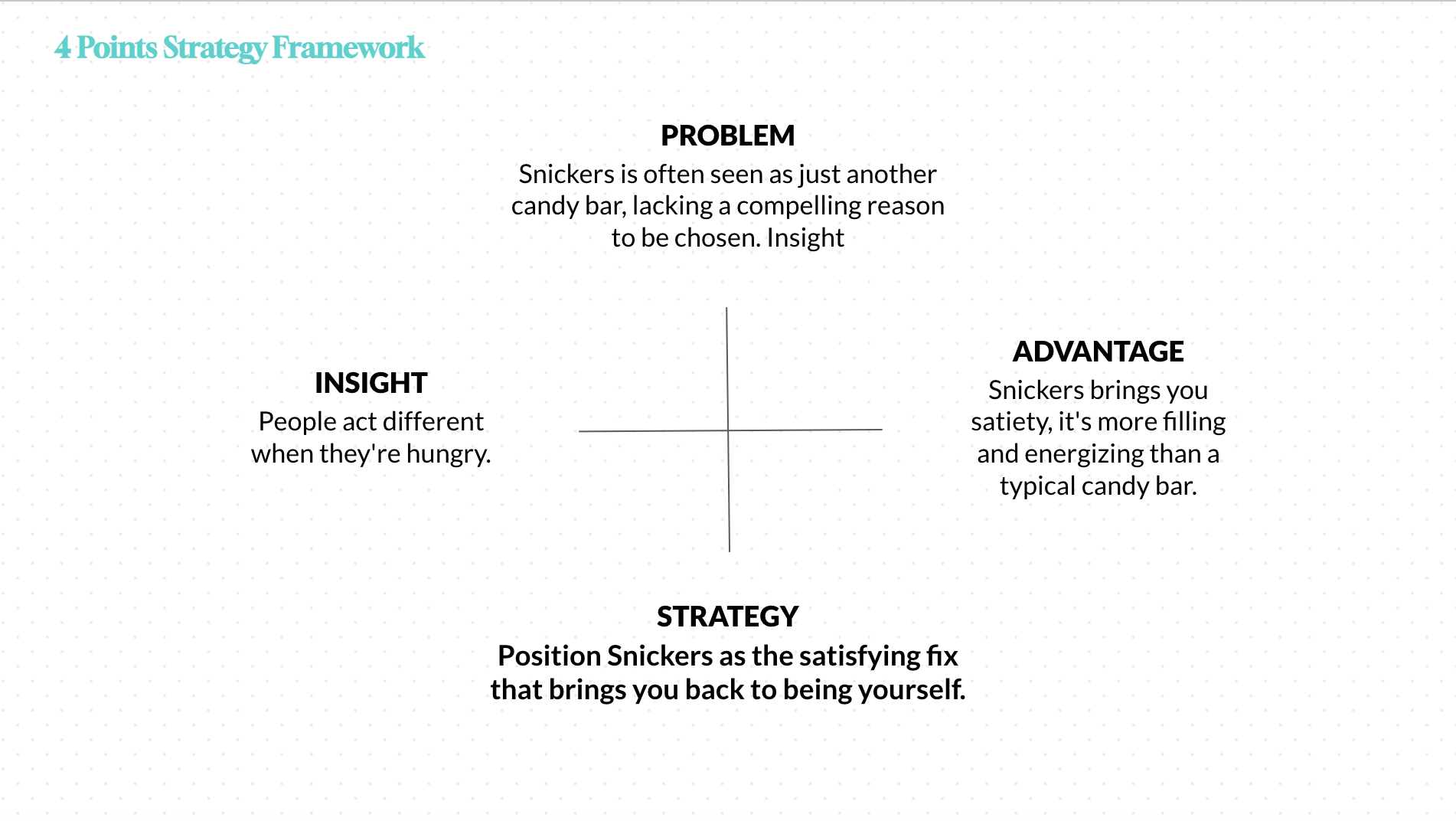
Snickers won the lottery by admitting we’re all unbearable when we’re low on blood sugar. Instead of talking about 'satisfying caramel and nougat,' they showed Joe Pesci and Betty White acting like divas in a football game. The execution was simple: hunger turns you into a different, worse version of yourself. The bar is the fix. It’s a global insight that works in every language because everyone has a friend who turns into a monster by 2 PM.

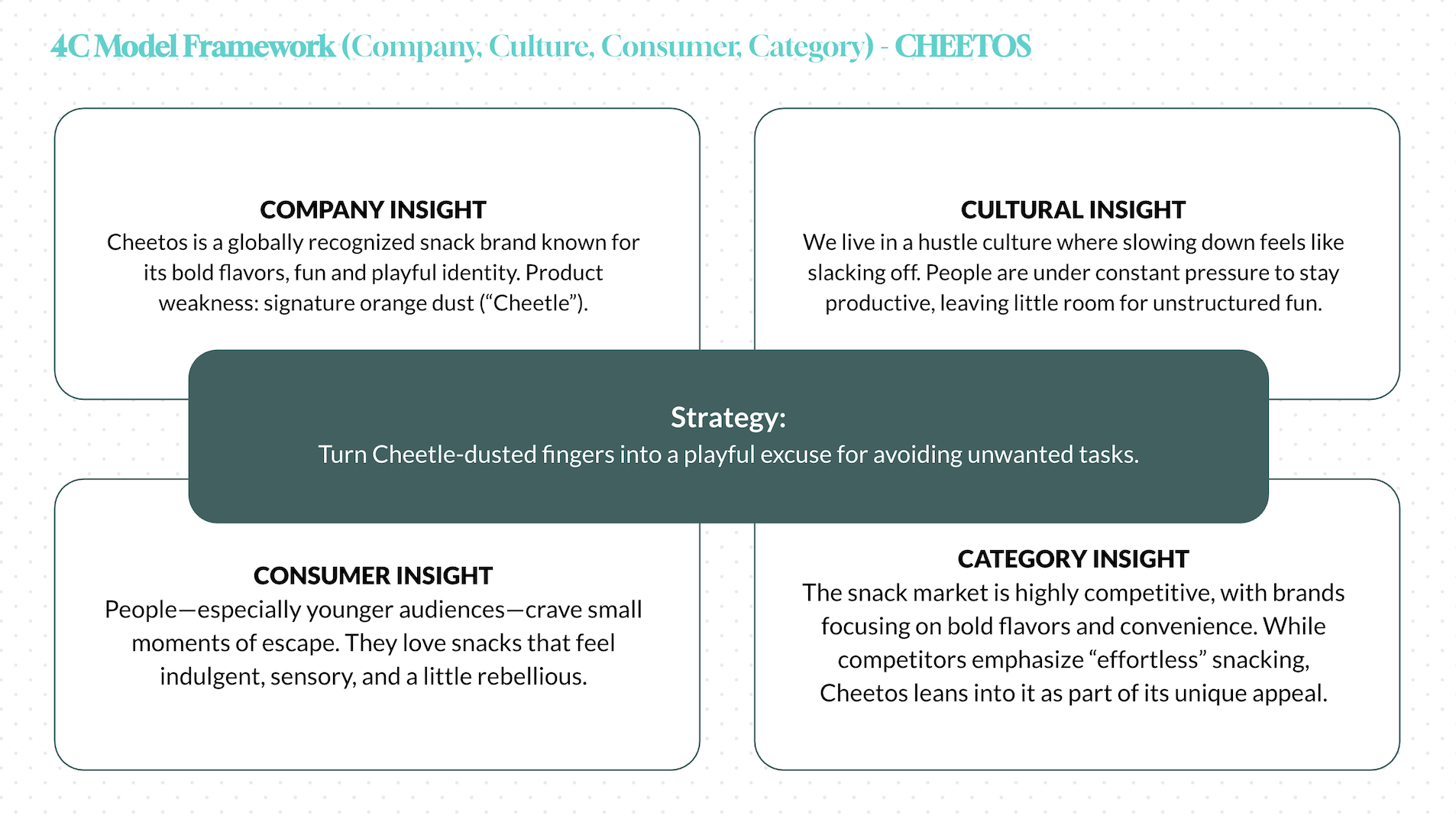
Creative Strategy Deconstructed in 4C Framework

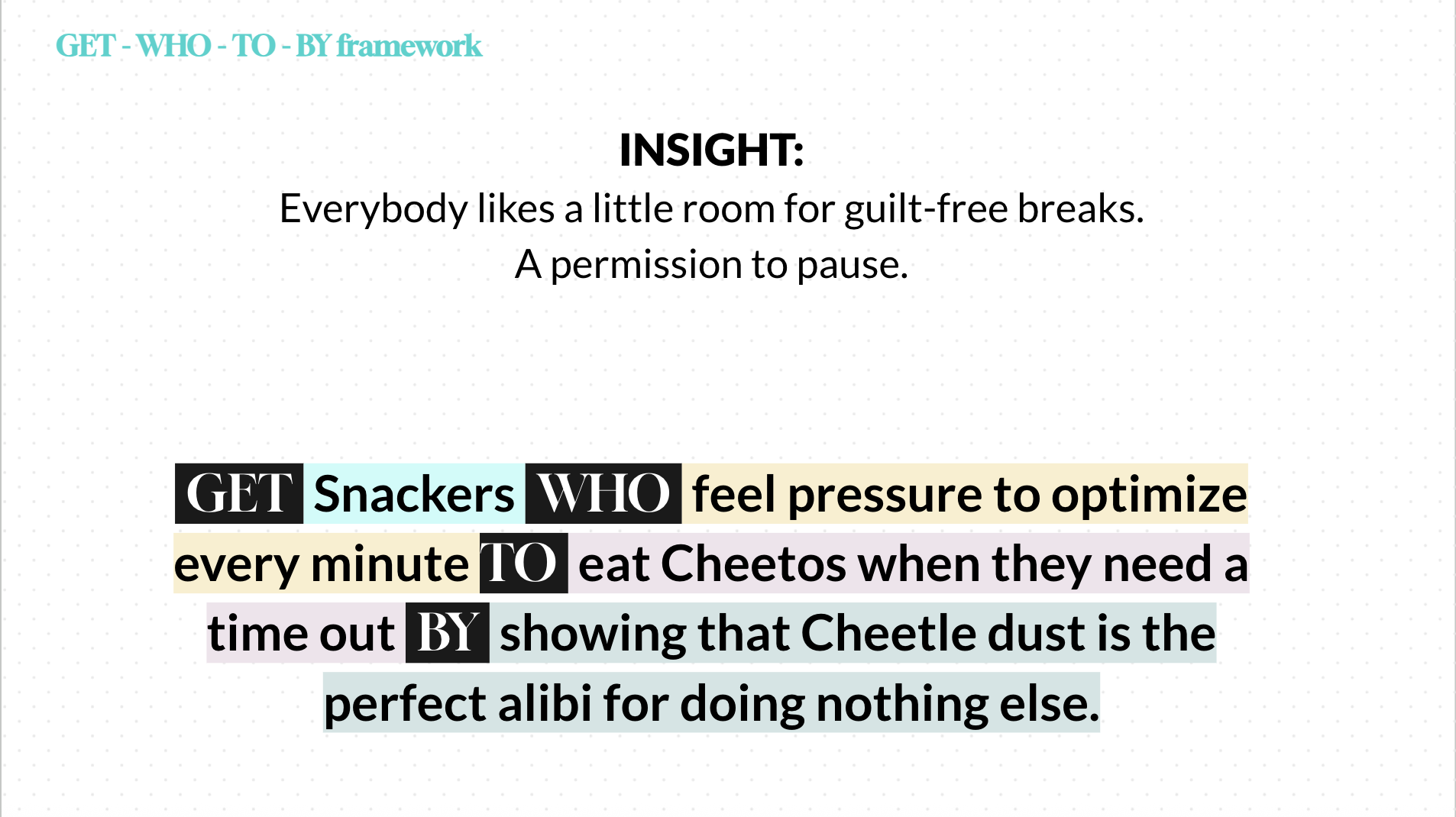
Company INSIGHT

Snickers is a high-calorie, heavy chocolate bar known for being 'substantial.' They have the physical weight to claim they can actually stop hunger in its tracks.

Category INSIGHT

Most candy brands focus on 'joy,' 'whimsy,' or 'sharing moments.' It’s all very sweet, very fake, and completely ignores why people actually grab a bar at a gas station.

Strategy:

Reposition a snack as a functional mood-regulator by dramatizing the social consequences of being hungry.

Customer INSIGHT

People are busy, stressed, and frequently skip meals, leading to 'hangry' outbursts that embarrass them later. They need a quick fix to return to being a functional human.

Culture INSIGHT

We live in a culture of high-performance expectations where being 'off' is a social liability. Tapping into the 'hangry' meme made the brand culturally relevant and highly meme-able.

Why is Start With a Human Flaw a Great Strategy?

It works because humans are suckers for anyone who actually admits the truth about how annoying life is.

Relatability beats shiny perfection every time.

High tension creates high brand recall.

It bypasses the usual consumer skepticism.

Vulnerability makes the brand feel human.

When you stop lying about how perfect your customers are, they might actually start trusting you. It’s about creating a mirror that isn’t photoshopped. People don't want to be inspired by a candy bar; they just want to stop feeling like a gremlin.

! When not to use the "Start With a Human Flaw" Strategy

Don't use this Strategy if you're selling life insurance or funeral services, unless you really want to be the most hated person in the entire room.

Steps to implement: Stop Pretending Your Customers Are Perfect People

1

Find the most annoying human behavior

Look for the things people do that they’re secretly ashamed of. We aren't looking for virtues here; we're looking for the short tempers, the vanity, and the laziness. If it’s something people complain about over a drink, you’re on the right track. Don't look at the data yet; look at the people in the grocery store line losing their minds.

2

Connect the product to the problem

Now, figure out how your product stops that specific flaw from ruining someone's day. For Snickers, the flaw was 'hunger-induced irritability.' The product is the immediate, functional cure. Don't overcomplicate it with 'emotional resonance' nonsense. Just show how the thing you’re selling fixes the mess you just identified. Keep the link direct, obvious, and incredibly simple to understand.

3

Exaggerate the flaw for comedic effect

Real life is depressing; advertising should be a caricature. Take that human flaw and turn the volume up to eleven. If someone is hungry, don't just make them grumpy—make them a literal diva or an ancient cranky lady. This creates the 'aha' moment where the audience recognizes themselves without feeling like they’re being personally attacked by a billion-dollar chocolate corporation.

4

Keep the brand role strictly functional

Your brand isn't a life coach or a spiritual guide. It’s a candy bar. Or a software patch. Or a pair of socks. Let the product do its job and then get out of the way. In the Snickers ads, the bar doesn't give them a new personality; it just brings back the old one. Don't ask for more credit than you deserve.

5

Test it for genuine cringey relatability

Show the idea to someone who doesn't work in marketing. If they laugh and say, 'I know someone like that,' you've won. If they look confused or offended, you’ve either gone too dark or you’re still being too corporate. The goal is a collective nod of 'yeah, we’ve all been there.' If it doesn't feel true, it won't sell anything.

Related Creative Strategy Techniques

Explore Strategy Frameworks

Use these proven frameworks to build your creative strategy and implement the Start With a Human Flaw approach effectively.
We use cookies on our site to enhance your user experience, provide personalized content, and analyze our traffic. Cookie Policy