Develop a Creative Strategy: Use Brutal Honesty
What is the Use Brutal Honesty Strategy and when should I use it?
It’s the strategy for when your brand has a glaring flaw or a reality that everyone knows but nobody mentions. Instead of hiding behind glossy lifestyle shots and vague adjectives like "artisan," you just admit the truth. You use it when you’re the underdog, the budget option, or the ugly duckling. It works because consumers are exhausted by the endless parade of perfection. When you stop lying, they start listening. It’s not about being mean; it’s about being real. If your product is cheap, say it. If your office is a shed, show it. Honesty is the only way to actually cut the noise.
How to execute this strategy effectively
You start by finding the elephant in the room and inviting it to tea. Identify the one thing your competitors are terrified to admit about themselves or the category. Then, own it. Don’t apologize. If you’re the cheap option, don’t call it "value-engineered"—call it cheap. The magic happens when you pair that bluntness with a benefit that actually matters to the customer. You aren't just being rude for the sake of it; you are building a bridge of trust. If you can be trusted to tell the bad news, they’ll believe you when you share the good. It is a high-risk, high-reward power move.
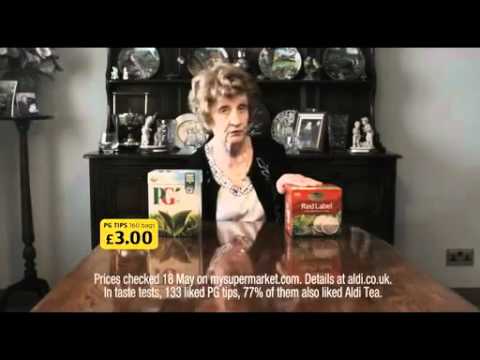
Example: Aldi UK – "Like Brands. Only Cheaper." (2015–2024).
Aldi didn’t pretend their knock-off cereals were "curated experiences." They ran ads showing a famous brand next to their own version with a simple price comparison. The message was blunt: "I like this one, and I like this one. This one is £3.99, this one is £1.89." They admitted they were a budget copycat and turned that "weakness" into a massive strength. It killed the stigma of being a discount shopper by making it the only logical choice for anyone with a brain.
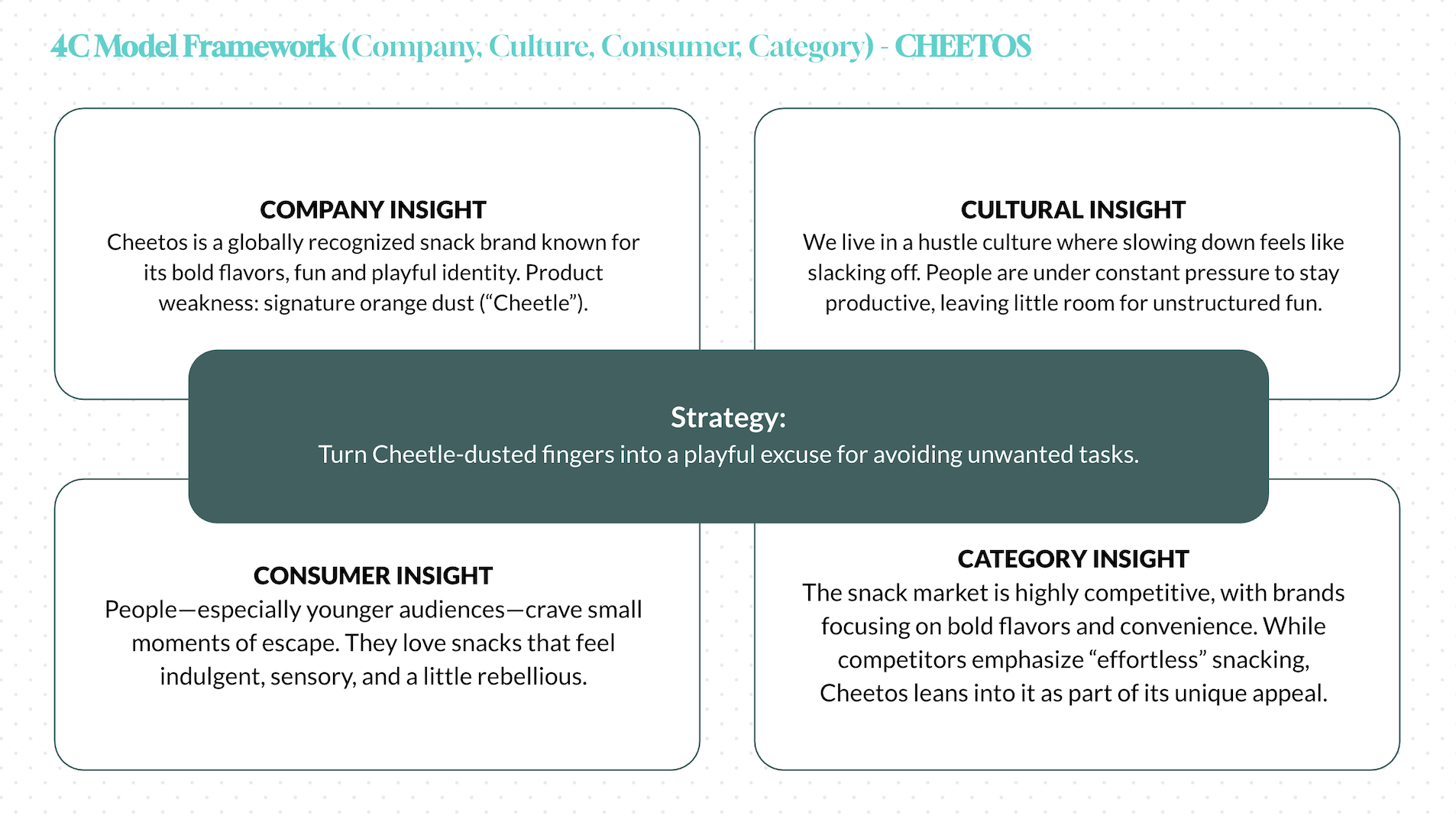
Creative Strategy Deconstructed in 4C Framework
Company INSIGHT
Aldi had a massive range of private-label products that tasted identical to big brands but cost significantly less to produce and sell.
Category INSIGHT
The grocery category was obsessed with brand loyalty and emotional storytelling, making shoppers feel cheap for choosing off-brand items over big names.
Strategy:
Position Aldi’s private labels as the logical, honest alternative to overpriced brand-name vanity.
Customer INSIGHT
Shoppers wanted the quality of big brands but were tired of paying a brand tax during a cost-of-living squeeze and wanted permission to save.
Culture INSIGHT
The rise of the savvy shopper culture where being smart with money became more socially acceptable than being loyal to a legacy logo.
Strategy:
Position Aldi’s private labels as the logical, honest alternative to overpriced brand-name vanity.
Company INSIGHT
Aldi had a massive range of private-label products that tasted identical to big brands but cost significantly less to produce and sell.
Category INSIGHT
The grocery category was obsessed with brand loyalty and emotional storytelling, making shoppers feel cheap for choosing off-brand items over big names.
Customer INSIGHT
Shoppers wanted the quality of big brands but were tired of paying a brand tax during a cost-of-living squeeze and wanted permission to save.
Culture INSIGHT
The rise of the savvy shopper culture where being smart with money became more socially acceptable than being loyal to a legacy logo.
Why is Use Brutal Honesty a Great Strategy?
It cuts through the thick layer of marketing grease that covers everything else.
Instantly builds trust through unexpected vulnerability.
Eliminates the need for expensive fluff.
Forces competitors to defend their overpriced nonsense.
Makes your brand feel human and relatable.
When you stop trying to be everything to everyone, you finally become something to someone. People are smart enough to know you aren't perfect, so stop acting like it. Being the first to point out your own flaws makes you the most credible person in the room.
! When not to use the "Use Brutal Honesty" Strategy
Don't use this Strategy if your product is actually a dangerous piece of garbage; honesty won't save you from a massive class-action lawsuit.
Steps to implement: Stop Lying to Yourself and Your Customers
Find the ugly truth you're hiding.
Identify the core weakness or the boring reality of your product. Is it cheap? Is it slow? Is the packaging ugly? Don't look for a spin; look for the literal fact that makes your marketing team cringe in meetings. This is your gold mine for authenticity.
Kill the corporate adjectives immediately.
Scrub your copy of words like 'bespoke,' 'synergy,' or 'premium.' If you're using this strategy, those words are your enemies. Replace them with the kind of language a normal person uses when they're complaining about something at a pub. Keep the delivery raw and unfiltered.
Connect the flaw to a benefit.
Aldi didn't just say they were cheap; they showed you could get the same taste for half the price. Your honesty needs a point. 'We're slow because we actually care' or 'We're ugly because we spent the budget on the ingredients.' Give them a reason to care.
Pick a fight with the category.
Call out the industry standard for being a lie. If everyone else is selling 'magic' anti-aging cream, tell the audience it's just moisturizer that smells nice. Positioning yourself as the only truth-teller in the room makes everyone else look like a desperate used car salesman.
Commit to the bit entirely.
You can't be 'sort of' honest. If you dip your toe in and then retreat to safety, you'll look like a coward. Go all in on the bluntness across every touchpoint. If the ad is honest but the website is corporate, the whole thing collapses into a mess.
Related Creative Strategy Techniques
Explore Strategy Frameworks
Use these proven frameworks to build your creative strategy and implement the Use Brutal Honesty approach effectively.