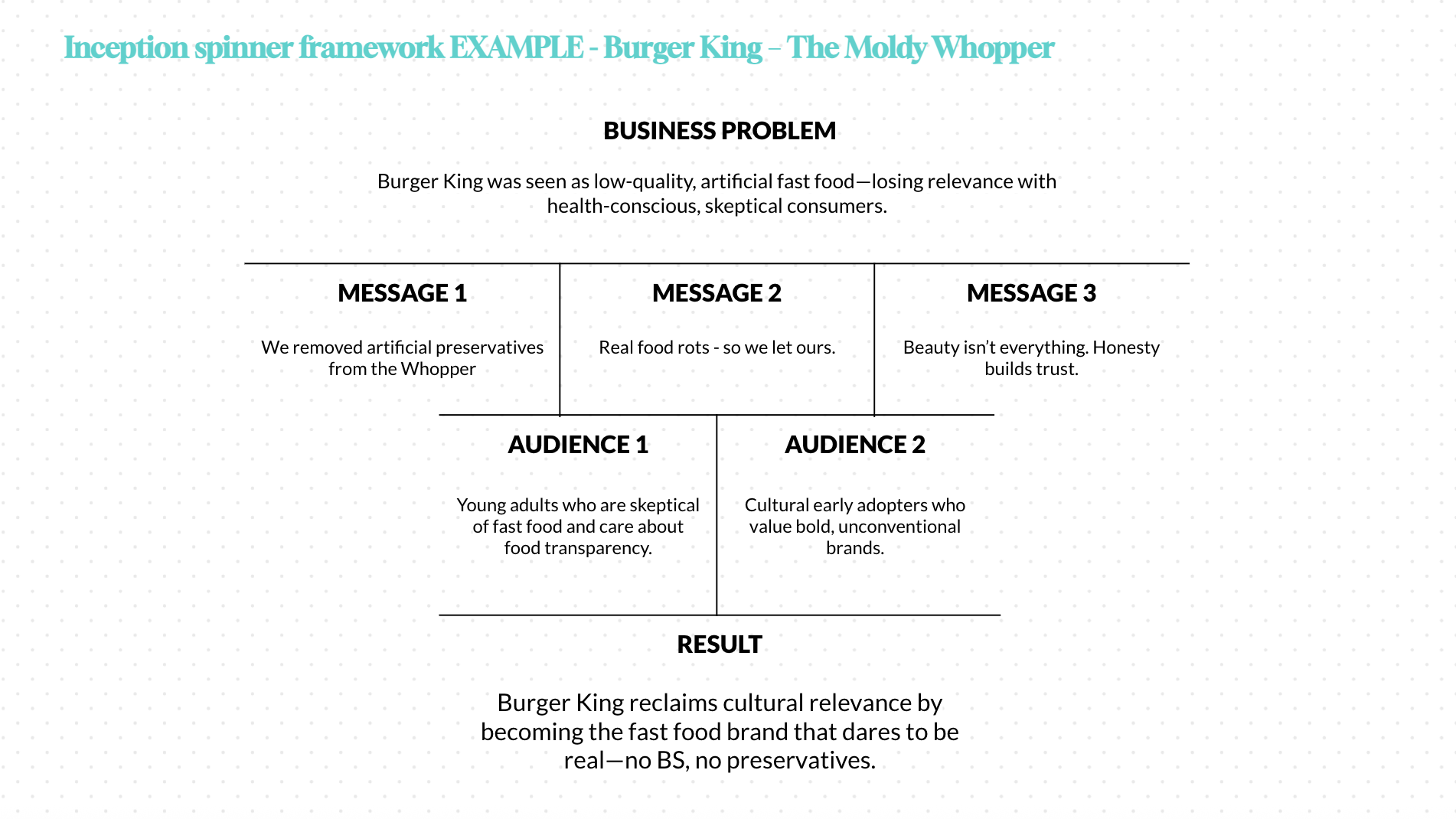
Build a Creative Strategy: Use Radical Simplicity

What is the Use Radical Simplicity Strategy and when should I use it?

Radical Simplicity is the art of murdering your darlings until only the bone remains. It’s about taking a complex mess of brand baggage and distilling it into a single, unignorable point. You use it when your message is getting buried under layers of 'synergy' and 'value adds' that nobody cares about. If you’re facing a PR nightmare or launched a product that’s basically a box of air, this is your lifeline. Use it when you need to be heard over the deafening roar of mediocrity. It’s for when you finally realize that saying five things means you’ve actually said nothing at all. Well, it is now!!

How to execute this strategy effectively

You start by admitting your current deck is a bloated disaster. Stop trying to be everything to everyone. Look at your core truth—the one thing that actually matters—and strip away the adjectives, the buzzwords, and the ego. If you can’t explain the strategy to a distracted intern in ten seconds, you’ve failed. It requires the guts to leave out 'important' features that clutter the brain. Execution is about focus; it’s choosing one hill to die on and making sure it’s the right one. Be brief, be blunt, and for the love of god, stop over-explaining things that should be obvious. Do it today, okay? Right now!

Example: KFC – "FCK Bucket" apology (2018).

In 2018, KFC ran out of chicken in the UK. Instead of a 50-page corporate apology, they rearranged the letters on their bucket to spell 'FCK'. That’s it. One image, three letters, and a full-page ad. It didn't explain supply chains or logistics because customers don't care. It owned the mistake with a wink. By stripping the apology to its rawest form, they turned a massive operational failure into a masterclass in brand loyalty. Simple enough, right? Yes!

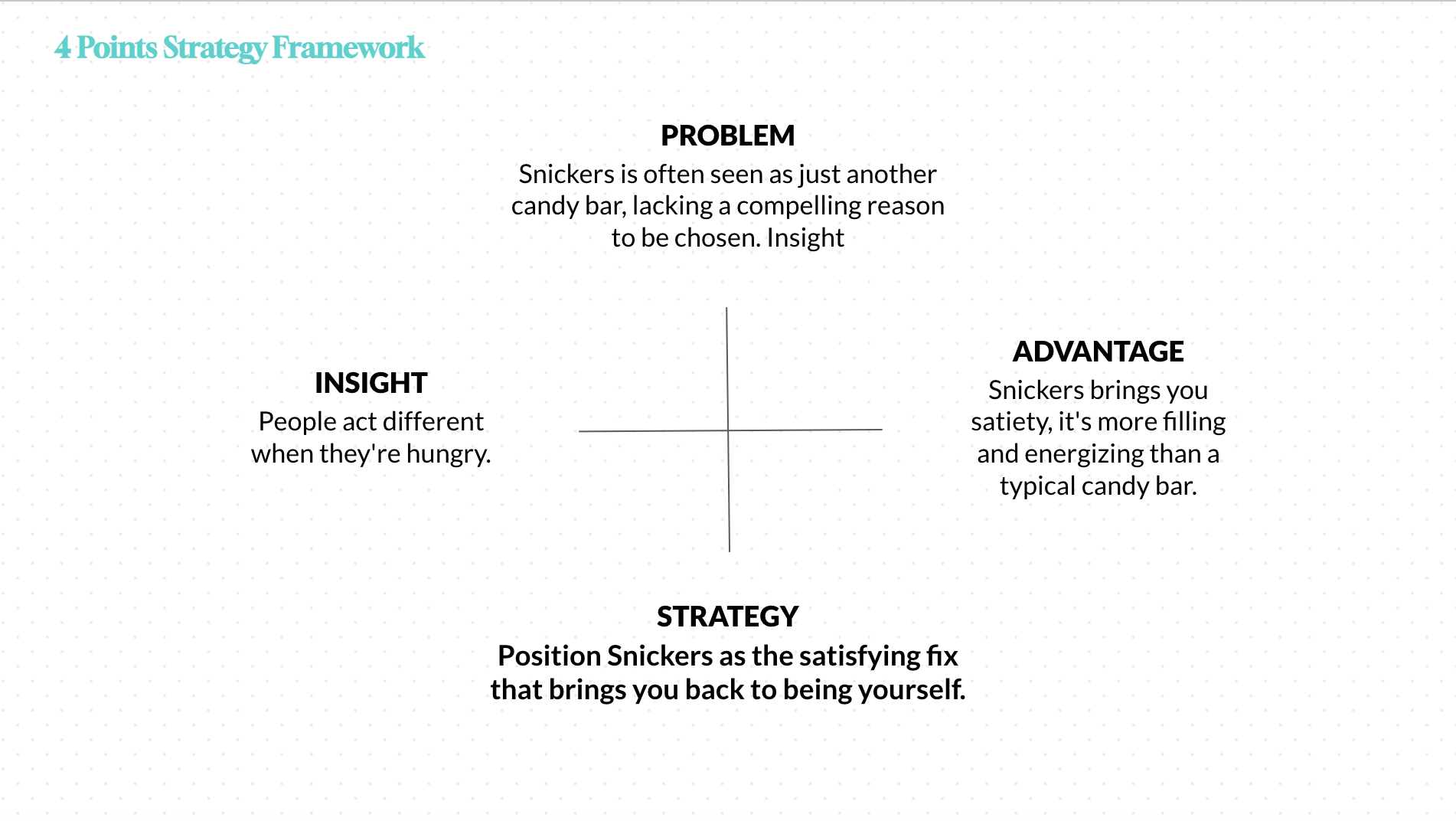
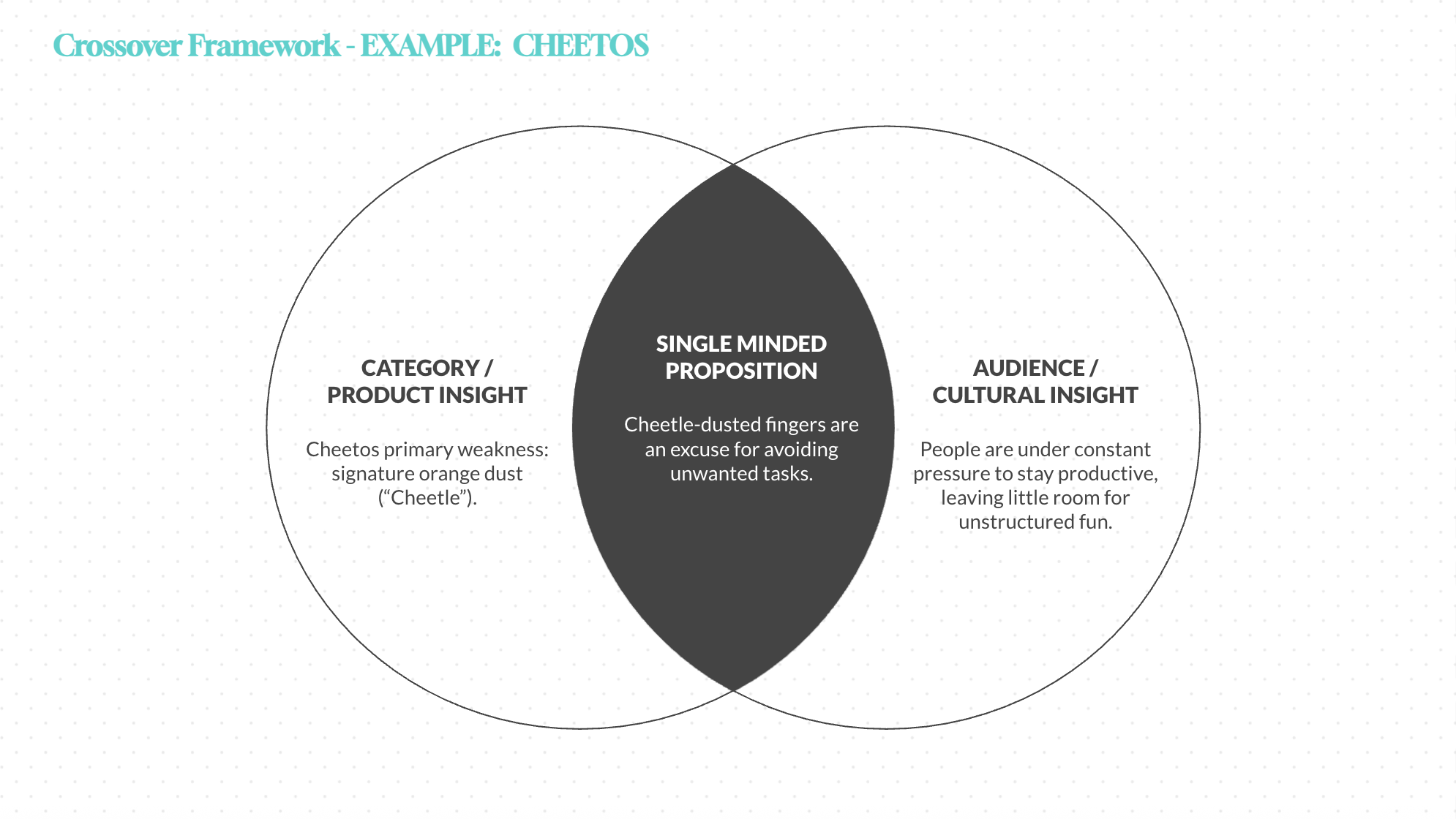
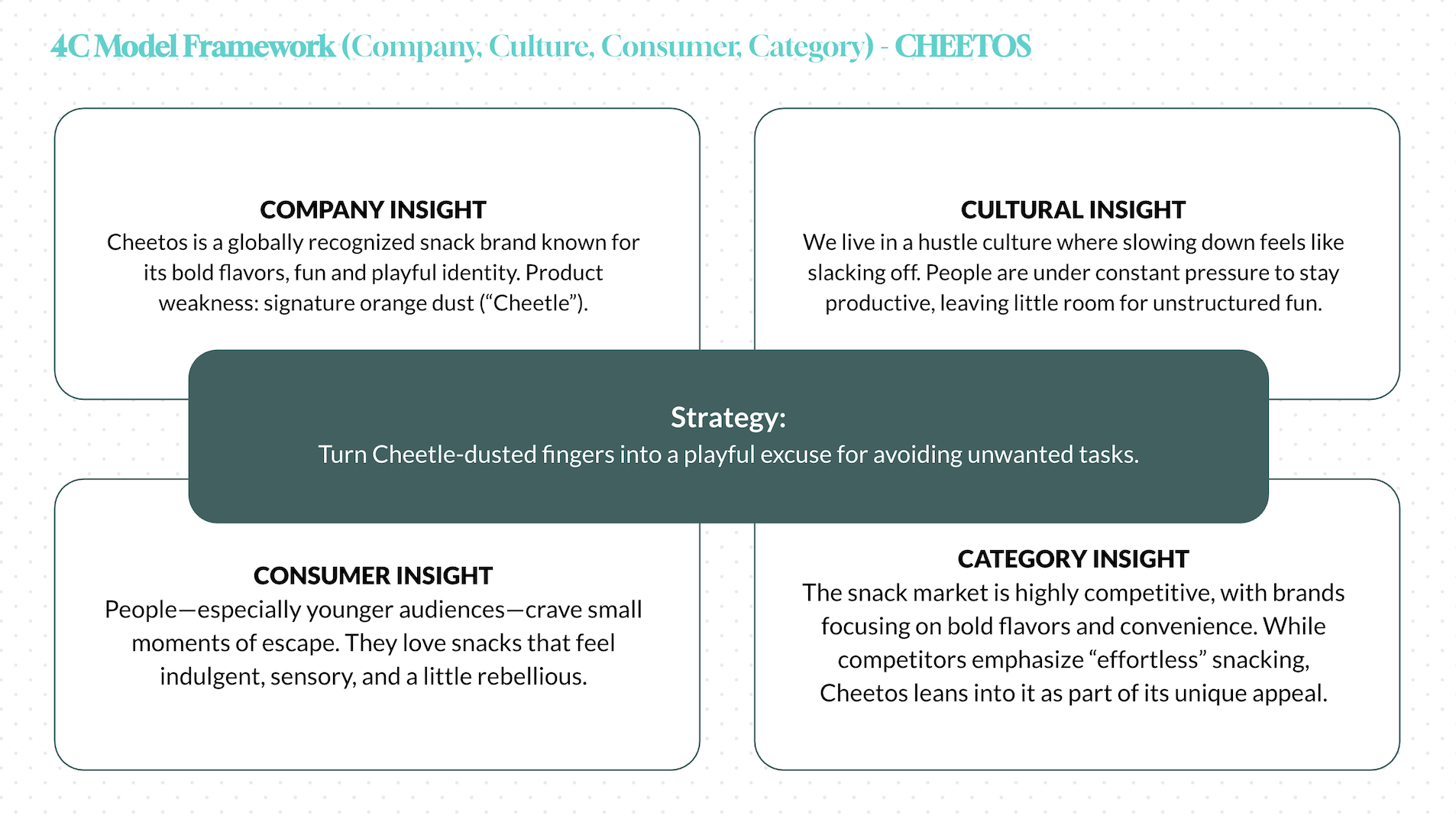
Creative Strategy Deconstructed in 4C Framework

Company INSIGHT

KFC is a massive global brand built on a very specific promise: fried chicken. When they failed at the one thing they exist to do, they had the brand equity to be self-deprecating.

Category INSIGHT

Fast food apologies are usually dry, legalistic, and hidden in the back of newspapers. Most brands try to minimize the error rather than putting it front and center in a bold way.

Strategy:

Own the failure with brutal, humorous honesty to turn a PR crisis into a moment of brand intimacy.

Customer INSIGHT

Hungry people were annoyed and mocking the brand on social media. They didn't want a corporate excuse; they wanted an acknowledgment that the situation was ridiculous and frustrating.

Culture INSIGHT

We live in an era of 'cancel culture' where brands are expected to be authentic. Transparency is the only currency left when you've messed up this badly on a national scale.

Why is Use Radical Simplicity a Great Strategy?

People are distracted and your brand isn't that special, so you might as well get to the point.

Cuts through the endless digital noise

Forces you to own your mistakes

Eliminates the need for confusing explanations

Creates an instant, visceral emotional connection

This works because it respects the audience's time. You aren't asking them to solve a puzzle; you're giving them the answer. It’s the ultimate flex in a world of over-thinkers.

! When not to use the "Use Radical Simplicity" Strategy

If you’re hiding a legal loophole or your Strategy requires a PhD to understand, don't try to be simple—you'll just look like a liar or an idiot.

Steps to implement: Stop over-complicating your life and do this.

1

Identify the single most painful truth.

Look at the mess. In KFC’s case, they had no chicken. That’s the truth. Don’t talk about 'logistical pivots' or 'supply chain disruptions.' Find the one thing people are actually mad about or interested in. If you can't find it, you don't have a strategy; you have a list of complaints. Face the music before you start writing the lyrics.

2

Kill every secondary supporting message.

Your product has twelve features? Cool, nobody cares. Pick the one that doesn't suck and bury the rest. Radical simplicity requires you to be a bit of a jerk to your stakeholders. They’ll want to mention the app update and the new sustainability initiative. Tell them no. If it doesn't serve the core point, it’s just static. Be the filter or be forgotten.

3

Translate the truth into human speak.

Stop using words like 'synergy' or 'optimization.' If you wouldn't say it to a friend over a beer, don't put it in the copy. KFC didn't issue a 'formal statement of regret'; they said 'FCK.' It’s human, it’s blunt, and it’s impossible to misunderstand. Speak like a person who has actually lived in the real world, not a corporate bot.

4

Design for the five-second glance.

If your creative needs a caption to be understood, start over. The 'FCK' bucket worked because you saw it and instantly got the joke. Your audience is scrolling past you at sixty miles per hour. If they have to stop and think, you’ve already lost them. Visuals should carry the weight so the words don't have to do the heavy lifting.

5

Refuse to add the extra logo.

This is where most strategies go to die. Someone will try to add a 'call to action' or a QR code to the 'FCK' bucket. Resist the urge to clutter. The power of this strategy is in the empty space. If the message is strong enough, you don't need to beg for engagement. Trust that your audience isn't as stupid as your boss thinks they are.

Related Creative Strategy Techniques

Explore Strategy Frameworks

Use these proven frameworks to build your creative strategy and implement the Use Radical Simplicity approach effectively.
We use cookies on our site to enhance your user experience, provide personalized content, and analyze our traffic. Cookie Policy