Develop a Creative Strategy: Use the Brand As a Character
What is the Use the Brand As a Character Strategy and when should I use it?
The Use the Brand As a Character Strategy is about ditching the corporate mask and giving your brand an actual pulse, an ego, and probably a few personality flaws. You use it when your brand is about as exciting as unflavored oatmeal and you need people to actually feel something—even if that something is mild concern. It’s for when you want to stop talking AT people and start existing WITH them. If your brand was a person at a party, would they be the one explaining tax law or the one doing a backflip into the pool? If it’s the former, stop reading and go back to your spreadsheets. Okay! Bye.
How to execute this strategy effectively
Execution requires you to stop being a coward and commit to a bit. You define a persona that isn't just a list of 'brand values' but a set of human traits, including the annoying ones. Then, you let that character loose on your channels to react to the world in real-time. It’s not about posting scheduled graphics; it’s about having a perspective that doesn't feel like it was approved by a committee of twelve people in beige suits. If you aren't willing to let your brand be a little weird or divisive, then don't bother. Nobody wants to be friends with a perfectly polished robot. Ever. It's over.
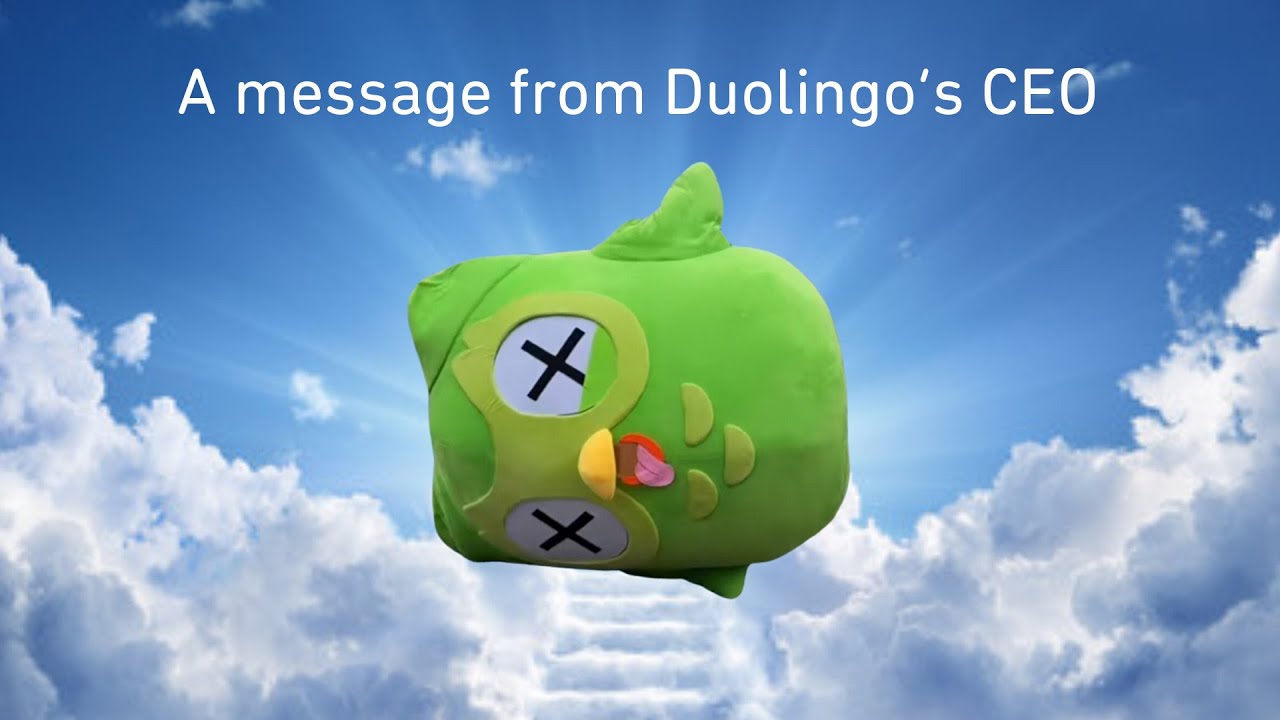
Example: Duolingo – chaotic mascot TikTok era (2021–2024).
Duolingo turned their owl mascot, Duo, from a passive reminder icon into a chaotic, unhinged menace obsessed with Dua Lipa and threatening users who skip their Spanish lessons. Instead of 'please learn,' the strategy became 'learn or else,' delivered through TikToks of a giant green owl suit causing office havoc. It worked because it felt like a real, slightly terrifying person was running the account, not a social media manager with a KPI. Truth.
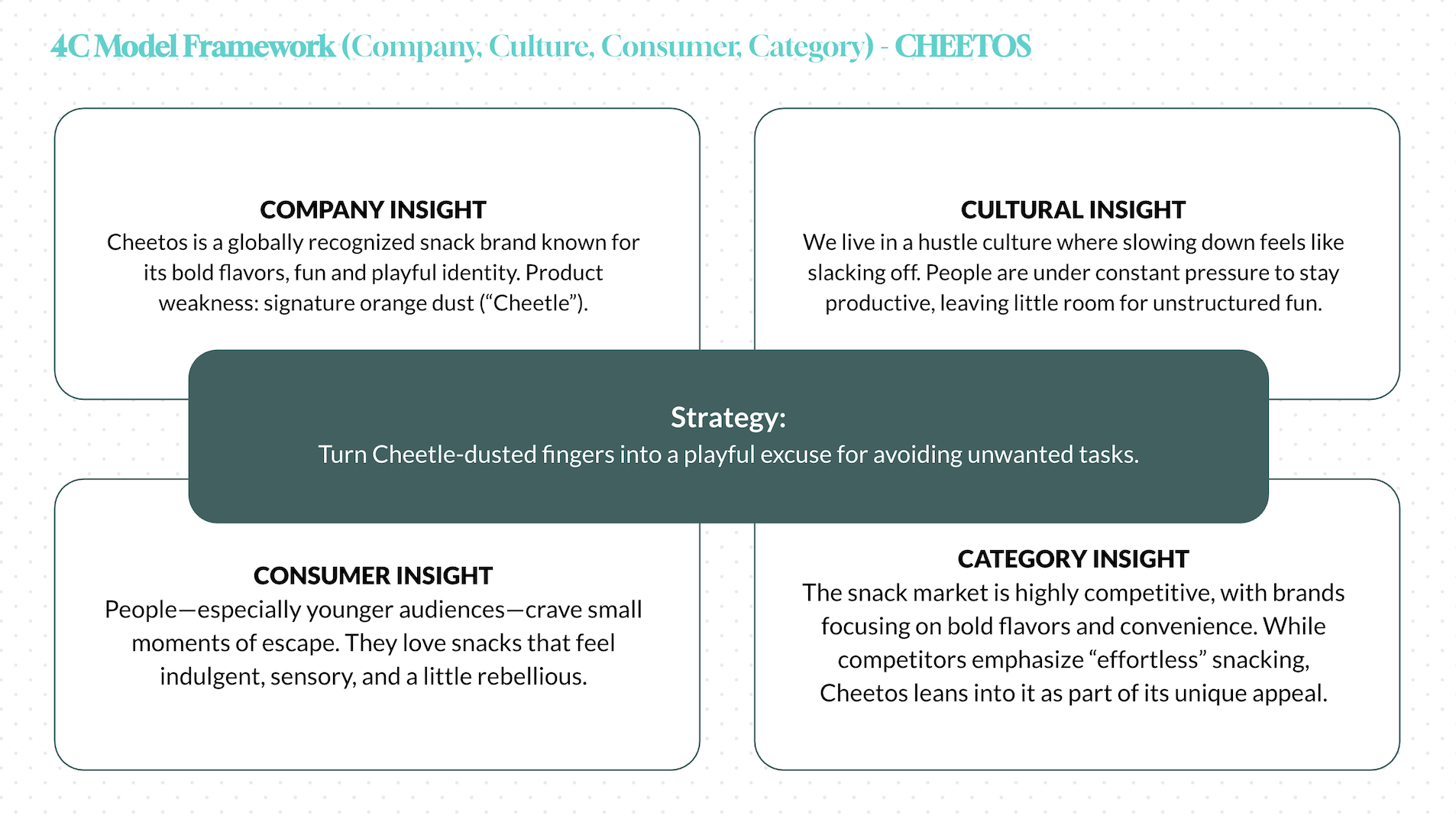
Creative Strategy Deconstructed in 4C Framework
Company INSIGHT
Duolingo had a recognizable mascot that was already associated with nagging users to finish their lessons. They leaned into this existing trait instead of hiding it.
Category INSIGHT
Language apps are usually dry, academic, and encouraging in a very boring way. Most competitors act like a digital textbook that no one wants to open.
Strategy:
Transform the mascot from a utility tool into a chaotic protagonist to drive brand obsession through entertainment.
Customer INSIGHT
Gen Z and Millennials are immune to traditional ads but love chaotic, self-aware humor. They wanted entertainment, not just another notification to ignore.
Culture INSIGHT
TikTok culture rewards authenticity and unhinged content that breaks the fourth wall. The mascot became a meme-lord, tapping into the internet's love for weird characters.
Strategy:
Transform the mascot from a utility tool into a chaotic protagonist to drive brand obsession through entertainment.
Company INSIGHT
Duolingo had a recognizable mascot that was already associated with nagging users to finish their lessons. They leaned into this existing trait instead of hiding it.
Category INSIGHT
Language apps are usually dry, academic, and encouraging in a very boring way. Most competitors act like a digital textbook that no one wants to open.
Customer INSIGHT
Gen Z and Millennials are immune to traditional ads but love chaotic, self-aware humor. They wanted entertainment, not just another notification to ignore.
Culture INSIGHT
TikTok culture rewards authenticity and unhinged content that breaks the fourth wall. The mascot became a meme-lord, tapping into the internet's love for weird characters.
Why is Use the Brand As a Character a Great Strategy?
It turns a faceless entity into someone people actually want to talk to.
Humanizes the boring corporate machine.
Builds genuine emotional connection quickly.
Makes your content actually shareable.
Cuts through the standard marketing noise.
By giving the brand a personality, you stop being a vendor and start being a presence. It’s the difference between a billboard and a friend who actually makes you laugh. Just don't make them too annoying or you'll be blocked.
! When not to use the "Use the Brand As a Character" Strategy
If your brand handles funeral services or nuclear waste disposal, maybe don't give the strategy a try unless you want to be the main character of a PR disaster for all the wrong reasons.
Steps to implement: Here's how you do it without ruining the vibe.
Identify the core personality traits now.
Look, your brand isn't a 'solution.' It’s a person. If it walked into a bar, what would it order? Is it the loud-mouthed regular or the mysterious stranger in the corner? Pick three traits that aren't 'innovative' or 'reliable.' Think 'sarcastic,' 'obsessive,' or 'clumsy.' This is the foundation. Without this, you’re just a logo with a Twitter account, and nobody cares about that.
Draft a list of hard nos.
Define what your character would never say. This is more important than what they would say. A character with no boundaries is just a mess. If your character is a chaotic owl like Duo, they probably won't use corporate jargon or apologize for being 'too much.' Establishing these guardrails keeps the persona consistent so you don't accidentally slip back into boring marketing-speak.
Give the character a specific voice.
Give them a voice that people can actually hear in their heads. Are they using slang? Are they overly formal? Do they use emojis like a boomer or a zoomer? Write a mock conversation between your brand and a customer. If it sounds like a template, burn it. The goal is to make the audience feel like they’re talking to a specific individual, not a department.
Commit to the bit in public.
Stop asking for permission and start posting. A character only lives when they interact with the world. Let them comment on trends, talk back to trolls, and have opinions on things that don't even relate to your product. This is where the magic happens. It’s about building a narrative that people want to follow, not just an ad campaign they want to skip.
Measure engagement over corporate safety metrics.
Ditch the safe metrics. You’re looking for 'vibes' and community sentiment now. Are people making fan art? Are they arguing with the brand? If people aren't reacting emotionally, your character is a cardboard cutout. Monitor how the persona changes the conversation around your brand. If you’re not getting some hate along with the love, you’re probably playing it too safe. Take a risk.
Related Creative Strategy Techniques
Explore Strategy Frameworks
Use these proven frameworks to build your creative strategy and implement the Use the Brand As a Character approach effectively.