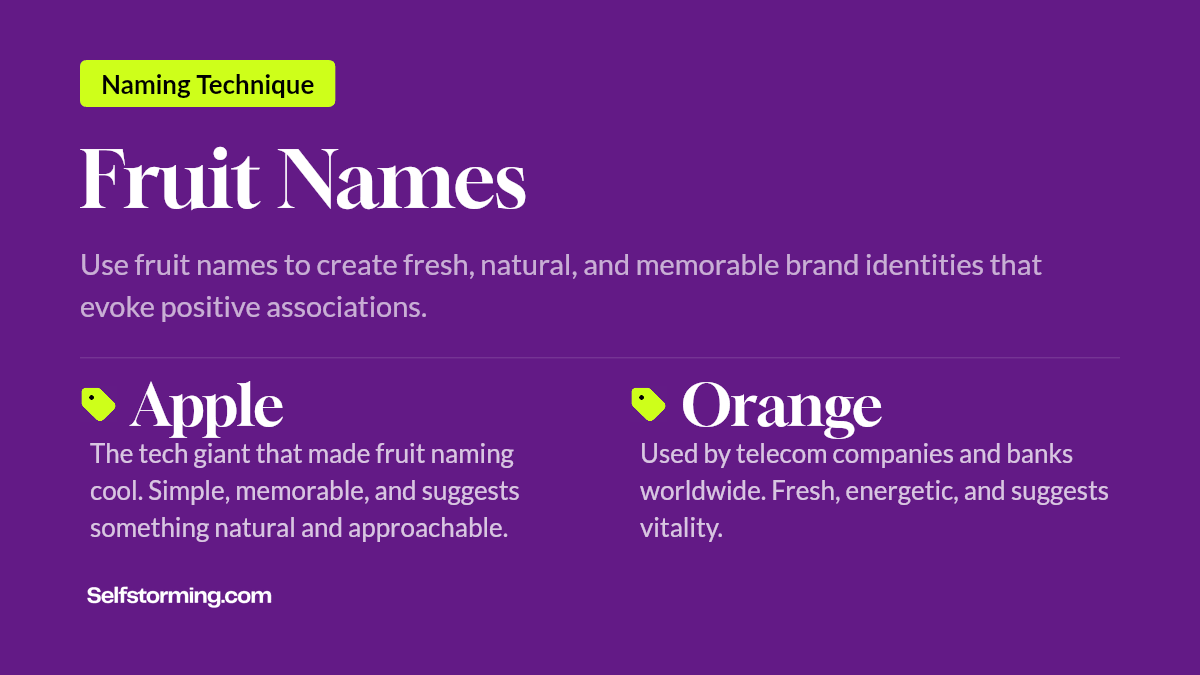
What is Fruit Names naming anyway?
Most names try to sound corporate or clever. Fruit names sound fresh, natural, and instantly recognizable. Instead of calling your tech company "Advanced Technology Solutions" (yawn), you call it "Apple" and suddenly people think simple, beautiful, approachable. That's the power of fruit naming done right.
Fruits are universal. Everyone knows what an apple is. Everyone has positive associations with fresh fruit. When someone hears "Apple," they don't think "technology company" — they think crisp, simple, natural, good for you. That instant positive association is why this naming technique works so damn well for brands that want to feel approachable and human.
Why do fruit names work so well in naming?
Fruit names aren't just cute. They're strategic shortcuts to positive emotions. When done right, they create instant recognition, natural associations, and a friendly brand personality. When done wrong? You get a name that sounds childish or doesn't fit your brand at all.
The trick is picking the right fruit for your brand personality. Apple works for tech because it suggests simplicity. BlackBerry works because berries suggest something small and connected. Orange works for energy and vitality. That's the difference between strategic fruit naming and just picking a random fruit because it sounds nice.
What is Fruit Names naming?
This is the part where you'd get the actual explanation — not fluff. Real naming insights you can use. But that's for subscribers. For everyone else: mystery and sadness.
The technique works by combining specific elements in a way that creates memorable, distinctive brand names. Learn exactly how with a subscription.
Real-World Examples
Apple — The tech giant that made fruit naming cool. Simple, memorable, and suggests something natural and approachable.
Orange — Used by telecom companies and banks worldwide. Fresh, energetic, and suggests vitality.
BlackBerry — The smartphone that made berries sound tech-forward. Suggests something small, powerful, and connected.
Clementine — Used by various brands to suggest something sweet, approachable, and delightful.
Pomegranate — Luxury brands use this to suggest something exotic, premium, and full of value.
Lime — Fresh, zesty, and suggests energy and vitality. Perfect for lifestyle and beverage brands.
Grape — Used to suggest something refined, sophisticated, and premium.
Kiwi — Suggests something unique, exotic, and fresh. Great for brands that want to stand out.
When should you use Fruit Names naming for your brand name or product name?
Creates instant positive associations — everyone loves fresh fruit
Memorable and easy to pronounce — fruits are universal
Suggests natural, healthy, fresh qualities
Works globally — fruits are recognized worldwide
When should you avoid Fruit Names naming for your brand name or product name?
Can sound childish or unprofessional if not chosen carefully
Might limit your brand to certain industries — not every company can pull off fruit naming
Could be too playful for serious or corporate brands
Some fruits have negative associations in certain cultures — do your research
When this technique works best
Creates memorable brand associations
Works well for consumer products
Easy to implement consistently
When to consider alternatives
May not suit all industries
Requires careful consideration
Cultural context matters
Step by step guide
How to use Fruit Names in naming?
Figure out if fruit naming actually fits your brand personality. Not every company can pull off being called "Apple" or "Orange." If you're a serious law firm or financial institution, maybe skip the fruit route.
Choose a fruit that matches your brand values. Apple suggests simplicity. Orange suggests energy. BlackBerry suggests something small and connected. What does your brand stand for? Pick a fruit that reinforces that.
Check cultural associations. Some fruits have negative meanings in certain cultures. Do your homework. What does this fruit mean in your target markets?
Make sure it's not already taken. Apple is taken. So is BlackBerry. But there are plenty of other fruits. Check trademarks. Check domains. Make sure you can actually use it.
Test if it sounds professional enough. Say it out loud. Does "Orange Financial Services" sound right? Or does it sound like a juice company? If it doesn't fit, try a different fruit or a different approach.
Consider how it will age. Will this fruit name still work in 10 years? Will it still feel fresh? Or will it feel dated? Think long-term.
Plan how you'll explain it. People might ask "why are you called Apple?" Have a story. Have a reason. Don't just pick a fruit because it sounds nice.
Identify your brand values and attributes
Detailed explanation of how to execute this step effectively in your naming process.
Brainstorm initial name concepts
Detailed explanation of how to execute this step effectively in your naming process.
Apply the technique systematically
Detailed explanation of how to execute this step effectively in your naming process.
Test and refine your options
Detailed explanation of how to execute this step effectively in your naming process.
Here's an image card for your deck