What is Geographic naming anyway?
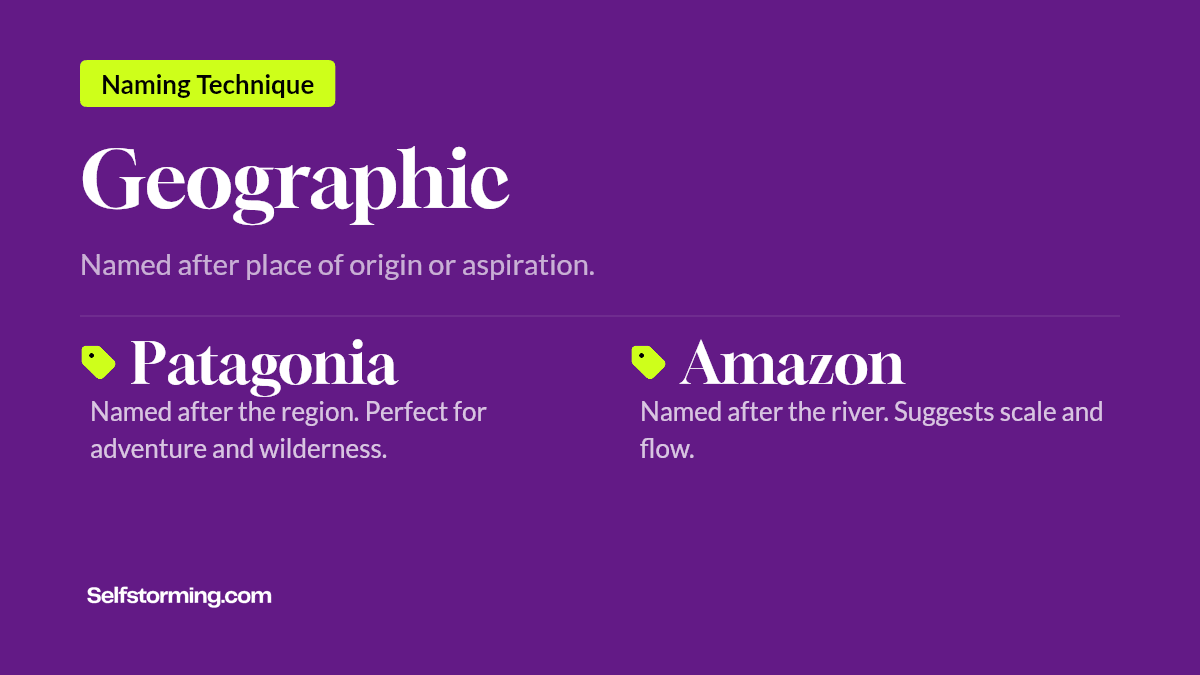
Why invent a place when you can borrow one that already has meaning? Instead of calling your brand 'OutdoorGear' (boring), you name it after Patagonia, and suddenly people think about adventure, wilderness, and a place that represents exploration. That's geographic naming.
Geographic names borrow from places of origin or aspiration. When someone hears 'Patagonia,' they don't think about the company first — they think about the place: wild, remote, adventurous. That borrowed geography is why this naming technique works so damn well for brands that want to communicate place-based identity.
Why do geographic names work so well in naming?
Geographic names come with built-in associations. They have history, meaning, and emotional weight that you don't have to create. When done right, they create instant recognition, depth, and names that feel significant because they're connected to a place. When done wrong? You get a name that feels generic or disconnected.
The trick is picking places that actually fit your brand. Not just random geography, but locations that represent what you stand for. Patagonia works because it suggests adventure. Amazon works because it suggests scale. That's the difference between strategic geographic borrowing and random place picking in naming.
What is Geographic naming?
This is the part where you'd get the actual explanation — not fluff. Real naming insights you can use. But that's for subscribers. For everyone else: mystery and sadness.
The technique works by combining specific elements in a way that creates memorable, distinctive brand names. Learn exactly how with a subscription.
Real-World Examples
Patagonia — Named after the region. Perfect for adventure and wilderness.
Amazon — Named after the river. Suggests scale and flow.
Nike — Named after Greek location. Perfect for victory and triumph.
Montana — Named after the state. Suggests wilderness and freedom.
California — Named after the state. Suggests lifestyle and innovation.
Brooklyn — Named after the borough. Suggests creativity and urban culture.
Texas — Named after the state. Suggests boldness and independence.
Alaska — Named after the state. Suggests wilderness and adventure.
When should you use Geographic naming for your brand name or product name?
Comes with built-in associations — places have meaning
Creates emotional weight — geography has power
Works if place is well-known — recognition is built in
Allows for place-based storytelling
When should you avoid Geographic naming for your brand name or product name?
Can feel generic if place is too common
Might confuse if place isn't well-known
Less flexible than abstract names if your brand changes
When this technique works best
Creates memorable brand associations
Works well for consumer products
Easy to implement consistently
When to consider alternatives
May not suit all industries
Requires careful consideration
Cultural context matters
Step by step guide
How to use Geographic in naming?
Figure out if geography actually fits your brand. Not every company needs a place. If you can't find a good match, maybe skip this route.
Selfstorm places that match your brand story. Use Selfstorm's naming creative session to explore options. What places? What do they represent?
Test if the geography resonates. Good geographic names create connection. If people don't know the place, it won't work. Show someone your name. Do they get the geography?
Make sure it's not too obscure. Geographic names need to be known enough to work. If it's too niche, try again.
Check for negative associations. Does your geography accidentally mean something bad? Does it remind people of something negative? Do your homework.
Plan how you'll honor the place. Geographic names need respect. How will you live up to the place? If you can't answer this, reconsider.
Identify your brand values and attributes
Detailed explanation of how to execute this step effectively in your naming process.
Brainstorm initial name concepts
Detailed explanation of how to execute this step effectively in your naming process.
Apply the technique systematically
Detailed explanation of how to execute this step effectively in your naming process.
Test and refine your options
Detailed explanation of how to execute this step effectively in your naming process.
Here's an image card for your deck