William Patrick Corgan: Aeronaut VR
William Patrick Corgan needed to promote his solo album Ogilala to a modern, tech-savvy audience. He challenged Isobar New York to move beyond the traditional 2D music video format. The goal was to create a groundbreaking digital experience that would deepen fan engagement and establish Corgan as a pioneer in the intersection of music and emerging technology.
Creative Idea
Turned a music video into an interactive 3D world using volumetric holographic capture.
To launch his solo album, Corgan created the first-ever volumetric VR music video, transforming a passive listening experience into an interactive, hand-painted 3D world that allowed fans to physically explore the artist's performance from any perspective.
Capturing a Hologram with 106 Cameras
The Microsoft Mixed Reality Pivot
While William Patrick Corgan initially envisioned a high - budget, "mega - level" production, the creative team at Isobar New York and Viacom NEXT successfully pivoted the project toward a "low - cost, low - key" technological approach. This shift allowed the team to meet the single's release deadline while utilizing the Microsoft Mixed Reality Capture Studio in Redmond. To create a photorealistic 3D hologram of Corgan, the production utilized 106 cameras to record his performance via volumetric capture. This was not just a visual stunt; it solved the technical hurdle of "holographic mesh texture synchronization," ensuring the artist's digital form didn't flicker or break apart in the virtual space.
Hand - Painted Worlds in Unity
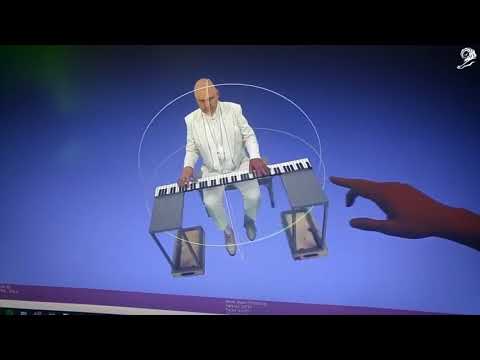 The fantastical environment surrounding Corgan was hand - sculpted by lead artist Danny Bittman using Google Tilt Brush and Google Blocks. This artistic choice meant the entire 3.5 - minute experience could be rendered directly from the Unity game engine. By using Unity’s Cinemachine tool, director David Liu was able to "film" the 2D music video using the exact same assets as the interactive VR version. This marked a historical first: a music video that functioned as both a passive global YouTube release and a room - scale journey where fans could physically walk around the performer.
A Milestone for Digital Craft
The project’s impact extended far beyond the music industry. It led to Isobar being named one of Fast Company’s Top 10 Most Innovative Companies in VR/AR for 2018. Director David Liu also made history as the first Singaporean to win a Grand Prix at Cannes Lions. As Executive Producer Dave Meeker noted, the technology provided a "new palette of inspiration" that allowed Corgan to connect with a tech - forward audience while bypassing traditional physical set costs.
Creative Strategy Deconstructed
Company
Corgan's raw, intimate performance and a willingness to experiment with emerging immersive technologies.
Category
Music videos are typically passive, two-dimensional viewing experiences with fixed perspectives and limited audience agency.
Customer
Fans wanted a deeper, more visceral connection to the artist's emotional world beyond just watching a screen.
Culture
The rapid advancement of VR and volumetric capture allowed for the creation of truly spatial music experiences.
Company
Corgan's raw, intimate performance and a willingness to experiment with emerging immersive technologies.
Category
Music videos are typically passive, two-dimensional viewing experiences with fixed perspectives and limited audience agency.
Strategy:
Shift the music video from a passive broadcast to an interactive, spatial environment that fans can inhabit.
Customer
Fans wanted a deeper, more visceral connection to the artist's emotional world beyond just watching a screen.
Culture
The rapid advancement of VR and volumetric capture allowed for the creation of truly spatial music experiences.
Strategy:
Shift the music video from a passive broadcast to an interactive, spatial environment that fans can inhabit.
Results
The campaign for 'Aeronaut' received significant critical acclaim, being described as the highest quality volumetric video seen by ScreenAnarchy. Rolling Stone called it a 'trippy cosmic voyage', while UPROXX described it as 'stunning... surreal'. The project successfully demonstrated the potential of volumetric video and mixed reality in music video production, creating a completely immersive and unprecedented virtual reality experience.
106
cameras used for capture
10 GB/s
data capture rate
1
unprecedented VR experience
Strategy Technique
Break a Category Convention
Music videos have been fixed 2D frames for decades. By moving the medium into a room-scale, interactive game engine, the campaign redefined how fans consume and inhabit an artist's vision.
Explore Technique
Creative Technique
Cutting-edge Tech
The campaign utilized 106-camera volumetric capture and Unity-rendered environments to create a photorealistic hologram. This allowed the audience to interact with the performance in a way impossible with traditional video.
Explore Technique
Craft Breakdown
This campaign's craft is exceptional due to its pioneering use of volumetric video and mixed reality technology to create a truly immersive and interactive music video experience.
The use of 106 cameras and volumetric video capture at Microsoft's Mixed Reality Capture Studio is a groundbreaking technical achievement.
The seamless integration of 2D content created in Google Tilt Brush within a 3D Unity environment demonstrates a high level of digital artistry.
The surreal and ethereal visual style of the music video's world is beautifully realized and emotionally resonant.
The innovative use of VR tools to 'film' within a 3D space allows for unique and dynamic perspectives.
“The magic of 'Aeronaut' comes from the synergy between cutting-edge capture technology and creative digital tools like Tilt Brush and Unity, which together redefine the possibilities of the music video format.”