City of Chicago: Boards of Change
The City of Chicago and When We All Vote tasked FCB Chicago with increasing voter registration and turnout in historically disenfranchised, low-turnout neighborhoods. Amidst the 2020 civil unrest, they needed to find a way to channel the raw energy of the Black Lives Matter protests into lasting democratic engagement, convincing skeptical residents that their votes could actually drive systemic change.
Creative Idea
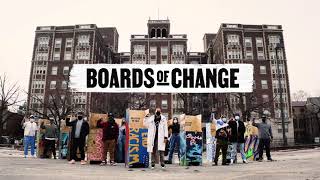
Plywood boards from protest-barricaded storefronts were repurposed into functional voter registration booths.
Repurposing the plywood boards used to barricade storefronts during Black Lives Matter protests into functional voter registration booths, turning symbols of community exclusion and unrest into powerful tools for systemic democratic change and civic empowerment.
From Plywood Barricades to Presidential Voting Booths
Turning Anarchy into Infrastructure
The campaign represented a profound semiotic shift, taking plywood - a material traditionally symbolizing boarded-up businesses and civil unrest - and transforming it into functional public infrastructure. This "from destruction to construction" approach helped Chicago achieve its highest voter turnout in over 20 years for the 2020 U.S. Presidential Election. Beyond the ballot box, the boards served a dual purpose: they were first deployed to drive participation in the 2020 U.S. Census to ensure equitable federal funding before being converted into mobile voting booths.
The Cold Call Strategy
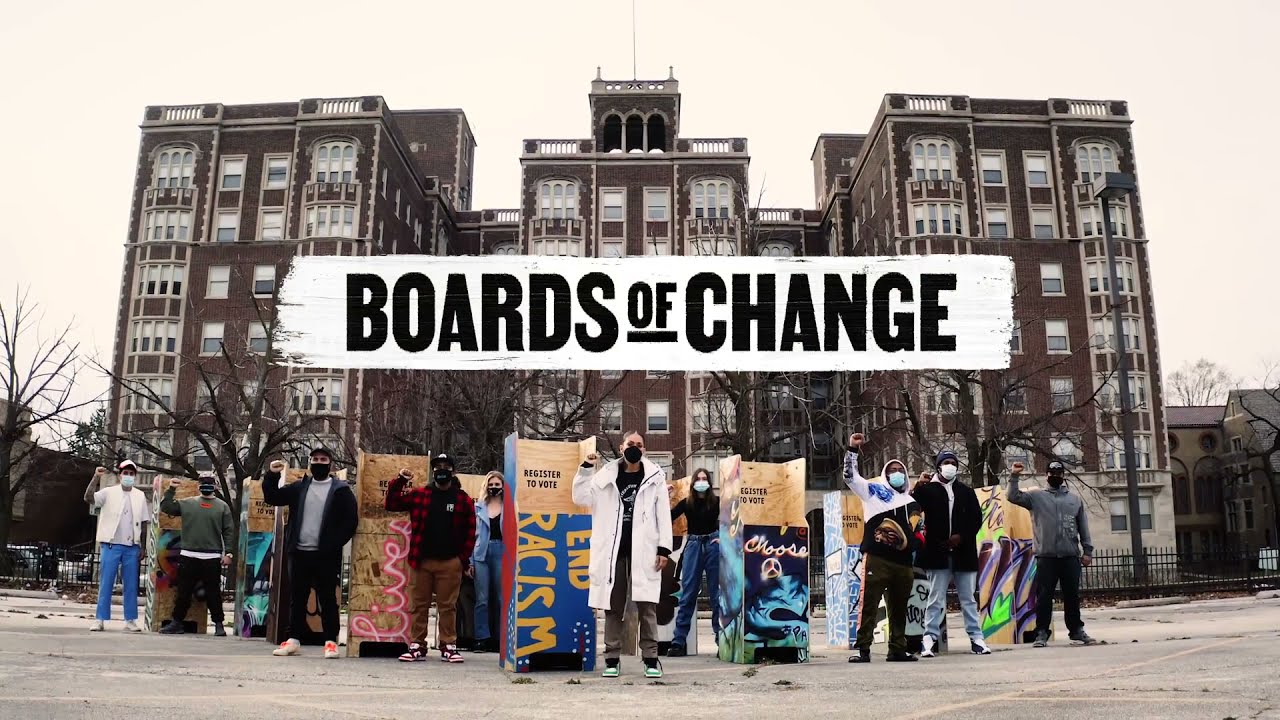 To maintain absolute authenticity, FCB Chicago and its experiential arm FCBX refused to commission any new art. Instead, producers Carolina Velez and Chelsea Ferguson spent weeks scouring the streets of the South and West sides, documenting boards and hunting for artist signatures or Instagram handles. The production team utilized a "cold call" strategy, DMing small business owners and local artists like Damon Reed and Jamiah Calvin for permission. If an artist wasn't 100% on board, the agency considered the piece a "dead end" to ensure the project remained a grassroots community effort rather than a corporate fabrication.
A Defiant Digital Bridge
While QR codes are ubiquitous today, the project was a pioneer in using the technology to bridge physical protest art with digital government forms. In case study footage, the booths are described as a "big F.U." to those attempting to suppress Black voters. This defiant spirit was championed by then-Mayor Lori Lightfoot, who launched the initiative alongside Andres Ordonez and Fred Levron. The project eventually ranked as the #1 campaign in the world for social responsibility, proving that government entities could utilize high-level creative strategy to drive measurable civic action.
Creative Strategy Deconstructed
Company
The City of Chicago had the authority to facilitate voting and access to the physical remnants of the city's civil unrest.
Category
Government voter drives often rely on generic, uninspiring paperwork and sterile environments that fail to connect with marginalized communities.
Customer
Disenfranchised citizens felt their voices were ignored on the streets and doubted that the system would ever represent their interests.
Culture
The 2020 Black Lives Matter movement created a surge of civic energy and a visual landscape of protest art on plywood.
Company
The City of Chicago had the authority to facilitate voting and access to the physical remnants of the city's civil unrest.
Category
Government voter drives often rely on generic, uninspiring paperwork and sterile environments that fail to connect with marginalized communities.
Strategy:
Convert the physical artifacts of social friction into functional infrastructure that facilitates the resolution of that friction.
Customer
Disenfranchised citizens felt their voices were ignored on the streets and doubted that the system would ever represent their interests.
Culture
The 2020 Black Lives Matter movement created a surge of civic energy and a visual landscape of protest art on plywood.
Strategy:
Convert the physical artifacts of social friction into functional infrastructure that facilitates the resolution of that friction.
Results
The campaign achieved significant impact, contributing to Chicago seeing a record number of registrations and a record number of voters in the 2020 election. The initiative received widespread earned media coverage from major outlets including NBC News, ABC News, The New York Times, Forbes, and Fox 32. It was described as 'Inspiring America' and a 'symbol of change.' The physical booths were eventually inducted into the DuSable Museum of African American History as part of a permanent historical collection.
Record
voter registrations in Chicago
Record
voter turnout in Chicago
Permanent
Museum exhibition at DuSable
Strategy Technique
Turn Brand Values Into Action
Instead of just making a statement about equality, the City of Chicago created a tangible infrastructure that actively facilitated the democratic process for disenfranchised communities.
Explore Technique
Creative Technique
Turn Message into Product
It physically transformed the medium of the protest - the plywood boards and their messages - into a functional product that enabled the very change the protesters were demanding.
Explore Technique
Craft Breakdown
The campaign's brilliance lies in its physical transformation of a symbol of civil unrest into a tool for systemic change, elevated by exceptional art direction and experiential design.
Repurposing protest plywood into functional voter booths created a tangible, localized solution to voter registration in the very communities feeling most silenced.
The visual identity seamlessly integrates raw street art with a clean, authoritative stencil aesthetic that commands respect and action.
The use of macro shots during the construction phase elevates the physical labor of the campaign to an art form.
Strategically placing the booths in high-traffic minority neighborhoods ensured the campaign reached the specific audience it intended to empower.
“The synergy between the raw street art (Art Direction) and the utility of the booths (Experiential Design) turned a temporary protest artifact into a permanent historical statement.”