City of Chicago - Boards of Change
The City of Chicago wanted FCB Chicago to address persistently low voter turnout in disenfranchised neighborhoods, especially among Black Americans, following the Black Lives Matter protests. The challenge was to transform symbols of social unrest into tools for civic engagement. The brand needed to empower these voices, inspiring them to register and vote, ultimately increasing participation and fostering systemic change.
Creative Idea
Chicago converted Black Lives Matter protest boards into voting booths, channeling street demands into electoral power.
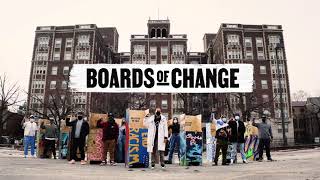
The City of Chicago, through the Boards of Change campaign, transformed plywood boards from Black Lives Matter protests into voting booths, turning symbols of social unrest into tools for civic engagement. By repurposing these boards with messages of unity and justice, the campaign inspired residents in low-turnout neighborhoods to register and vote, empowering disenfranchised voices to create systemic change.
Turning Protest Plywood into Democratic Architecture
From Barricades to Ballots
The production team at FCB Chicago made a strategic, non-negotiable decision to maintain absolute authenticity: they refused to commission any new artwork. Instead, they spent months conducting street-level research to build trust with activists and business owners. Every piece of plywood used to construct the booths was a physical artifact salvaged from the streets of Chicago following the George Floyd protests. These boards, originally used to protect storefronts, were already covered in organic messages of unity and cries for justice. By repurposing these "negative" symbols of boarded-up windows into functional, portable architecture, the campaign met residents directly in their own neighborhoods rather than relying on traditional billboards.
A Record Breaking Civic Surge
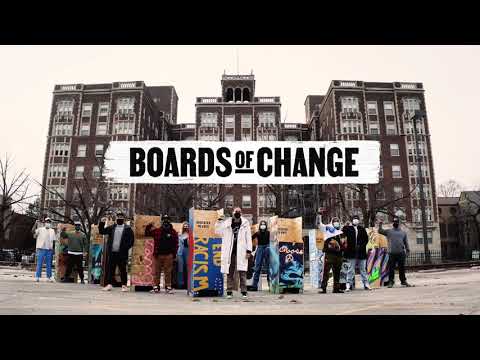 The initiative drove historic engagement during a dual-crisis year of civil unrest and COVID-19. Illinois ranked #1 among states with over 9 million people for census response, and the city achieved a record number of voter registrations. Through a partnership with Michelle Obama’s "When We All Vote," the booths utilized QR codes to facilitate registration. Of those who registered via the platform, 71% were young people and people of color, achieving an 83% turnout rate - surpassing the national average by 20 points.
The Fifty Foot Mural
Before being disassembled into individual booths, the project began as a massive 50-foot-by-15-foot mural. The construction involved production partners Lord+Thomas, Flo Creative, and Absolute Production Services, with music by JSM Music. While the "Census Cowboy" became a viral sensation elsewhere in the city, Boards of Change provided the structural backbone for the movement, eventually seeing its materials preserved as historical artifacts of the 2020 social justice movement.
Creative Strategy Deconstructed
Company
The City of Chicago possessed the administrative authority to facilitate voter registration and access to the physical plywood artifacts recovered from its own streets.
Category
Public service announcements typically use generic 'get out the vote' slogans or celebrity endorsements that lack a visceral connection to the specific local struggles of the community.
Customer
Disenfranchised residents felt their voices were powerful in the streets but doubted that the bureaucratic act of voting could actually deliver the justice they were demanding.
Culture
The 2020 social justice movement turned urban plywood barricades into a global visual language of protest, signaling a shift from civil unrest toward a demand for systemic change.
Company
The City of Chicago possessed the administrative authority to facilitate voter registration and access to the physical plywood artifacts recovered from its own streets.
Category
Public service announcements typically use generic 'get out the vote' slogans or celebrity endorsements that lack a visceral connection to the specific local struggles of the community.
Strategy:
Convert the physical artifacts of street activism into functional voting tools to bridge the gap between protest and policy.
Customer
Disenfranchised residents felt their voices were powerful in the streets but doubted that the bureaucratic act of voting could actually deliver the justice they were demanding.
Culture
The 2020 social justice movement turned urban plywood barricades into a global visual language of protest, signaling a shift from civil unrest toward a demand for systemic change.
Strategy:
Convert the physical artifacts of street activism into functional voting tools to bridge the gap between protest and policy.
Results
The video highlights the significant impact of the "Boards of Change" campaign on voter registration and turnout in Chicago during a critical election period. - The campaign was instrumental in making registering easier than ever. - It mobilized minority neighborhoods to vote. - It inspired the nation, gaining significant media coverage from outlets like NBC News, The New York Times, Forbes, FOX 32 News, ABC News, WBBM Newsradio, and Univision. Specific quotes from media include: - NBC News: "Marking your 'X' has never been more colorful or perhaps meaningful." - The New York Times: "Chicago is using a symbol of unrest to build a symbol of change." - ABC News: "It will bring attention to the power of voting." - WBBM Newsradio: "Remnants of this summer's looting and rioting in downtown Chicago have been repurposed into artwork aimed at encouraging people to vote." - Marsel Hernandez, Chicago Board of Elections Chairman: "It represents the hope, optimism and determination of the people of the city of Chicago." - Chicago saw a record number of registrations. - Chicago saw a record number of voters. - The "Boards of Change" exhibition is now on display at The DuSable Museum of African American History, signifying its lasting cultural and historical impact.
Record number
registrations
Record number
voters
National attention
media coverage
Strategy Technique
Turn Brand Values Into Action
The City transformed protest boards into voting booths, tangibly demonstrating its commitment to civic engagement and empowering disenfranchised voices. This action proved their values rather than just stating them.
Explore Technique
Creative Technique
Unexpected Utility
The campaign repurposed protest boards into voting booths. This gave existing objects an unexpected and empowering utility, turning symbols of unrest into tools for change.
Explore Technique
Craft Breakdown
This campaign's craft is exceptional for its brilliant idea of transforming symbols of unrest into powerful tools for civic engagement, brought to life through striking public art and strategic community activation.
The visual transformation of raw plywood into compelling, message-driven artworks, employing powerful aesthetics to convey themes of justice, hope, and the urgency of voting, is visually arresting and purposeful.
The thoughtful design of the boards includes the effective integration of typography for clear messaging and legible QR codes, making them both visually impactful and functionally seamless as voter registration tools.
“The campaign's magic comes from the seamless synergy between the brilliant central idea, its powerful artistic execution, functional design, and strategic physical placement to activate communities.”