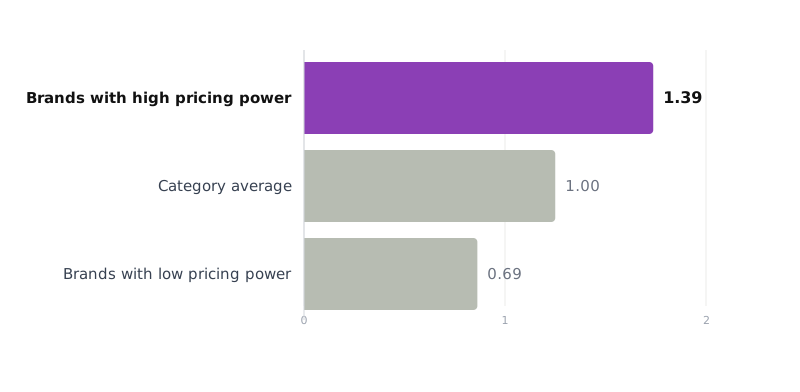
Brands with pricing power command roughly twice the price of brands without it
StatBrand Strategy
Brands with high pricing power achieve prices indexed at 1.39 against the category average, while brands with low pricing power sit at 0.69. Shoppers are willing to pay roughly twice as much for the same category from a brand with pricing power.
Source
The Effectiveness Equation - Google Market Insights EMEA, with Kantar, Nielsen, Ekimetrics, Ipsos MMA, the Behavioural Architects and WARC (2025)
Michal Protasiuk, Ahmet Bas, Jonas Christensen, Vanessa Bruns, Emily Allen and Jonny Protheroe (Google Market Insights, EMEA)
Figure 14, p. 44, The Effectiveness Equation (2025), Kantar 2022 MDF validation
Go to the originalMore from this source
PrincipleMarketing measures itself on only one side of the profit equationStatMost organisations have no agreed definition of what marketing effectiveness meansStatPricing power comes from meaningful difference, not from salienceCaseA UK skincare brand turned a 2% revenue increase into 7% by lowering its price elasticity firstPrinciplePromotion-heavy communication raises price sensitivity; balanced brand building lowers itStatPricing power and resistance to price rises correlate strongly and measurablyStatHalf of advertising's sales effect arrives after the fourth monthStatMedia returns peak with roughly half to sixty per cent of the budget in brand buildingStatRaising brand awareness lifts short-term sales as well as long-term onesWarningWinning back share costs nearly twice what cutting the budget savedWarningEvery dark quarter costs future revenue that takes years to rebuildWarningShifting a shrinking budget into performance can destroy the returns performance depends on