Campaigns that target both new and existing customers grow market share faster per year than campaigns targeting only one group.
StatBrand Strategy
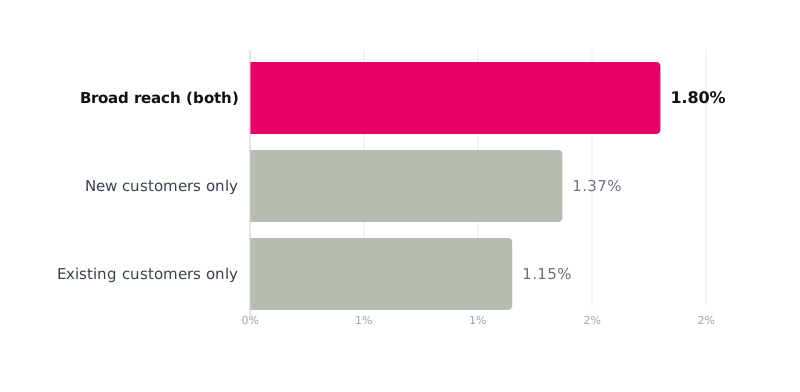
The most effective campaigns address the whole market rather than a segment of it. Broad-reach campaigns targeting both new and existing customers delivered 1.8% annual market share growth, against 1.37% for new-customer-only and 1.15% for existing-customer-only campaigns.
Source
Media in Focus: Marketing Effectiveness in the Digital Era - IPA, in association with Google and Thinkbox (EffWorks) (2017)
Les Binet (adam&eveDDB) and Peter Field (Peter Field Consulting), IPA Databank
Fig 14, Media in Focus (IPA 2017)
Go to the originalMore from this source
StatReach is the single biggest driver of media effectiveness, accounting for roughly 83% of the variation in how well media perform.WarningExisting-customer campaigns beat new-customer campaigns on short-term activation far more often, which is exactly why activation metrics keep pointing marketers toward the growth-limiting strategy.StatPure loyalty campaigns nearly disappeared from the IPA case base, falling from about 10% to 3% of cases.WarningBrand website visitors spend more on the category than on the brand itself, showing they're deal-hunting category buyers rather than loyalists the website created.WarningReal-time Big Data targeting raises the share of campaigns with strong activation effects, but comes at the cost of weaker market share growth and price elasticity.StatEarned media only fires at scale online when paid and owned media are both already in place.StatPure viral transmission drove only about 4% of IPA campaigns' success - roughly a one-in-twenty-five hit rate.StatAdding earned media lifts campaign effectiveness by 26%, compared with 13% for adding owned media.StatOnline paid media drives far more market share growth than online unpaid media.CaseWall's Ice Cream: social media drove nearly half of campaign sales, and almost all of that social effect came from paid advertising, not organic or viral spread.CaseJohn Lewis's Christmas ad reputation for going viral was mostly manufactured by paid TV - online views made up only about 3% of its total exposure.StatThe share of annual market share growth explained by excess share of voice (ESOV) rose from 6% before the digital era to 12% after it.