Coop Sverige: The Organic Effect
Coop Sverige wanted to shift consumer perception of organic food, moving beyond environmental arguments to focus on personal health. The brand needed to credibly demonstrate the immediate benefits of an organic diet to a skeptical audience. The challenge was to spark global conversation about organic nutrition and sustainable farming, ultimately driving consideration for Coop Sverige's organic range.
Creative Idea
Coop Sverige measured a family's pesticide levels before and after an organic diet, revealing organic food's immediate health impact.
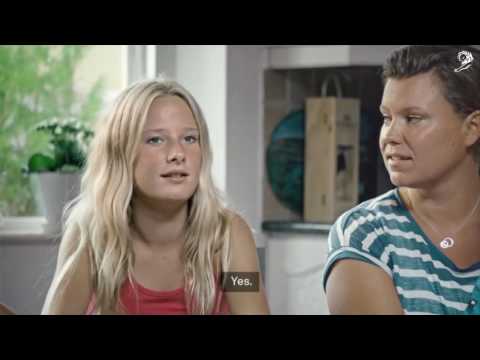
Coop Sverige created a unique scientific experiment with a family to demonstrate the immediate health impact of switching to organic food by measuring pesticide levels in their urine before and after the diet change. The campaign aimed to shift consumer perception about organic food by focusing on personal health effects rather than environmental arguments, ultimately sparking global conversation about sustainable farming and organic nutrition.
The Lab Results That Sparked a Legal Ban
A Gamble on Urine Samples
The agency Forsman & Bodenfors admitted the production was a high - stakes gamble. They began filming the Palmberg family without knowing what the laboratory results would show. Had the pesticide levels not dropped significantly after the switch to organic food, the entire project would have been scrapped. Lead researcher My Troedsson and the Swedish Environmental Research Institute (IVL) tracked 12 specific pesticides, discovering that levels plummeted to near - zero within days. This "personalization" of sustainability shifted the narrative from saving the planet to protecting one's own children.
The Billion Person Reach
 The campaign’s impact was immediate and massive, achieving a global reach of 1.8 billion people. Within the first few months, the film garnered over 35 million views across social platforms. More importantly, it translated into a 50% increase in organic food sales for Coop Sverige, contributing to the brand’s best financial year in 23 years. The initiative was so effective that Coop was ranked as the #1 most sustainable brand in Sweden for several consecutive years.
Banned by the Courts
Despite its success, the campaign faced intense industry pushback. In 2017, the Swedish Patent and Market Court officially banned Coop from using the video or its core arguments. The court ruled that phrases like "we are eating pesticides" were misleading and exaggerated the health risks of conventional farming. Coop faced a 1 million SEK fine if they continued to broadcast the content. However, by then, the "cocktail effect" - a term the campaign popularized to describe the cumulative impact of low - level chemicals - had already become a permanent part of the Swedish cultural lexicon.
Creative Strategy Deconstructed
Company
Coop Sverige had a long-standing commitment to organic farming but struggled to convert passive support into active purchasing. They leveraged their retail credibility to conduct a legitimate scientific test that turned abstract sustainability into a tangible health benefit.
Category
The organic category traditionally relied on environmental messaging about soil, bees, and long-term sustainability. These altruistic arguments often failed to justify the price premium for consumers who viewed planetary health as a secondary concern to their own immediate needs.
Customer
Consumers felt a growing but vague anxiety about industrial chemicals in their food supply. They wanted undeniable proof that paying more for organic was a necessary investment in their family’s health rather than just a moral choice for the planet.
Culture
A cultural shift toward the 'quantified self' and detoxification meant that data-driven proof resonated more than emotional pleas. People were increasingly skeptical of industrial food systems and hungry for radical transparency regarding what actually stays in their bodies.
Company
Coop Sverige had a long-standing commitment to organic farming but struggled to convert passive support into active purchasing. They leveraged their retail credibility to conduct a legitimate scientific test that turned abstract sustainability into a tangible health benefit.
Category
The organic category traditionally relied on environmental messaging about soil, bees, and long-term sustainability. These altruistic arguments often failed to justify the price premium for consumers who viewed planetary health as a secondary concern to their own immediate needs.
Strategy:
Pivot from environmental guilt to personal health by visualizing the immediate biological impact of removing pesticides from the body.
Customer
Consumers felt a growing but vague anxiety about industrial chemicals in their food supply. They wanted undeniable proof that paying more for organic was a necessary investment in their family’s health rather than just a moral choice for the planet.
Culture
A cultural shift toward the 'quantified self' and detoxification meant that data-driven proof resonated more than emotional pleas. People were increasingly skeptical of industrial food systems and hungry for radical transparency regarding what actually stays in their bodies.
Strategy:
Pivot from environmental guilt to personal health by visualizing the immediate biological impact of removing pesticides from the body.
Results
The film was viewed more than 35 million times on YouTube and Facebook. It generated articles and social media posts all over the world, with a total reach of 1.8 billion. The campaign changed the conversation about organic food and increased global demand for more sustainable farming. In Sweden, sales of organic food rose sharply, and Coop had their best year in two decades.
35M+
views on YouTube and Facebook
1.8B
total reach
best year in two decades
Coop's business performance
Strategy Technique
Make the Invisible Visible
The campaign made the invisible presence of pesticides in the human body visible through scientific testing. This dramatically shifted consumer perception by focusing on immediate personal health impacts.
Explore Technique
Creative Technique
Conduct an Experiment
The campaign directly implemented a scientific experiment with a family to measure pesticide levels. This approach credibly demonstrated the immediate health benefits of organic food.
Explore Technique
Craft Breakdown
The campaign's craft is exceptional in its strategic brilliance to translate complex scientific data into a relatable human story, making an abstract health concern tangible through a well-documented experiment.
The clear and dramatic 'Before & After' visuals, showing the reduction of specific pesticides in urine samples, made complex scientific data immediately accessible and emotionally persuasive within the campaign's communication.
The filming of the family's daily life, their reactions, and the scientific process lent authenticity and relatability to the core experiment, making the campaign's message resonate strongly with viewers.
“The campaign's power stems from the seamless combination of a groundbreaking strategic idea, compelling visual storytelling through cinematography, and highly effective data visualization that made scientific proof undeniably clear.”