IKEA: Hidden Tags
IKEA Portugal faced a widespread perception that its furniture lacked durability, hindering trust and sales. The client needed to reverse this negative sentiment, retain loyal customers, and attract new ones by providing tangible proof that IKEA products were built to last for a broad consumer audience.
Creative Idea
IKEA challenged customers to find hidden tags, proving furniture's surprising longevity.
IKEA challenged consumers to become "furniture archaeologists," unearthing hidden manufacturing tags on their own IKEA pieces to reveal their surprising age, transforming a common perception of disposability into a powerful testament to durability through collective discovery and shared pride.
The Birth Certificates Hidden Under Your Sofa
The 55 Year Old Trojan Horse
The campaign turned Portuguese homes into archaeological sites, uncovering 4,573 tags with an average product age of 18.5 years. The most shocking discovery was a wooden table from 1969 - manufactured 35 years before IKEA even opened its first store in Portugal. These "Trojan horses" proved that families had been crossing the border to Madrid for decades just to bring durable IKEA pieces home. This historical context effectively debunked the "fast furniture" myth, leading to a 40% sales uplift as brand trust reached a new peak.
Decoding the YYWW Secret
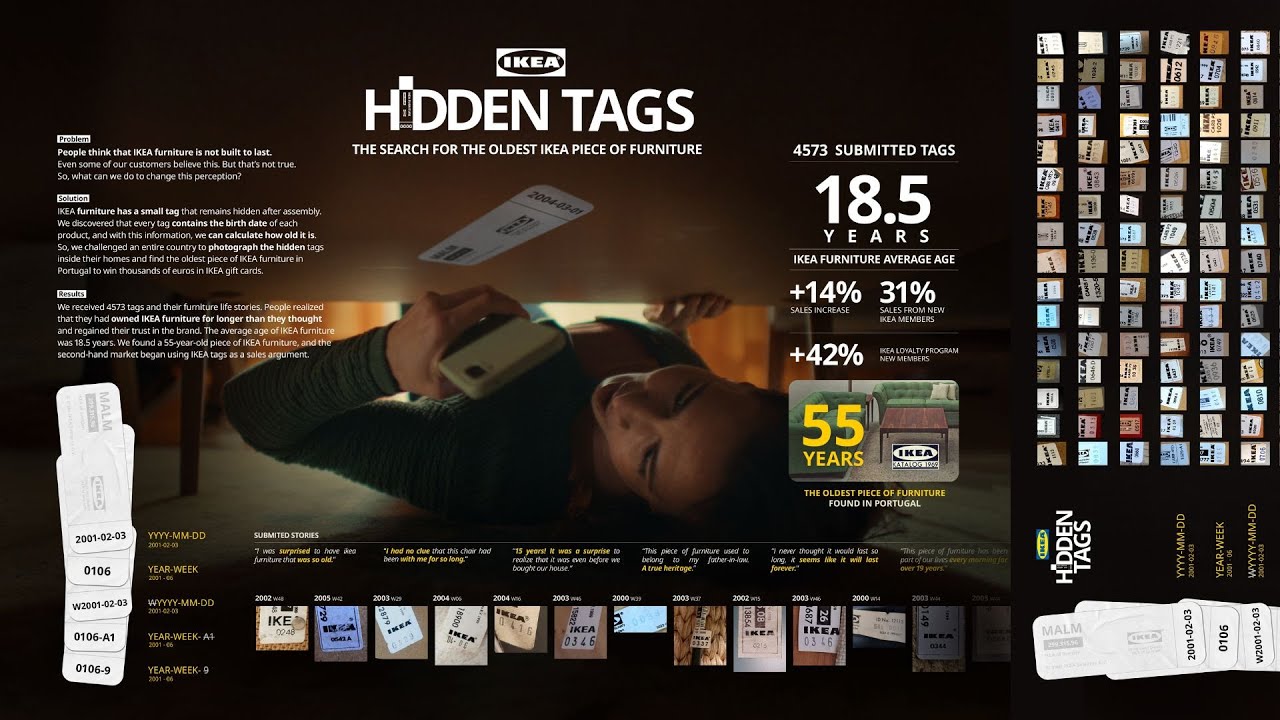 To facilitate the hunt, agency Uzina and production house The Playground developed a digital "decoder" tool. This tech allowed users to input the four-digit YYWW (Year/Week) code found on internal labels - a detail usually reserved for logistics and quality control. Director Martim Condeixa captured the humor of the search, filming customers awkwardly crawling under wardrobes and emptying drawers to find these hidden "birth certificates." The production even leaned into the absurdity of the furniture's survival, jokingly asking in ads if the products were made of Vibranium.
A New Standard for Resale
The initiative's impact extended far beyond the campaign period, fundamentally changing the Portuguese second-hand market. On platforms like OLX, sellers began using photos of the Hidden Tags as primary proof of authenticity and longevity. By shifting the narrative from "disposable" to "legacy," IKEA transformed a technical manufacturing mark into a badge of honor, proving founder Ingvar Kamprad’s philosophy that IKEA products are designed for long-term enjoyment rather than the landfill.
Creative Strategy Deconstructed
Company
IKEA possessed hidden manufacturing tags on millions of products, containing undeniable proof of their longevity.
Category
Furniture brands typically rely on marketing claims or lab tests to assert durability, often failing to engage consumers directly.
Customer
Consumers perceived IKEA furniture as temporary or disposable, despite valuing long-lasting, sustainable products for their homes.
Culture
A growing cultural interest in sustainability, product provenance, and authentic, user-generated content made the campaign resonate deeply.
Company
IKEA possessed hidden manufacturing tags on millions of products, containing undeniable proof of their longevity.
Category
Furniture brands typically rely on marketing claims or lab tests to assert durability, often failing to engage consumers directly.
Strategy:
Leverage IKEA's hidden product data to empower consumers to personally disprove durability myths through shared discovery.
Customer
Consumers perceived IKEA furniture as temporary or disposable, despite valuing long-lasting, sustainable products for their homes.
Culture
A growing cultural interest in sustainability, product provenance, and authentic, user-generated content made the campaign resonate deeply.
Strategy:
Leverage IKEA's hidden product data to empower consumers to personally disprove durability myths through shared discovery.
Results
The campaign successfully gathered 4573 submitted tags. The average age of IKEA furniture found was 18.5 years. The oldest piece of IKEA furniture found in Portugal dated back to 1969, making it 55 years old. This led to a +42% increase in new members for the IKEA Loyalty Program and a +14% increase in sales. The campaign inspired millions to regain their trust in IKEA furniture, and the second-hand market began using the original IKEA tags as a sales argument.
55 years
age of oldest IKEA furniture found
+42%
IKEA Loyalty Program new members
+14%
sales increase
Strategy Technique
Turn Users Into the Story
The campaign empowered customers to discover and share their furniture's true age. By turning individual findings into a collective narrative, it transformed users into living proof of IKEA's durability.
Explore Technique
Creative Technique
Challenge your target group
The campaign directly challenged consumers to physically search their homes for hidden manufacturing tags. This interactive hunt turned product verification into a personal, engaging experience, proving durability through active participation.
Explore Technique
Craft Breakdown
The campaign's craft excelled by transforming mundane product tags into an engaging, interactive narrative, making durability tangible through user participation.
The campaign brilliantly turned finding product tags into a nationwide 'treasure hunt,' creating a memorable and personal brand interaction.
A user-friendly digital platform facilitated tag submissions and showcased collective findings, central to the campaign's interactive success.
The campaign effectively transformed submitted tag data into compelling proof points, like average furniture age, making durability impactful.
The video effectively captured the genuine excitement and surprise of people discovering old tags, enhancing the campaign's authenticity.
“The magic came from the seamless combination of digital interaction, data storytelling, and real-world consumer experience.”