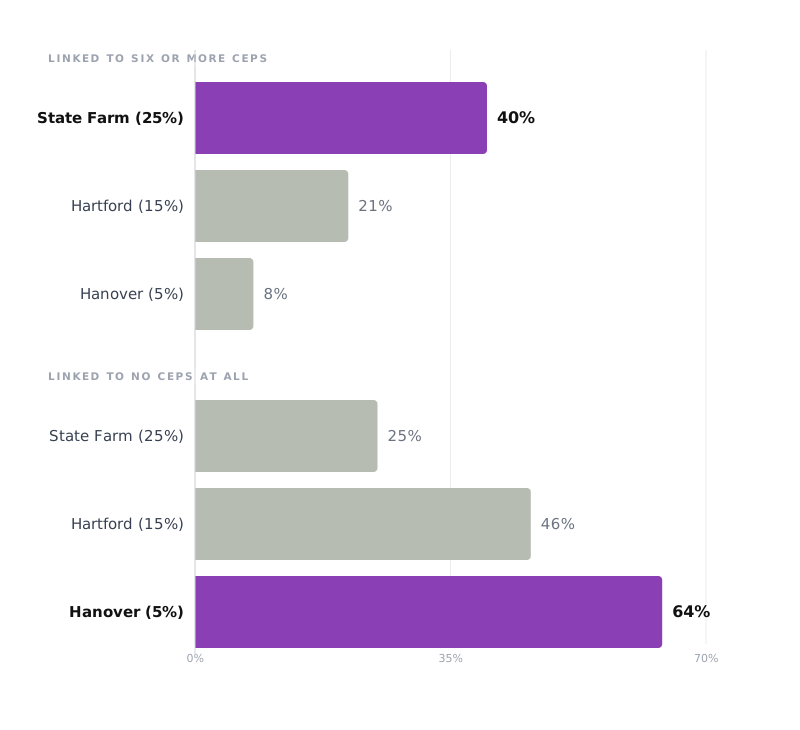
Bigger brands are linked to more buying situations by more buyers
StatBrand Strategy
In US business insurance, the number of CEPs decision-makers link to a brand tracks brand size directly. State Farm at 25% penetration had 40% of decision-makers linking it to six or more CEPs and 25% linking it to none. Hanover at 5% penetration had 8% with six or more and 64% with none.
Source
Category Entry Points In A B2B World - Linking Buying Situations To Brand Sales, The B2B Institute at LinkedIn x Ehrenberg-Bass Institute (2022)
Professor Jenni Romaniuk, Ehrenberg-Bass Institute for Marketing Science, University of South Australia
p10-11, Figure 1, US Business Insurance, n=606
Go to the originalMore from this source
PrincipleMemory-generated brands are the starting point of the buying process, not searchPrincipleCategory Entry Points - the retrieval cues that decide which brands come to mindStatThe fewer buying situations a customer links to your brand, the more likely they are to leaveStatEach extra buying situation linked to your brand lowers defection riskPrincipleWider CEP networks win the switch as well as prevent itPrincipleOne CEP per execution, many CEPs across the campaign portfolioPrincipleThe seven W's - a prompt set for generating a category's buying situationsPrincipleIn B2B every buying situation has a business motive and a personal onePrincipleBuying committees make 'with and for whom' the highest-leverage B2B cuePrincipleThe 3C's - Credibility, Competitiveness, CommonalityPrinciplePrioritise buying situations by elimination, not by selectionPrincipleExpected score = (column total x row total) / grand total