AnNahar Newspaper - The Elections Edition
AnNahar Newspaper approached Impact BBDO. The client wanted to challenge government claims of paper and ink shortages threatening the upcoming national election in Lebanon. The brand needed to make a powerful statement to ensure democratic participation and encourage citizens to vote, despite the crisis. The challenge was to remove all excuses for cancelling the vital election.
Creative Idea
AnNahar Newspaper stopped printing for a day, donating its paper and ink to elections.
AnNahar Newspaper stopped its print edition for a day and donated its paper and ink to election polling stations to challenge government claims of resource shortages and ensure the national election could proceed. By sacrificing its daily publication, the newspaper made a powerful statement about the importance of democratic participation during Lebanon's critical election period.
Winning a Print Grand Prix by Not Printing
The Irony of the Empty Rack
On February 2, 2022, for the first time in 88 years, AnNahar did not go to press. Instead of the usual morning edition, the newspaper deployed empty news racks across Lebanon featuring a single message: "The Elections Edition." This physical stunt was supported by a massive logistical operation where trucks delivered the newspaper’s entire daily supply of paper and ink directly to the government’s printing associate. This move effectively stripped the Lebanese government of its primary excuse - a lack of resources - for delaying the national vote.
Record Revenue from Zero Copies
 Despite the lack of a physical product, the campaign was a commercial juggernaut. Over 100 advertisers, including global brands like Honda and MasterCard, bought space in the "non-existent" edition. This resulted in revenues more than 20 times higher than a standard printing day. Digitally, the impact was even greater; the online edition became the most-read in the paper’s history, featuring a "voting calculator" that translated the value of a single vote into tangible impact.
From Silence to the Ballot Box
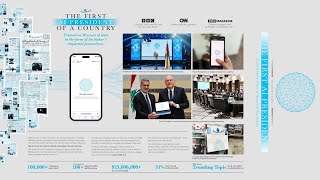
The campaign, led by Editor-in-Chief Nayla Tueni and Impact BBDO’s Ali Rez and Dani Richa, sparked a national movement. Other press companies and recycling firms followed suit, donating materials to ensure the election's integrity. The pressure worked: the elections were held on May 15, 2022, resulting in reformist newcomers winning 25% of the parliamentary seats. This "Active Journalism" approach has since inspired a 2024 follow-up, "The AI President," which used nine decades of AnNahar archives to fill a leadership vacuum in the country.
Creative Strategy Deconstructed
Company
AnNahar possesses an 88-year legacy as a pillar of Lebanese journalism and holds significant physical resources in the form of newsprint and ink. Its credibility as a national truth-teller allowed it to leverage its own silence as a loud, undeniable political statement.
Category
News media typically reports on government corruption and logistical failures from the sidelines, using words to criticize. Most publications focus on maintaining daily circulation to survive economic crises rather than sacrificing their core product to solve a physical problem.
Customer
Lebanese citizens felt disenfranchised, fearing that the ruling class would use resource scarcity as a cynical excuse to postpone democracy. They needed a tangible sign of hope and a way to hold the government accountable beyond just reading another editorial.
Culture
In a collapsing state where basic necessities like fuel and medicine are weaponized, 'sacrifice' is a potent symbol. The timing coincided with a global trend of brand activism where citizens expect institutions to take direct action against systemic failure.
Company
AnNahar possesses an 88-year legacy as a pillar of Lebanese journalism and holds significant physical resources in the form of newsprint and ink. Its credibility as a national truth-teller allowed it to leverage its own silence as a loud, undeniable political statement.
Category
News media typically reports on government corruption and logistical failures from the sidelines, using words to criticize. Most publications focus on maintaining daily circulation to survive economic crises rather than sacrificing their core product to solve a physical problem.
Strategy:
Sacrifice the medium to provide the message's infrastructure, turning a resource shortage into a demand for democracy.
Customer
Lebanese citizens felt disenfranchised, fearing that the ruling class would use resource scarcity as a cynical excuse to postpone democracy. They needed a tangible sign of hope and a way to hold the government accountable beyond just reading another editorial.
Culture
In a collapsing state where basic necessities like fuel and medicine are weaponized, 'sacrifice' is a potent symbol. The timing coincided with a global trend of brand activism where citizens expect institutions to take direct action against systemic failure.
Strategy:
Sacrifice the medium to provide the message's infrastructure, turning a resource shortage into a demand for democracy.
Results
As a result of AnNahar's campaign: - The Lebanese elections are scheduled to go ahead as planned. - The government stopped mentioning the shortage of paper and ink to print ballots as an excuse for delays. - Enough paper and ink were donated to print ballots for the entire voting population of Lebanon. - The campaign generated $12 million in earned media. - The digital edition became the most read. - The campaign was trending on Twitter. - The issue went viral, sparking a movement of people joining to ensure elections happened. - Mid East press stated the campaign "Eliminates government's excuses". - Adweek stated it "Ensures the elections proceed on schedule."
$12M
Earned Media
Entire Voting Population
Ballots Printed
Most Read
Digital Edition
Strategy Technique
Make the Brand the Hero of a Bigger Fight
AnNahar positioned itself as the champion for democratic participation against government claims. By sacrificing its publication, it became a protagonist in the national election crisis.
Explore Technique
Creative Technique
Take a Real Stand
The newspaper risked its daily operations by stopping publication and donating resources. This bold, tangible act demonstrated unwavering commitment to democratic elections.
Explore Technique
Craft Breakdown
This campaign's craft is exceptional due to its ingenious strategic design and powerful copywriting, which leveraged a seemingly negative action (not printing) into a potent symbol of democratic resistance, amplified by effective media strategy and digital engagement.
The core idea of abstaining from printing a newspaper, turning its essential resources into a direct solution for a national crisis, demonstrates profound strategic thinking and creative problem-solving.
The central message, 'We didn't print today, so the people can write the future,' is an incredibly concise, powerful, and emotionally resonant statement that perfectly encapsulates the campaign's purpose and inspired widespread action.
The campaign brilliantly used the act of *not* producing a physical product to generate massive earned media coverage and public dialogue, transforming a potential loss into a compelling national story that commanded attention and support.
By integrating a QR code that linked to an online edition and encouraging social media engagement, the campaign effectively leveraged digital platforms to extend its reach, mobilize citizens, and facilitate the viral spread of its message.
“The true genius of this campaign lies in the seamless synergy between its symbolic act, the clarity of its message, and the strategic amplification through both traditional and digital media, creating an unstoppable movement.”