Decathlon – The Breakaway: The First eCycling Team For Prisoners
Decathlon – The Breakaway approached BBDO Belgium, wanting to redefine its brand image beyond retail. The client sought an innovative way to demonstrate sport's transformative power for social good. The challenge was to connect a marginalized group - prisoners - with the outside world through sports, fostering rehabilitation and inclusion, while generating significant positive PR and demonstrating Decathlon's commitment to community integration.
Creative Idea
Decathlon created an eCycling team for prisoners to anonymously race online, breaking down social barriers to the outside world.
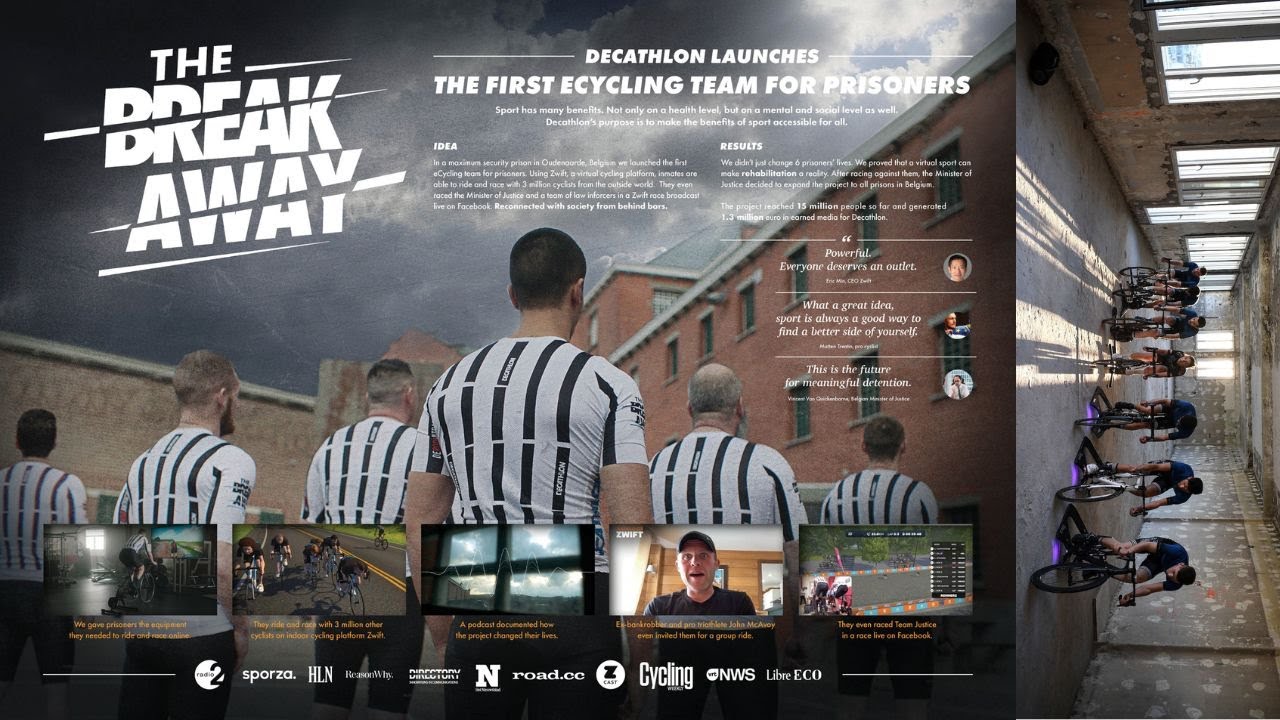
Decathlon created the first eCycling team for prisoners, providing them with equipment to participate anonymously in virtual cycling races. By enabling prisoners to engage in sports through Zwift, the brand helped break down social barriers and offer a path to rehabilitation and connection with the outside world.
The Virtual Escape That Changed Belgian Law
From Lockdown Isolation to Digital Freedom
The concept was born during the COVID - 19 lockdowns, when the creative team at BBDO Belgium realized that while the public felt trapped, actual inmates were experiencing total isolation from visitors and sports. To bridge this gap, they utilized Zwift, a virtual cycling platform. Because of strict privacy laws, the six inmates from Oudenaarde prison competed under the pseudonym John Doe. This choice was a deliberate nod to legal terminology for unidentified persons, ensuring that on the bike, they were judged by their performance rather than their criminal records.
Racing Against the Minister of Justice
The campaign culminated in a high - stakes live - streamed event where the inmates raced against Team Justice, a group composed of judges, lawyers, and the Belgian Minister of Justice, Vincent Van Quickenborne. Professional cycling commentators Renaat Schotte and Cyril Saugrain provided live play - by - play, treating the inmates like elite athletes. Former bank robber turned Ironman, John McAvoy, served as a mentor, proving that sport could facilitate a successful transition back into society.
A Nationwide Policy Shift
The project achieved a staggering €1.3 million in earned media value and reached 15 million people, more than the entire population of Belgium. Beyond the metrics, the campaign triggered a permanent systemic change. After seeing the physical and mental health benefits, the Belgian Ministry of Justice committed to rolling out the eCycling program to all 35 prisons across the country. As one inmate noted, the experience allowed him to feel like "just another cyclist" rather than a prisoner, marking a shift in how the industry views the metaverse as a tool for social rehabilitation.
Creative Strategy Deconstructed
Company
Decathlon is a global sports retailer driven by the purpose of making sport accessible to everyone. They provided the high-performance equipment and technical logistics necessary to turn a prison cell into a professional training environment.
Category
Sports marketing typically highlights elite athletes or mass participation, while prison rehabilitation often focuses on vocational labor. Rarely do these categories intersect to treat incarcerated individuals as part of a global athletic community.
Customer
Inmates feel defined by their crimes and isolated from the world by physical and social walls. They crave a way to compete and connect with society as equals, without the stigma of their prisoner status preceding them.
Culture
The rise of the 'metaverse' and virtual platforms like Zwift allows for radical inclusivity through digital avatars. Culture is increasingly shifting toward restorative justice and recognizing that digital connection can transcend physical confinement.
Company
Decathlon is a global sports retailer driven by the purpose of making sport accessible to everyone. They provided the high-performance equipment and technical logistics necessary to turn a prison cell into a professional training environment.
Category
Sports marketing typically highlights elite athletes or mass participation, while prison rehabilitation often focuses on vocational labor. Rarely do these categories intersect to treat incarcerated individuals as part of a global athletic community.
Strategy:
Leverage virtual anonymity to bridge the social divide, proving sport's power to humanize and rehabilitate beyond physical walls.
Customer
Inmates feel defined by their crimes and isolated from the world by physical and social walls. They crave a way to compete and connect with society as equals, without the stigma of their prisoner status preceding them.
Culture
The rise of the 'metaverse' and virtual platforms like Zwift allows for radical inclusivity through digital avatars. Culture is increasingly shifting toward restorative justice and recognizing that digital connection can transcend physical confinement.
Strategy:
Leverage virtual anonymity to bridge the social divide, proving sport's power to humanize and rehabilitate beyond physical walls.
Strategy Technique
Turn Brand Values Into Action
Decathlon moved beyond retail, actively demonstrating sport's transformative power for social good. The campaign concretely proved its commitment to community integration and rehabilitation.
Explore Technique
Creative Technique
Support the underdogs
Decathlon equipped prisoners to form an eCycling team, directly supporting a marginalized group. This initiative showcased sport's transformative power, positioning the brand as an advocate for the overlooked.
Explore Technique