Maxx Flash: The Killer Pack
Maxx Flash, a non - toxic mosquito repellent brand, wanted to combat India's rising Dengue and Malaria outbreaks. VMLY&R Mumbai was tasked with finding a way to protect vulnerable communities in hot pockets where indoor coils were insufficient because mosquitoes bred in nearby garbage dumps. The goal was to move beyond indoor protection and address the external root cause of the epidemic.
Creative Idea
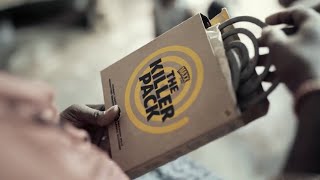
Infused biodegradable packaging with larvicide to kill mosquitoes when discarded in garbage dumps.
Maxx Flash turned its 100% biodegradable packaging into a larvicide tool that kills mosquito larvae when discarded in garbage dumps, extending protection from inside the home to the very breeding grounds where the disease - carrying insects originate.
Turning Packaging Waste Into A Biological Weapon
From Defensive Coils to Offensive Packaging
The mosquito repellent category has historically been defensive, focusing on protecting individuals inside their homes. Maxx Flash shifted this paradigm to an offensive strategy by targeting the source. While the non - toxic coil inside protects the family, the 100% biodegradable cardboard exterior addresses the "outside" breeding grounds. This dual - action approach ensures that even after the product is consumed, the brand continues to provide a public health service in "hot pockets" like Salaya and Mevasa.
A Month in the Lab
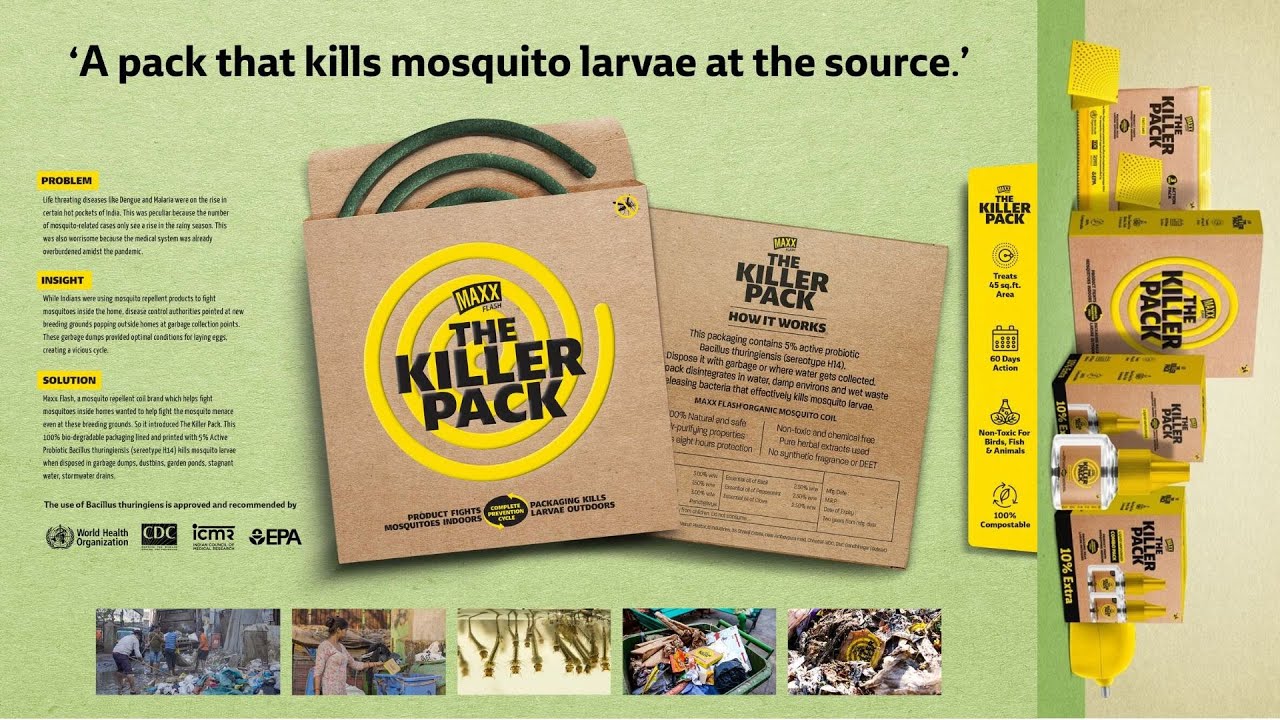 The production required a deep dive into entomology rather than traditional film sets. Associate Creative Director Mahesh Ambaliya embedded himself at the National Center for Vector Borne Diseases Control for a month. Working alongside entomologist Jignesh Mathur, the team developed a way to stabilize Bacillus thuringiensis (serotype H14) within printing ink. This specific probiotic is lethal to larvae but remains 100% safe for the stray dogs, birds, and scavengers that frequent Indian garbage dumps.
Biological Impact by the Numbers
The campaign's effectiveness was measured by larvae reduction rather than just clicks. In Salaya, the initiative saw a staggering 82% reduction in Anopheles larvae, while Bhunga Okha recorded a 76% drop. Even in areas with lower impact, such as Movan, the pack achieved a 38% reduction. Beyond the biological results, the innovation generated over 40 million free impressions, proving that a functional utility can drive brand loyalty more effectively than traditional media spend. As the VMLY&R team noted, the goal was to "change the problem into the solution" by turning potential litter into a life - saving tool.
Creative Strategy Deconstructed
Company
A chemical - free mosquito repellent brand with a commitment to non - toxic, sustainable health solutions.
Category
Most brands focus solely on repelling insects inside the home, ignoring the external breeding grounds.
Customer
People in high - risk areas needed protection from the source of the outbreak, not just indoor fixes.
Culture
India's broken garbage system creates perfect breeding grounds, making discarded waste the ideal vehicle for larvicide.
Company
A chemical - free mosquito repellent brand with a commitment to non - toxic, sustainable health solutions.
Category
Most brands focus solely on repelling insects inside the home, ignoring the external breeding grounds.
Strategy:
Transform unavoidable product waste into a proactive environmental solution to eliminate the source of a public health crisis.
Customer
People in high - risk areas needed protection from the source of the outbreak, not just indoor fixes.
Culture
India's broken garbage system creates perfect breeding grounds, making discarded waste the ideal vehicle for larvicide.
Strategy:
Transform unavoidable product waste into a proactive environmental solution to eliminate the source of a public health crisis.
Results
The campaign targeted high-risk 'hot pockets' across India, including states like Maharashtra, Uttar Pradesh, and West Bengal. The product was distributed to areas with over 50,000 cases in some regions. The packaging effectively treats 45 sq. ft. of surrounding area when disposed of. The solution is approved and recommended by the WHO, CDC, ICMR, and EPA. The campaign successfully turned a waste product into a public health tool, creating an automated process for mosquito control in underserved communities.
45 sq. ft.
area treated per pack
100%
biodegradable packaging
5%
active probiotic content
Strategy Technique
Build an Utility, Not an Ad
Instead of just advertising protection, the brand engineered a physical solution that solves a public health crisis, making the product's disposal as valuable as its use.
Explore Technique
Creative Technique
Unexpected Utility
It transforms a piece of waste - the product packaging - into a functional larvicide, providing a secondary, life - saving utility that addresses the root cause of mosquito breeding outside the home.
Explore Technique
Craft Breakdown
The campaign's brilliance lies in its innovative use of materials and design to solve a systemic health issue through existing consumer behavior.
The structural design of the packaging serves a dual purpose, turning a discarded item into a functional larvicide.
Integrating active probiotic bacteria into biodegradable printing ink is a sophisticated technical achievement.
The narrative clearly bridges the gap between a massive public health problem and a simple product-based solution.
The high-visibility yellow branding ensures the product stands out in cluttered environments, reinforcing its 'killer' identity.
“The synergy between biotechnology and sustainable packaging design transforms a commodity product into a life-saving intervention.”