The Times: JFK Unsilenced
The Times briefed Rotcho (Accenture), seeking an innovative campaign to engage readers and reinforce its position as a leader in quality journalism and storytelling. The challenge was to connect with an audience interested in history and technology, demonstrating The Times' ability to "Find Your Voice" in new ways. They sought a powerful, technologically advanced execution to generate significant buzz and showcase their commitment to uncovering unique perspectives.
Creative Idea
The Times reconstructed JFK's undelivered speech using AI, unsilencing his voice to show their commitment to giving voice.
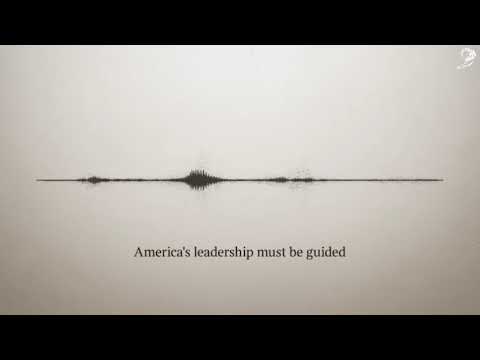
The Times used advanced AI technology to reconstruct JFK's undelivered Trade Mart speech, allowing him to "speak" 100 years after his assassination as part of their "Find Your Voice" campaign. By analyzing 831 of JFK's speeches and meticulously piecing together over 116,000 sound units, they created a powerful audio experience that brought his silenced voice back to life.
Resurrecting a President from 116,777 Phonetic Units
The 0.04 Second Puzzle
To rebuild John F. Kennedy’s voice, the team at Rothco and CereProc spent eight weeks analyzing 831 analog recordings. They didn't just stitch words together; they extracted 116,777 "phones" - individual phonetic units roughly 0.04 seconds long. The technical challenge was immense - for instance, the AI had to learn that a "W" in "weapons" sounds different from a "W" in "words." Using Deep Neural Networks (DNN), the engineers taught the AI JFK’s specific cadence and intonation. To ensure the 22-minute speech felt authentic to 1963, the team "de-noised" the original samples to build the voice, then re-applied period-accurate room reverberation and tape hiss to the final output.
A Legacy Beyond Advertising
While the campaign was a marketing triumph for The Times, generating 1.1 billion editorial impressions and 4,500 new registrations, its most significant impact was medical. The audio technique developed for the project was later adopted to help ALS (Motor Neurone Disease) patients "bank" their voices before losing the ability to speak. This allowed them to communicate in their own tone rather than a generic robotic voice.
Controversy in the Jury Room
The project nearly missed its historic Cannes Lions Grand Prix win. A heated debate broke out among the Creative Data jury over whether the work was "editorial" or "commercial." If judged purely as a news piece, it would have been disqualified. It was ultimately saved when judges linked it back to the broader "Find Your Voice" brand platform. As Richard Oakley, Editor of *The Times, Ireland Edition*, noted, the project allowed the newspaper to "make the news as well as break it."
Creative Strategy Deconstructed
Company
The Times is an authoritative historical record-keeper with a legacy of deep investigative storytelling and archival preservation. They had the brand permission to 'find' lost voices and the resources to pioneer complex, high-stakes AI-driven audio engineering.
Category
News media typically treats history as a closed book, relying on static archives or passive retrospectives. The category rarely uses generative technology to make historical figures active participants in modern discourse, usually playing it safe with standard documentary formats.
Customer
Audiences feel a profound sense of 'what if' regarding JFK's unfinished legacy and the words he never got to say at the Trade Mart. They seek a visceral, emotional connection to history rather than just a dry recitation of historical facts.
Culture
The campaign launched during the 100th anniversary of JFK's birth amidst a rising cultural fascination with AI's potential. It cleverly turned emerging 'deepfake' technology into a tool for historical restoration and humanistic social good.
Company
The Times is an authoritative historical record-keeper with a legacy of deep investigative storytelling and archival preservation. They had the brand permission to 'find' lost voices and the resources to pioneer complex, high-stakes AI-driven audio engineering.
Category
News media typically treats history as a closed book, relying on static archives or passive retrospectives. The category rarely uses generative technology to make historical figures active participants in modern discourse, usually playing it safe with standard documentary formats.
Strategy:
Leverage AI to complete history’s most famous undelivered speech, positioning the brand as the ultimate restorer of lost voices.
Customer
Audiences feel a profound sense of 'what if' regarding JFK's unfinished legacy and the words he never got to say at the Trade Mart. They seek a visceral, emotional connection to history rather than just a dry recitation of historical facts.
Culture
The campaign launched during the 100th anniversary of JFK's birth amidst a rising cultural fascination with AI's potential. It cleverly turned emerging 'deepfake' technology into a tool for historical restoration and humanistic social good.
Strategy:
Leverage AI to complete history’s most famous undelivered speech, positioning the brand as the ultimate restorer of lost voices.
Results
The campaign achieved 1 billion media impressions. It garnered a Twitter reach of 51 million. The campaign was so impactful that every one of The Times' rivals covered their idea. Furthermore, the audio technique developed for "JFKUnsilenced" has since been adopted by numerous companies around the world to help ALS sufferers refind their voice.
1 Billion
Media Impressions
51 Million
Twitter Reach
All rivals
Covered the idea
Strategy Technique
Make the Brand the Hero of a Bigger Fight
The Times positioned itself as a hero fighting to 'unsilence' a historical voice. This demonstrated their commitment to unique perspectives and innovative storytelling.
Explore Technique
Creative Technique
Cutting-edge Tech
The Times leveraged advanced AI to reconstruct JFK's undelivered speech. This showcased their innovative use of bleeding-edge technology to bring history to life.
Explore Technique
Craft Breakdown
This campaign's craft is exceptional due to its audacious and profoundly resonant idea, flawlessly executed through groundbreaking AI-driven sound engineering to breathe life into a historical moment and deliver a powerful message.
The painstaking and highly complex sound engineering, involving analysis of hundreds of speeches and precise blending of phonetic units, flawlessly recreates JFK's voice with authentic emotional resonance.
The innovative application of artificial intelligence and advanced machine learning algorithms to reconstruct a historically significant voice from fragmented audio is a pioneering display of computational craft.
“The true magic of this campaign arises from the synergy between a bold, insightful idea, cutting-edge AI technology, and meticulous sound design, all powerfully framed by compelling campaign messaging.”