LADbible: Trash Isles
Plastic Oceans Foundation and LADbible tasked AMV BBDO London with raising awareness for the Great Pacific Garbage Patch. Despite its massive size, the issue remained ignored by world governments. They needed a way to bypass public apathy and force the United Nations to take immediate, legal responsibility for cleaning up the ocean's plastic, targeting a global audience to build political pressure.
Creative Idea
Turned a massive plastic patch into a country to force UN environmental cleanup laws.
To force global action on the Great Pacific Garbage Patch, the campaign applied for UN recognition of the plastic mass as an official country, using international law to legally obligate other nations to assist in its environmental cleanup.
The Country Made of Trash That Forced the UN's Hand
A Legal Loophole in the Rio Declaration
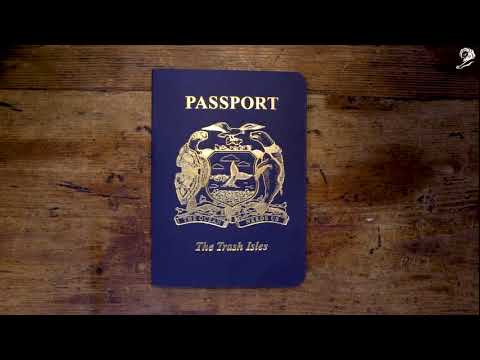
The campaign was built on a brilliant legal strategy derived from the 1992 Rio Declaration. By establishing the Great Pacific Garbage Patch as a sovereign nation, the creators triggered a clause that obligates UN member states to assist in the environmental cleanup of other nations. This "design-led activism" transformed a passive environmental crisis into a mandatory political responsibility. To meet the UN's criteria for statehood, AMV BBDO and LADbible meticulously crafted a national identity, including a flag featuring a floating plastic bottle and a currency called Debris. The banknotes, designed in 20, 50, and 100 denominations, depicted marine life - such as turtles and whales - struggling with plastic waste.
The Fastest Growing Nation on Earth
 The "Trash Isles" quickly became a cultural phenomenon, reaching over half a billion people and generating 50 million video views. The recruitment of a high-profile "government" was central to its viral success. Al Gore was named the first honorary citizen, while Dame Judi Dench served as the nation's Queen. The cabinet was rounded out by John Cena as Secretary of Defence - a role he reportedly self-elected - and Sir David Attenborough as a citizen. Within weeks, the petition on Change.org gained 220,000 citizens, giving the Trash Isles a larger population than 21 existing countries, including Iceland and Samoa.
Making the Invisible Visible
The production relied on the creative expertise of The Mill for animation and Jelly London for illustration. Every detail was physical; the passports were manufactured from recycled plastic, and the official stamps were produced by The Portland Stamp Company. This tangible approach forced Stéphane Dujarric, a UN spokesperson, to acknowledge the campaign as an innovative way to bring visibility to a problem that is literally "out of sight, out of mind."
Creative Strategy Deconstructed
Company
LADbible leveraged its massive social reach and youthful audience to turn a niche environmental issue into a global movement.
Category
Environmental campaigns often rely on guilt-tripping imagery that people have become desensitized to and eventually ignore.
Customer
People felt overwhelmed by the scale of plastic pollution and powerless to influence high-level international policy.
Culture
A growing global demand for corporate and political accountability regarding the climate crisis and ocean health.
Company
LADbible leveraged its massive social reach and youthful audience to turn a niche environmental issue into a global movement.
Category
Environmental campaigns often rely on guilt-tripping imagery that people have become desensitized to and eventually ignore.
Strategy:
Leverage sovereign identity and legal frameworks to force institutional accountability for neglected global environmental crises.
Customer
People felt overwhelmed by the scale of plastic pollution and powerless to influence high-level international policy.
Culture
A growing global demand for corporate and political accountability regarding the climate crisis and ocean health.
Strategy:
Leverage sovereign identity and legal frameworks to force institutional accountability for neglected global environmental crises.
Results
The campaign achieved massive global scale, reaching half a billion people. It garnered over 50 million video views and successfully recruited over 200,000 citizens for the new nation—more than the population of some actual countries. The initiative received widespread international media coverage from outlets like Reuters, CNN, Forbes, and The Guardian, forcing a response from the UN spokesperson who called it an 'innovative and creative' way to bring attention to the issue. The campaign successfully shifted the narrative from a distant environmental problem to a matter of international law and sovereign responsibility.
500M
people reached
200k+
citizens recruited
50M
video views
Strategy Technique
Make the Invisible Visible
The campaign used a legal loophole to give a forgotten environmental disaster a name, borders, and a voice. By turning trash into a nation, it made an invisible global crisis impossible for world leaders to ignore.
Explore Technique
Creative Technique
Turn Message into Product
By designing physical artifacts like passports and currency, the campaign transformed an abstract environmental crisis into a tangible sovereign state. This forced the UN to acknowledge the plastic patch through formal, bureaucratic channels.
Explore Technique
Craft Breakdown
The campaign's brilliance lies in its meticulous world-building, creating a tangible national identity that forced a legal and media conversation.
The creation of a complete visual identity—currency, passports, and a flag—transformed an abstract idea into a physical reality that felt legitimate.
The clever use of language, such as naming the currency 'Debris' and framing the environmental issue as a 'sovereign' legal obligation, was key to the campaign's logic.
Strategic use of LADbible's massive platform and high-profile influencers ensured the campaign reached a global audience and forced a UN response.
The visual contrast between the beautiful, high-quality 'national' artifacts and the ugly reality of the trash patch created a powerful aesthetic tension.
“The synergy between the legal 'hack' (Copywriting) and the physical artifacts (Design) made the satirical concept impossible for the UN and global media to ignore.”