TAC: Towards Zero
The Transport Accident Commission (TAC) needed to re-engage the Victorian public, who had become desensitized to road death statistics. Clemenger BBDO, Melbourne, was tasked with creating a campaign that would make the human cost of road fatalities tangible, aiming to shift public perception towards accepting zero road deaths as the only acceptable number.
Creative Idea
The campaign visually represented road death statistics with real people, making abstract numbers tangible.
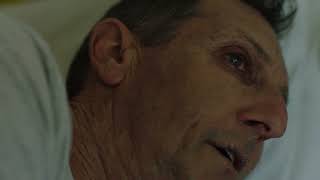
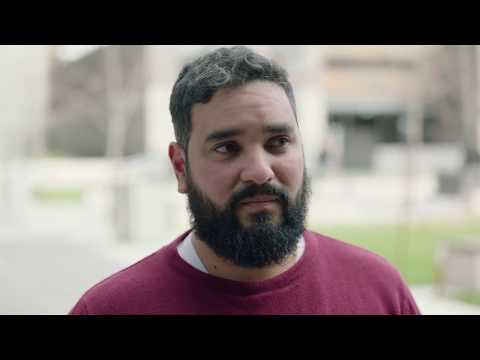
The campaign made the abstract number of road deaths tangible by showing 70 real people, forcing a man to confront the human cost, and shifting his acceptable number from 70 to zero, highlighting that every life lost impacts someone.
The Only Human Who Can Survive a Car Crash
A Masterclass in Biological Speculation
To move beyond the desensitization of shock advertising, Clemenger BBDO Melbourne collaborated with world - renowned artist Patricia Piccinini, trauma surgeon Christian Kenfield, and crash investigator Dr. David Logan. Together, they engineered Graham, a biological solution to the physics of high - speed impact. Constructed from silicone, fiberglass, and human hair, Graham features a helmet - like skull with built - in crumple zones, a flat face to protect sensory organs, and "airbag" sacks between his ribs to absorb kinetic energy. His hoof - like legs even allow him to spring away from oncoming vehicles.
From Viral Sculpture to Global Curriculum
 The campaign utilized Google Tango AR technology, allowing museum visitors to look "underneath" Graham’s skin to see his modified bone and organ structure in real - time. This scientific depth transformed a PSA into a cultural phenomenon. Graham reached nearly 100% of the Victorian population and generated over $100 million in earned media globally. Beyond the gallery, the campaign was officially integrated into the Victorian school curriculum, using Graham to teach students physics and biology through the lens of road safety.
The Shift to Intellectual Curiosity
The "Towards Zero" platform marked a historic pivot from "shock and gore" to intellectual curiosity. By inviting the public to interact with a physical manifestation of human vulnerability, the TAC achieved an 89% message recall rate. Most importantly, the campaign saw a 16% reduction in road deaths in Victoria during the year following its launch. As former TAC CEO Joe Calafiore noted, if the goal isn't zero, the industry is essentially stating there is an "acceptable level" of road trauma.
Creative Strategy Deconstructed
Company
TAC, as a road safety authority, had the mandate and credibility to confront the public with the stark reality of road fatalities.
Category
Road safety campaigns often relied on shock tactics or statistics, which had desensitized the public to the true impact of deaths.
Customer
People were desensitized to large numbers of road deaths, struggling to connect abstract figures to individual human lives and loss.
Culture
A cultural desensitization to statistics and a need for more personal, empathetic storytelling to cut through information overload.
Company
TAC, as a road safety authority, had the mandate and credibility to confront the public with the stark reality of road fatalities.
Category
Road safety campaigns often relied on shock tactics or statistics, which had desensitized the public to the true impact of deaths.
Strategy:
Transform abstract statistics into visceral human experiences to re-sensitize audiences to the true cost.
Customer
People were desensitized to large numbers of road deaths, struggling to connect abstract figures to individual human lives and loss.
Culture
A cultural desensitization to statistics and a need for more personal, empathetic storytelling to cut through information overload.
Strategy:
Transform abstract statistics into visceral human experiences to re-sensitize audiences to the true cost.
Strategy Technique
Make the Invisible Visible
The campaign took the abstract statistic of road deaths, which people had become numb to, and made its human impact tangible. By visually representing the number of lives lost, it forced a profound emotional connection to the real cost.
Explore Technique
Creative Technique
Conduct an Experiment
The campaign conducted a live experiment, asking a man to quantify acceptable road deaths, then visually presented that number as real people. This forced a visceral understanding of the human cost, shifting his perspective from abstract statistics to individual lives.
Explore Technique
Craft Breakdown
This campaign's craft excels by transforming an abstract road safety statistic into a deeply personal and visceral emotional experience through a brilliant core idea executed with authentic human performance and precise visual storytelling.
The lead subject's authentic and unscripted emotional journey, from initial detachment to profound realization and tears, is central to the ad's raw and genuine power.
The meticulous coordination and presentation of the diverse crowd of 70 individuals, along with the realistic staging of the 'man-on-the-street' interview, creates a convincing and powerful visual experience.
“The campaign's magic truly emerges from the synergy between its brilliant, human-centered idea, the raw authenticity delivered through the acting, and the powerful visual dramatization of the human cost.”