AMIA: Booth
AMIA wanted to re-engage Argentinians with the 1994 bombing tragedy, 19 years later. The brand needed a powerful way to make the historical event feel immediate and personal for the target audience. The challenge was to reignite the call for justice and encourage remembrance and resolution, ensuring the tragedy wasn't forgotten. BBDO Argentina was tasked with creating an impactful experience.
Creative Idea
AMIA built a VR booth that put people inside the 1994 bombing.
The AMIA (Argentine Mutual Israeli Association) created an immersive virtual reality booth that recreated the exact moment of the 1994 bombing to help people emotionally experience the tragedy and reignite the call for justice 19 years after the attack. By placing people in a first-person simulation of the bombing, the campaign aimed to make the historical event feel immediate and personal, encouraging Argentinians to remember and seek resolution.
Turning 85 Names Into 85 Human Lives
A Cinematic Bridge to the Past
To move beyond traditional mourning, the agency recruited acclaimed Argentine film director Ariel Winograd and production house WINONA. Winograd treated the project as a "deeply emotional challenge," focusing on the booth as a "time capsule" rather than a memorial. The production team worked in intimate collaboration with the families of the 85 victims to script the interactions. Every detail shared by the actors - from a victim's favorite football team to specific daily hobbies - was verified by relatives to ensure the "conversations" felt authentic and personal rather than scripted.
Breaking the Sound Barrier
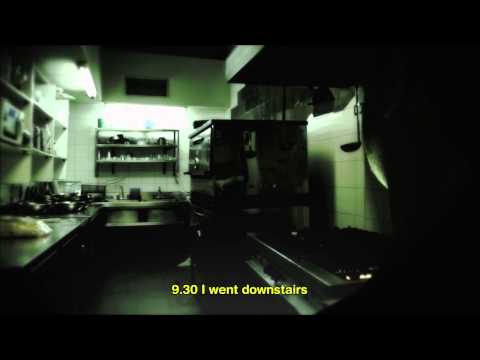 The physical booth was engineered as a soundproof wooden structure, designed to function like a secular confessional amidst the noise of Plaza de Mayo. While the brief mentions VR, the production reality focused on the sensory experience of "talking" to the victims through scripts based on their unfinished lives. This immersive storytelling approach was scored by Nectar Música, creating an atmospheric environment that forced participants to confront the human cost of the lack of justice.
National Resonance and Viral Reach
The campaign achieved total saturation in the Argentine market, appearing on every major news network including Telefe, El Trece, and C5N. Beyond the thousands who queued in person, the documentary-style case study capturing the raw emotional reactions of participants went viral on social media. By shifting the narrative from "mourning" to "active memory," the initiative successfully re-engaged a younger generation of Argentines who had no living memory of the 1994 bombing, fulfilling its goal of keeping the demand for justice alive two decades later.
Creative Strategy Deconstructed
Company
AMIA possesses the moral authority and historical archives of the 1994 tragedy. This credibility allows them to curate a sensitive yet harrowing experience that demands accountability for a still-unresolved crime.
Category
Social awareness campaigns for historical tragedies often rely on static memorials or intellectual documentaries. These traditional formats often fail to provoke the emotional urgency needed to sustain a decades-long pursuit of justice.
Customer
The public, especially younger Argentines, experiences 'historical fatigue,' viewing the bombing as a distant event rather than a living trauma. They need a way to feel the tragedy’s impact beyond just understanding the facts.
Culture
As society becomes desensitized to standard news media, there is a growing cultural reliance on immersive technology to create 'empathy machines' that bridge the gap between observation and lived experience.
Company
AMIA possesses the moral authority and historical archives of the 1994 tragedy. This credibility allows them to curate a sensitive yet harrowing experience that demands accountability for a still-unresolved crime.
Category
Social awareness campaigns for historical tragedies often rely on static memorials or intellectual documentaries. These traditional formats often fail to provoke the emotional urgency needed to sustain a decades-long pursuit of justice.
Strategy:
Replace intellectual remembrance with visceral physical trauma to bridge the emotional gap between historical memory and urgent justice.
Customer
The public, especially younger Argentines, experiences 'historical fatigue,' viewing the bombing as a distant event rather than a living trauma. They need a way to feel the tragedy’s impact beyond just understanding the facts.
Culture
As society becomes desensitized to standard news media, there is a growing cultural reliance on immersive technology to create 'empathy machines' that bridge the gap between observation and lived experience.
Strategy:
Replace intellectual remembrance with visceral physical trauma to bridge the emotional gap between historical memory and urgent justice.
Results
Over 5,000 people walked out of the booth as new survivors, experiencing the terrorist attack from a first-person perspective. The campaign achieved massive media coverage, mirroring the widespread attention of the original 1994 event. This widespread coverage made the entire country feel the explosion once again, ensuring the attack 'survived oblivion' on July 18th, 2013.
5,000+
people experienced the booth
Massive
media coverage
Survived oblivion
for the AMIA attack
Strategy Technique
Make the Invisible Visible
The campaign strategically made the faded emotional impact of the 1994 bombing visible again through immersive VR. This re-engaged Argentinians by transforming a distant historical event into an immediate, personal experience.
Explore Technique
Creative Technique
Cutting-edge Tech
The campaign leveraged virtual reality, a bleeding-edge technology in 2013, to immerse people in the 1994 bombing. This innovative use of tech made a distant tragedy feel immediate and personal, reigniting the call for justice.
Explore Technique
Craft Breakdown
This campaign's craft is exceptional in its use of immersive experiential design and precise sensory engineering to transform a historical tragedy into a profoundly visceral and unforgettable personal experience.
The creation of the 'Memory Booth' as a multi-sensory, first-person simulation of a traumatic event is central to the campaign's impact, making abstract history viscerally real for participants.
The meticulous 3D surround sound system and integrated blast wave generators are crucial for authentically recreating the jarring disorientation and auditory impact of the explosion.
The construction of exact replicas of the 1994 AMIA building offices for projection inside the booth provides a critical layer of visual authenticity to the immersive environment.
The sophisticated integration of specialized hardware like dust/scent dispersers, heat/blast wave generators, and vibrating platforms demonstrates advanced technical craft to deliver a full-body sensory experience.
“The campaign's profound impact stems from the seamless integration of Experiential Design, crafting the overall immersive journey, with highly specialized Sound Design and Technology, which deliver the precise sensory stimuli, all grounded in authentic Production Design.”