Legacy Berlin: Art Beats Hate
Legacy Berlin and Die Kulturellen Erben tasked Heimat Berlin with addressing the alarming rise of neo-Nazi graffiti in Berlin. The goal was to find a way for the local community, especially youth, to push back against radicalism and hate speech without resorting to violence, while simultaneously improving the public perception of graffiti as a positive force for social change.
Creative Idea
Transformed the four arms of swastikas into playful animals and objects through street art.
Legacy Berlin transformed hateful swastika graffiti into playful street art like owls and rabbits, turning symbols of fear into sources of joy by using the swastika's own geometry as a creative blueprint for community-led reclamation.
Turning Hateful Geometry Into Playful Urban Mascots
From Mosquitoes to Global Movement
The initiative was sparked by a single encounter at Ibo Omari’s graffiti shop, Legacy Berlin, when a father sought paint to cover a swastika at a local playground. Omari realized that simply painting over hate was a temporary fix - "Removing is like forgetting," he noted. Instead, he transformed that first symbol into a mosquito, which became the movement's unofficial mascot. This "beautification" strategy bypassed the slow bureaucratic process of city authorities, which Omari claimed could take months to address a single tag, whereas an artist could reclaim the space in 10 to 15 minutes.
Children as the Lead Architects
Reclaiming the Streets Without Arrests
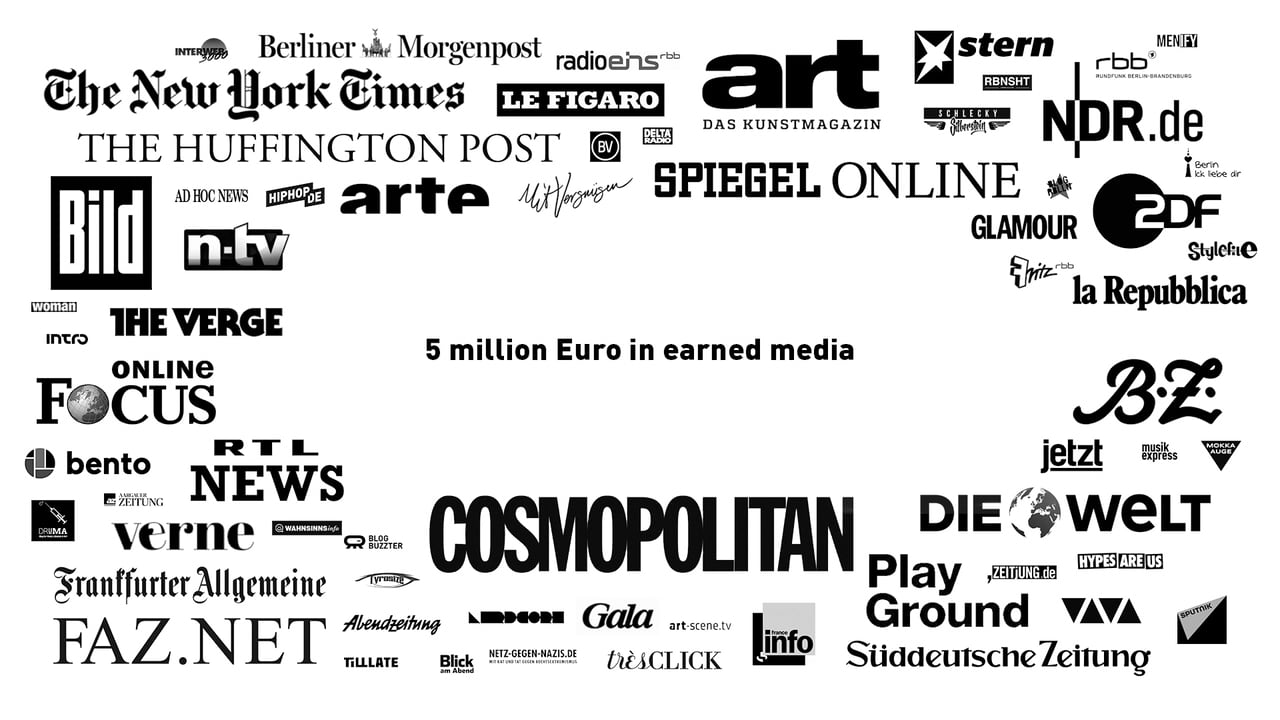
Despite the rebellious nature of graffiti, the team employed a strategic legal approach by securing permission from property owners before painting. This flipped the script on vandalism; eventually, landlords and city officials began calling the collective to request "beautification" services. While the campaign launched during the height of the 2015 - 2016 refugee crisis and the rise of the AfD party, it managed to generate over 100 million impressions and €5 million in earned media value without a traditional media budget.
Creative Strategy Deconstructed
Company
A local graffiti shop with deep roots in street culture and a network of talented urban artists.
Category
Authorities often ignore or slowly remove hate speech, treating it as a minor administrative nuisance rather than a social threat.
Customer
Citizens felt powerless and intimidated by the rising visibility of radicalism and hate symbols in their own neighborhoods.
Culture
A climate of political tension and the refugee crisis made people desperate for non-violent ways to reclaim their public spaces.
Company
A local graffiti shop with deep roots in street culture and a network of talented urban artists.
Category
Authorities often ignore or slowly remove hate speech, treating it as a minor administrative nuisance rather than a social threat.
Strategy:
Transform the geometry of oppression into a blueprint for creative resistance to reclaim public space and community spirit.
Customer
Citizens felt powerless and intimidated by the rising visibility of radicalism and hate symbols in their own neighborhoods.
Culture
A climate of political tension and the refugee crisis made people desperate for non-violent ways to reclaim their public spaces.
Strategy:
Transform the geometry of oppression into a blueprint for creative resistance to reclaim public space and community spirit.
Results
The #PaintBack campaign achieved massive global reach and impact, including over 100 million ad impressions and more than 10 million video views. It generated 5 million Euro in earned media value. Beyond the numbers, the campaign was celebrated by major international news outlets like The New York Times, Le Figaro, and the BBC, and was described as the 'Trend of summer 2016' by Bild. Most importantly, it successfully transformed numerous hateful symbols into community art across Berlin and beyond.
100M+
ad impressions
5M Euro
earned media value
10M+
video views
Strategy Technique
Reframe the Problem
Rather than treating hate speech as a bureaucratic cleaning task, the campaign reframed the symbols as creative opportunities, empowering citizens to actively overwrite negativity with positive, community-driven imagery.
Explore Technique
Creative Technique
Use Art
The campaign uses the visual structure of hate symbols as a canvas for creative expression, proving that artistic imagination is a more powerful and permanent tool for social change than simple removal.
Explore Technique
Craft Breakdown
The campaign's brilliance lies in its simple yet powerful visual transformation of hate symbols, turning a negative into a positive through community-driven art.
The clever visual 're-imagining' of the swastika into innocent characters and objects is the core of the campaign's success.
Transforming the act of graffiti into a community-building workshop creates a tangible, positive impact on the urban environment.
The hashtag #PaintBack is a concise and powerful call to action that perfectly encapsulates the movement's mission.
The instructional designs and stencils provided a clear framework for others to replicate the idea globally.
“The synergy between the simple graphic design of the stencils and the experiential nature of the workshops allowed the campaign to scale from a local store to a global movement.”