L’Oréal Luxe: Code for the Protection and Inclusion of Black Consumers
L’Oréal Luxe faced a crisis where 91% of high-income Black consumers reported experiencing racism in luxury stores. The client needed a way to move beyond performative diversity and enforce actual behavioral change in retail environments. They tasked Beta Collective with creating a scalable, systemic solution to eliminate racial profiling and ensure dignified service for Black shoppers across the Brazilian luxury market.
Creative Idea
They turned a mandatory legal book into an anti-racist code for retail stores.
L’Oréal Luxe hacked the mandatory Brazilian Consumer Protection Code by turning a dry legal requirement into a high-end, anti-racist manual, forcing retail leaders to adopt 10 new standards that combat racial profiling and ensure dignity for Black shoppers.
Turning A Legal Requirement Into A Moral Mandate
From Regulatory Burden To Cultural Catalyst
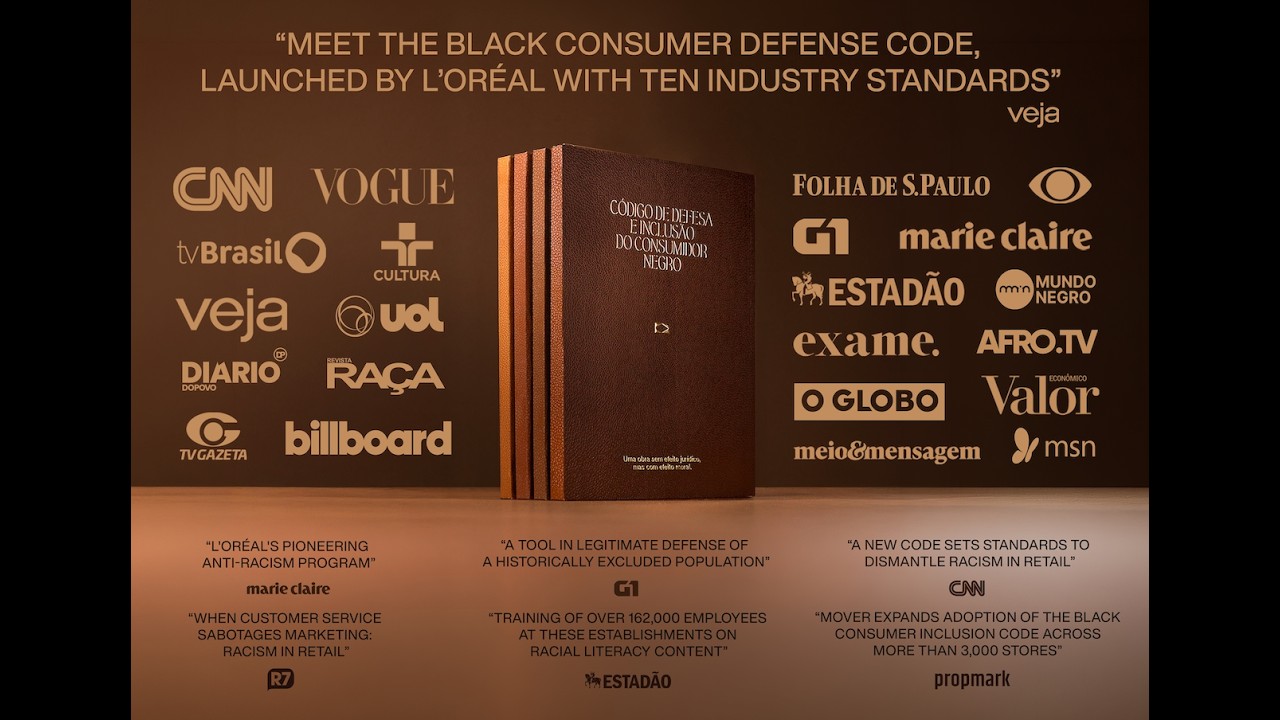
The campaign was born from a sobering 2024 study commissioned by L’Oréal Groupe, which revealed that 91% of high-income Black consumers in Brazil had suffered racial discrimination in luxury retail. By identifying 21 distinct racist practices—ranging from being ignored by staff to being unfairly targeted for bag searches—the brand moved beyond surface-level representation. Beta Collective transformed the mandatory, often ignored, physical copy of the Consumer Protection Code into a high-end editorial piece. This design choice ensured the anti-racist manual was not hidden in a back office but displayed prominently on counters, effectively forcing a confrontation with systemic bias in every interaction.
Scaling The Ten Point Protocol
The initiative established 10 definitive standards that redefined the luxury shopping experience. Beyond mandatory racial-literacy training, the code mandated that bag searches occur only when supported by unequivocal evidence, rather than subjective suspicion. It also required the physical stocking of diverse product ranges, ensuring that luxury beauty was truly accessible to all skin tones and hair types.
Tangible Business And Social Results
The impact was immediate and measurable. Initially adopted by 12 luxury retail chains across 151 stores, the movement scaled rapidly to include major retailers like Sephora and Carrefour, eventually reaching over 3,500 locations. This systemic shift was not just ethical; it delivered a measurable sales uplift for L’Oréal Luxe as the brand successfully re-engaged a demographic that had previously vowed never to return. The project, which featured striking illustrations by contemporary artist Mulambö, is now being pushed by legal teams to become a permanent, non-legislative addendum to the national Consumer Protection Code.
Creative Strategy Deconstructed
Company
L’Oréal Luxe leveraged its market leadership and internal research on racial bias to establish credible, data-backed anti-racist retail standards.
Category
Luxury retail often relies on superficial diversity marketing while ignoring systemic racial profiling and discriminatory customer service practices.
Customer
Black consumers demanded the right to exist and shop in luxury spaces with dignity, free from suspicion and harassment.
Culture
The campaign tapped into the growing national demand for racial equity and corporate accountability within Brazil's retail sector.
Company
L’Oréal Luxe leveraged its market leadership and internal research on racial bias to establish credible, data-backed anti-racist retail standards.
Category
Luxury retail often relies on superficial diversity marketing while ignoring systemic racial profiling and discriminatory customer service practices.
Strategy:
Transform mandatory regulatory compliance into a proactive tool for systemic social change.
Customer
Black consumers demanded the right to exist and shop in luxury spaces with dignity, free from suspicion and harassment.
Culture
The campaign tapped into the growing national demand for racial equity and corporate accountability within Brazil's retail sector.
Strategy:
Transform mandatory regulatory compliance into a proactive tool for systemic social change.
Results
The campaign achieved significant impact and reach: 84.5 million impacts, $2.2 million in earned media, and 100% positive sentiment across more than 200 publications. The initiative led to the launch of new makeup shades, resulting in a +42% increase in sales for Lancôme's Teint Idole Ultra Wear shades for deeper skintones. Most importantly, the campaign led to a -34.8% reduction in racist incidents in luxury stores within 10 months, as measured by Black mystery shoppers. The Code was adopted by 18 major retail chains, encompassing more than 3,100 stores, including Sephora, Carrefour, and Sam's Club.
-34.8%
reduction in racist incidents in luxury stores
18
retail chains adopted the code
+42%
increase in sales for deeper makeup shades
Strategy Technique
Build an Utility, Not an Ad
Instead of running a traditional awareness campaign, the brand created a functional regulatory tool. This utility forced systemic compliance across the retail industry by leveraging an existing legal requirement.
Explore Technique
Creative Technique
Turn Message into Product
The campaign transformed a mandatory legal document into a powerful anti-racist tool. By embedding the code into a required retail object, it ensured the message was physically present and unavoidable in every store.
Explore Technique
Craft Breakdown
This campaign's craft is elevated by its exceptional design and copywriting, turning a corporate social responsibility initiative into a tangible, beautifully produced piece of literature that commands respect and authority.
The physical creation of 'The Code' book—with its premium leather-like texture, elegant typography, and powerful, culturally resonant illustrations—elevates it from a corporate pamphlet to a prestigious object of moral authority.
The writing within the Code and the campaign's taglines (e.g., 'If you search my bag, you'll only find your own racism') is sharp, poetic, and uncompromisingly direct, reframing legalistic language into powerful civil rights statements.
The cohesive use of warm brown and gold color palettes across the book, video graphics, and product showcases beautifully bridges the gap between Black identity and luxury aesthetics.
The strategic distribution of the physical book to key influencers, activists, and retail executives successfully forced a grassroots conversation into mainstream national media and corporate boardrooms.
“The magic of the campaign lies in how the premium editorial Design of the book perfectly matches the sharp, dignified tone of the Copywriting, making the unofficial code feel as authoritative and mandatory as actual law.”