Greenpeace: Dead Whale
Greenpeace Philippines needed to pressure ASEAN leaders during their 2017 Manila summit to address the country's status as a top ocean plastic polluter. Despite real whale deaths, the public remained indifferent. Dentsu Jayme Syfu was tasked with creating a high-impact moment that would break through media clutter and force environmental policy onto the official summit agenda.
Creative Idea
Disguised a massive pile of ocean plastic as a hyper-realistic, decomposing beached whale.
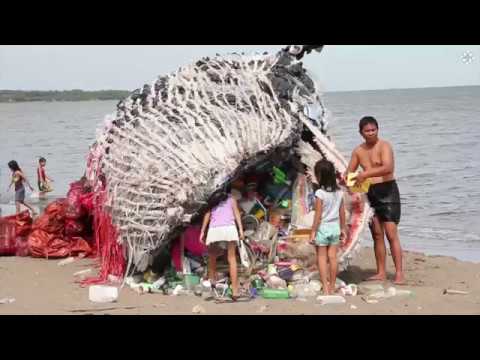
Greenpeace Philippines created a hyper-realistic 73-foot installation of a decomposing blue whale made entirely of plastic waste. By disguising trash as a tragic natural disaster, they forced the public and ASEAN leaders to confront the lethal reality of ocean pollution.
The 73 Foot Plastic Corpse That Fooled the World
A Midnight Operation in Naic
To ensure the installation felt like a genuine ecological disaster, the team from Dentsu Jayme Syfu and production house Etnikolor operated in total secrecy. They constructed the whale in a hidden lot 50 meters from the shore over five days, then moved the massive structure to the beach at 3:00 AM under the cover of darkness. The realism was so convincing that locals initially called authorities to report a biological hazard, with some residents even claiming they could "smell" the rotting carcass - a psychological phenomenon triggered by the hyper - realistic textures of the plastic "flesh."
Engineering a Digital Explosion
The sculpture was a masterclass in sustainable craftsmanship, using zero paint. Every color was achieved by sorting specific shades of plastic waste. The "skin" consisted of blue and grey garbage bags, the "baleen" teeth were carved from PET bottles, and the "innards" spilling onto the sand were actually red onion sacks filled with plastic debris. While originally planned at 50 feet, lead artist Biboy Royong expanded the design to 73 feet to maximize the visual impact for drone photography, which was essential for the campaign's "zero media spend" strategy.
From the Shore to the Summit
The activation achieved a staggering 1.5 billion impressions across 100 countries. More importantly, it functioned as a high - pressure lobbying tool. Launched during the 2017 ASEAN Summit, the installation forced plastic pollution onto the official agenda just 24 hours after it appeared on the beach. The campaign's legacy continued as a global template for Greenpeace, with replicas later appearing in Greece and Spain, and a 2019 sequel titled "The Cry of the Dead Whale" featuring a "baby whale" to highlight the generational impact of the crisis.
Creative Strategy Deconstructed
Company
Greenpeace's authority as an environmental watchdog and their ability to mobilize creative talent for high-impact, provocative activism.
Category
Environmental NGOs often rely on statistics or sad imagery that the public has become desensitized to over time.
Customer
Citizens who felt indifferent to plastic pollution because the consequences seemed distant, hidden underwater, or disconnected from daily life.
Culture
The 2017 ASEAN Summit provided a high-stakes political window to demand immediate policy changes from regional government leaders.
Company
Greenpeace's authority as an environmental watchdog and their ability to mobilize creative talent for high-impact, provocative activism.
Category
Environmental NGOs often rely on statistics or sad imagery that the public has become desensitized to over time.
Strategy:
Transform ignored ecological data into an unavoidable physical spectacle to force immediate political and public confrontation.
Customer
Citizens who felt indifferent to plastic pollution because the consequences seemed distant, hidden underwater, or disconnected from daily life.
Culture
The 2017 ASEAN Summit provided a high-stakes political window to demand immediate policy changes from regional government leaders.
Strategy:
Transform ignored ecological data into an unavoidable physical spectacle to force immediate political and public confrontation.
Results
The campaign achieved massive global scale, reaching over 100 countries. It generated more than 100 million impressions in just three weeks. The installation was covered by major international news outlets including CNN, The Telegraph, and Vice. Most significantly, the issue of plastic pollution was officially included in a proposal for the ASEAN leaders' summit just one day after the campaign launch. It also inspired similar environmental art installations in France and Greece, demonstrating its cultural resonance.
100M+
impressions in 3 weeks
100+
countries reached
1 day
time to reach ASEAN summit proposal
Strategy Technique
Make the Invisible Visible
While people ignored reports of plastic-filled stomachs in real whales, this campaign visualized the invisible threat. It forced a blind public to see the direct link between their plastic waste and the death of marine life.
Explore Technique
Creative Technique
Install it
The campaign used a massive, hyper-realistic physical installation to shock beachgoers. By placing a 'dead whale' in a public space, it turned a digital issue into an unavoidable, tactile reality that demanded immediate attention.
Explore Technique
Craft Breakdown
The campaign's power lies in the incredible physical execution of the whale sculpture and the strategic timing of its placement to coincide with a major political summit.
The 73-foot sculpture is a masterpiece of environmental art, using the very medium it protests (plastic) to create a visceral, unavoidable experience.
Placing the installation during the ASEAN summit ensured the message bypassed public apathy and landed directly on the desks of policymakers.
“The synergy between the hyper-realistic art direction and the tactical media placement turned a local stunt into a global political conversation.”