Mailchimp: Did You Mean Mailchimp?
Mailchimp wanted to increase brand awareness among small business owners and creative professionals in a crowded B2B market. Droga5 New York was tasked with making the brand feel more human and culturally relevant. The challenge was to drive search traffic and sign-ups without relying on traditional, feature-heavy advertising that the target audience typically ignores.
Creative Idea
Created a surreal ecosystem of rhyming sub-brands to trigger Google's 'Did you mean' search prompt.
Mailchimp transformed a common brand mispronunciation into a multi-platform ecosystem of surreal products and experiences, using Google's 'Did you mean...' search prompt to hijack curiosity and drive massive organic traffic through nine rhyming, unbranded sub-campaigns.
The Billion Impression Mispronunciation That Broke Google
From Serial to Surrealism
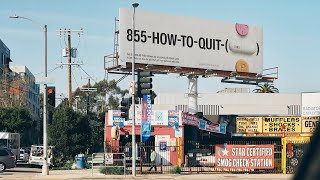
The campaign’s DNA traces back to a 2014 viral moment on the *Serial* podcast, where a young girl’s mispronunciation of the brand as "MailKimp" became a cultural meme. Rather than correcting the record, Droga5 leaned into the confusion, creating a "borderline reckless" strategy that relied on stealth branding. For months, the agency launched nine unbranded products - ranging from FailChips (200,000 bags of crushed potato chips) to SnailPrimp (a snail-secretion spa in LA) - without ever showing a Mailchimp logo. The goal was to trigger curiosity, forcing users to search for the oddities so Google’s algorithm would suggest: "Did you mean Mailchimp?"
High Art and Low-Fi Tech
The production attracted top-tier talent across disciplines. Directors The Sacred Egg crafted surreal films like KaleLimp, featuring a dog made of leafy greens, while musical polymath Dev Hynes (Blood Orange) formed the fictional band VeilHymn, whose single was streamed over 1.5 million times. Even experimental legend Brian Eno took notice, expressing interest in the WhaleSynth digital tool. While much of the campaign lived online, the team prioritized tactile effects; for the follow-up "Get Another Brain" phase, they avoided CGI by using Lycra fabric and physical pulling mechanisms to create "black hole" visuals in-camera.

Metrics of a Cultural Hijack
The "reckless" gamble paid off with 334 million people reached and 67 million organic searches. The campaign generated $3.52 million in earned media value and drove nearly 10 million visits to the main site. Most importantly for the B2B brand, this creative detour resulted in a 14% increase in new user sign-ups, proving that high-concept art could drive hard sales.
Creative Strategy Deconstructed
Company
A quirky brand name that was frequently mispronounced but possessed a playful, unconventional personality.
Category
B2B marketing platforms typically use dry, functional messaging focused on features and reliability.
Customer
Creative entrepreneurs and small business owners value authenticity and brands that don't take themselves too seriously.
Culture
The viral 'MailKimp' meme from the Serial podcast proved that brand errors could become cultural touchpoints.
Company
A quirky brand name that was frequently mispronounced but possessed a playful, unconventional personality.
Category
B2B marketing platforms typically use dry, functional messaging focused on features and reliability.
Strategy:
Convert brand name confusion into a discovery engine by rewarding curiosity with surreal, rhyming cultural artifacts.
Customer
Creative entrepreneurs and small business owners value authenticity and brands that don't take themselves too seriously.
Culture
The viral 'MailKimp' meme from the Serial podcast proved that brand errors could become cultural touchpoints.
Strategy:
Convert brand name confusion into a discovery engine by rewarding curiosity with surreal, rhyming cultural artifacts.
Results
The campaign achieved a massive reach of 334 million people and generated 988 million earned media impressions. It successfully triggered 67 million organic searches driven by curiosity about the unbranded sub-campaigns. Engagement was exceptionally high, with an average of 4 minutes per interaction, which is double the industry average. This translated to nearly 10 million visits to Mailchimp.com and a 14% increase in new user sign-ups. The earned media value was estimated at $3.52 million. Specific sub-campaign successes included 1.5 million streams for the 'VeilHymn' single, the distribution of 200,000 bags of FailChips, and high-profile recognition such as the Cannes Lions Cyber Grand Prix and 3 One Show Gold Pencils.
67M
Organic searches driven by curiosity
14%
Increase in new user sign-ups
988M
Earned media impressions
Strategy Technique
Turn Weakness Into Strength
Instead of correcting people who mispronounced their name, Mailchimp embraced the error. They transformed a potential branding liability into a massive cultural engine for curiosity, search traffic, and brand personality.
Explore Technique
Creative Technique
Wordplays
The campaign is built entirely on phonetic variations of the brand name. By creating real products like 'FailChips' and 'MailShrimp,' the agency turned linguistic confusion into a playful, interactive discovery game.
Explore Technique
Craft Breakdown
This campaign is a masterclass in 'stealth branding,' using surrealist art and physical activations to hijack Google's search algorithm and turn a brand weakness into a cultural ecosystem.
The strategic use of Google's 'Did you mean' prompt to bridge unbranded, surreal content with the core brand was a revolutionary use of search behavior.
Each of the nine sub-campaigns featured a distinct, high-concept aesthetic ranging from kale-covered dogs to piñata-themed prisons.
The campaign moved beyond digital by creating real-world products like FailChips and physical pop-ups like the SnailPrimp spa.
Collaborations with high-profile artists like Dev Hynes and the creation of the WhaleSynth tool turned the campaign into a legitimate cultural contributor.
“The magic lies in the tension between high-art surrealism and low-level search engine optimization, proving that 'reckless' creativity can be a precise business tool.”