Lockheed Martin: Field Trip to Mars
Lockheed Martin sought to inspire children about space exploration and STEM careers. The client aimed to position the brand as a leader in future innovation and a catalyst for the next generation of explorers, engaging them communally.
Creative Idea
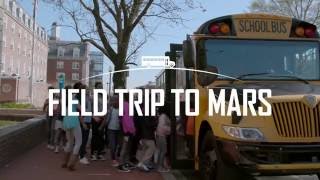
A school bus was transformed into an immersive Mars rover, simulating a journey on the red planet.
Lockheed Martin transformed a school bus into an immersive Mars rover experience using transparent HD window displays and haptic feedback, allowing children to communally explore a mapped Martian landscape and inspiring the next generation of space explorers.
The School Bus That Traveled To Mars
Engineering the First Group VR
To create the world’s first "headset - free" VR experience, the team at McCann New York and Framestore had to solve a massive technical hurdle: motion sickness. If the virtual visuals lagged behind the bus’s physical movement by even a fraction of a second, the students would feel ill. The solution involved a complex array of GPS sensors, 3-axis accelerometers, and a laser surface velocimeter that tracked the bus’s position relative to the pavement. This data was fed into Unreal Engine 4, which rendered 200 square miles of Martian terrain in real - time. Every turn on the streets of Washington D.C. corresponded to a 1:1 movement on the Red Planet.
Transparent Screens and Haptic Feedback
 The production required custom - manufactured transparent 4K LCD displays sourced from South Korea. These screens functioned as standard windows until the "magic moment" when they transitioned to opaque displays. To deepen the immersion, the team installed haptic actuators under the floorboards to simulate the vibrations of the Martian surface. While the students saw a standard yellow school bus, the vehicle was actually a high - tech shell packed with massive computing power and engineering led by Alexander Rea and the team at ISL.
From Defense Contractor to Innovation Leader
The campaign successfully shifted public perception of Lockheed Martin from a defense contractor to a leader in space exploration. It reached over 140,000 students during a two - year tour and generated 24 million earned media impressions in its first week. The project’s cultural significance was cemented when the bus was acquired by the Smithsonian National Air and Space Museum for its permanent collection - a rare honor for a piece of branded content.
Creative Strategy Deconstructed
Company
Lockheed Martin leveraged its advanced aerospace engineering and technological innovation to create a groundbreaking, immersive educational experience.
Category
Traditional educational field trips often lack immersive engagement, while VR typically isolates users, failing to foster communal discovery.
Customer
Children and educators desired engaging, communal learning experiences that could tangibly inspire future STEM careers and space exploration.
Culture
A cultural emphasis on STEM education and the enduring fascination with space exploration created a fertile ground for immersive learning.
Company
Lockheed Martin leveraged its advanced aerospace engineering and technological innovation to create a groundbreaking, immersive educational experience.
Category
Traditional educational field trips often lack immersive engagement, while VR typically isolates users, failing to foster communal discovery.
Strategy:
Make the future of space exploration tangible and communal to inspire the next generation.
Customer
Children and educators desired engaging, communal learning experiences that could tangibly inspire future STEM careers and space exploration.
Culture
A cultural emphasis on STEM education and the enduring fascination with space exploration created a fertile ground for immersive learning.
Strategy:
Make the future of space exploration tangible and communal to inspire the next generation.
Results
The campaign inspired thousands of students. It received significant media attention, with positive mentions from various outlets including PSFK, Ad Age, CBS News, Adweek ("Now this is cool."), Engadget ("Incredibly inspiring."), International Business Times ("Lockheed Mars bus to boost Stem education"), and Trendhunter ("...will change the way classroom learning happens."). Quotes from children and media suggest a shift in sentiment and increased inspiration towards STEM education and space exploration among the target demographic.
1
bus
200 sq. miles
of Mars simulated
Thousands
of students inspired
Strategy Technique
Show the Future
By transforming a school bus into a simulated Mars rover, Lockheed Martin vividly showed children a future where space exploration is tangible. This experience aimed to inspire the next generation of scientists and engineers.
Creative Technique
Cutting-edge Tech
The campaign invented transparent HD window displays and haptic feedback to simulate a Mars journey. This cutting-edge technology created an unparalleled, immersive, and communal virtual reality experience.
Explore Technique
Craft Breakdown
This campaign's craft is exceptional due to its groundbreaking use of integrated VR technology, creating a shared, immersive experience that transcends individual headsets. The seamless blend of physical and virtual movement, combined with high-fidelity visual effects, truly makes it a marvel of immersive advertising and educational technology.
The innovation of transforming a standard school bus into a group VR experience without individual headsets, synchronizing physical movement with virtual landscapes, is a pioneering use of digital technology in advertising.
The creation of a convincing, expansive, and interactive Martian landscape displayed on the bus windows, complete with dynamic elements and realistic textures, is a testament to high-quality VFX work.
The conversion of a regular school bus into a sophisticated, immersive VR environment, including the custom high-definition displays and haptic integration, demonstrates remarkable production design ingenuity.
The internal and external shots of the bus, combined with the seamlessly integrated virtual window views, effectively capture the transformation and the children's authentic reactions, enhancing the storytelling.
“The campaign's magic truly comes from the synergistic combination of innovative digital craft, advanced visual effects, and clever production design, working together to create an unparalleled immersive experience.”