Lockheed Martin: The Field Trip To Mars
As part of the 'Generation Beyond' initiative, Lockheed Martin tasked McCann New York with shifting perception from a defense contractor to a visionary innovation leader. They needed to inspire students to pursue STEM careers. The challenge was to make abstract space technology feel real and accessible to schoolchildren, positioning the brand as the primary architect of future deep-space exploration.
Creative Idea
Replaced school bus windows with screens mapping real-world driving to a virtual Martian landscape.
Lockheed Martin transformed a school bus into a headset-free 'Group VR' experience, replacing windows with screens that mapped real-world movement to Martian terrain. It worked by making the impossible tangible and communal, turning a passive commute into an immersive educational adventure.
Mapping Two Hundred Miles of Martian Terrain
Engineering the Group VR Bus
To move away from the isolation of traditional headsets, McCann New York and Framestore engineered a world - first "Group VR" experience. The team replaced standard bus windows with 4K transparent LCD screens layered with switchable electric glass. This allowed the windows to transition from clear to opaque instantly. To ensure the virtual world matched the physical ride, the bus was outfitted with a custom sensor array including GPS, accelerometers, and an industrial laser surface velocimeter. This tech synced the bus's real - world velocity and turns with the Unreal Engine 4 rendering of Mars.
Real Streets to Red Planet
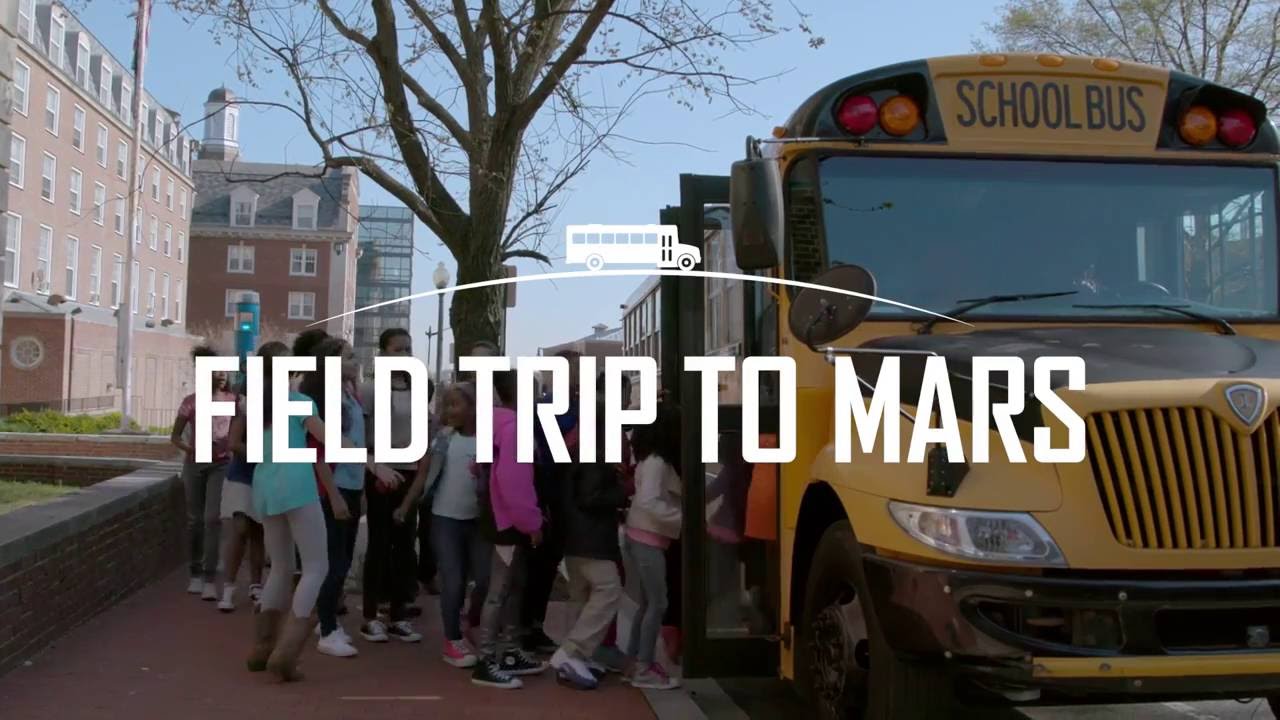 The production was a feat of 1:1 mapping. Framestore - the same VFX house behind *The Martian* and *Gravity* - mapped 200 square miles of Martian terrain directly onto the street grid of Washington, D.C. If the driver turned left on a real city street, the students saw a left turn on Mars. The digital landscape was built using actual NASA satellite imagery and featured a 1:1 scale model of the Curiosity Rover. Lead developer Ron Fosner noted the high stakes of the build, admitting that just 36 hours before launch, the team feared the complex integration might not work.
Impact Beyond the Commute
The campaign successfully rebranded Lockheed Martin for a new generation, generating over 2 billion earned media impressions and 750,000 social actions. Beyond the viral video, the "Generation Beyond" curriculum reached 1.5 million students across the U.S. The project’s legacy was cemented when the bus was retired from its two - year tour and inducted into the permanent collection at the Smithsonian National Air & Space Museum.
Creative Strategy Deconstructed
Company
Lockheed Martin's deep aerospace expertise and role in every American mission to Mars.
Category
Aerospace brands often rely on technical specifications or corporate imagery that fails to engage younger audiences.
Customer
Students who perceive STEM subjects as abstract or boring and lack a tangible connection to space exploration.
Culture
The cultural obsession with Mars and the limitations of isolating, individual VR headset experiences.
Company
Lockheed Martin's deep aerospace expertise and role in every American mission to Mars.
Category
Aerospace brands often rely on technical specifications or corporate imagery that fails to engage younger audiences.
Strategy:
Transform complex aerospace engineering into a communal, immersive experience to bridge the gap between classroom and cosmos.
Customer
Students who perceive STEM subjects as abstract or boring and lack a tangible connection to space exploration.
Culture
The cultural obsession with Mars and the limitations of isolating, individual VR headset experiences.
Strategy:
Transform complex aerospace engineering into a communal, immersive experience to bridge the gap between classroom and cosmos.
Results
The campaign achieved significant global impact, including: 200 square miles of Martian terrain mapped to DC streets, thousands of students inspired, and widespread media coverage from outlets like ABC News, CBS, Adweek, Engadget, and NBC. It was hailed as 'Magic... a first of its kind' by Futurism and 'Incredibly inspiring' by Engadget. The project successfully boosted interest in STEM education and positioned Lockheed Martin as a leader in future space exploration technology.
200
square miles of Mars mapped
1st
group VR experience without headsets
Thousands
of students inspired
Strategy Technique
Build an Utility, Not an Ad
By creating a functional educational tool rather than a traditional commercial, Lockheed Martin proved its innovation credentials. The bus served as a tangible manifestation of their mission to inspire the next generation of explorers.
Explore Technique
Creative Technique
Cutting-edge Tech
The campaign utilized custom-built transparent 4K LCDs and real-time GPS mapping to create a world-first group VR experience. This high-tech execution removed the isolation of headsets, allowing students to experience Mars collectively.
Explore Technique
Craft Breakdown
This campaign's excellence lies in its seamless integration of physical movement with virtual environments, creating a shared immersive experience without the isolation of headsets.
The custom-built transparent 4K displays and GPS-to-CGI mapping system represent a massive leap in experiential tech.
The 200 square miles of Martian terrain were rendered with cinematic quality, maintaining immersion even during real-world bus maneuvers.
The transformation of a mundane school bus into a space vessel created a powerful, communal 'wow' moment.
The capture of genuine, unscripted reactions from the children provides the emotional core of the campaign.
“The magic comes from the perfect synchronization of real-world physics (the bus moving) with the digital VFX, making the virtual world feel physically real.”