Google: Project Genie
Google tasked its internal creative team with introducing Project Genie to the public. The objective was to demonstrate the breakthrough in world models while positioning Google as the leader in interactive AI. The target audience included tech enthusiasts and creative professionals who were eager to explore the future of digital media and real-time content generation.
Creative Idea
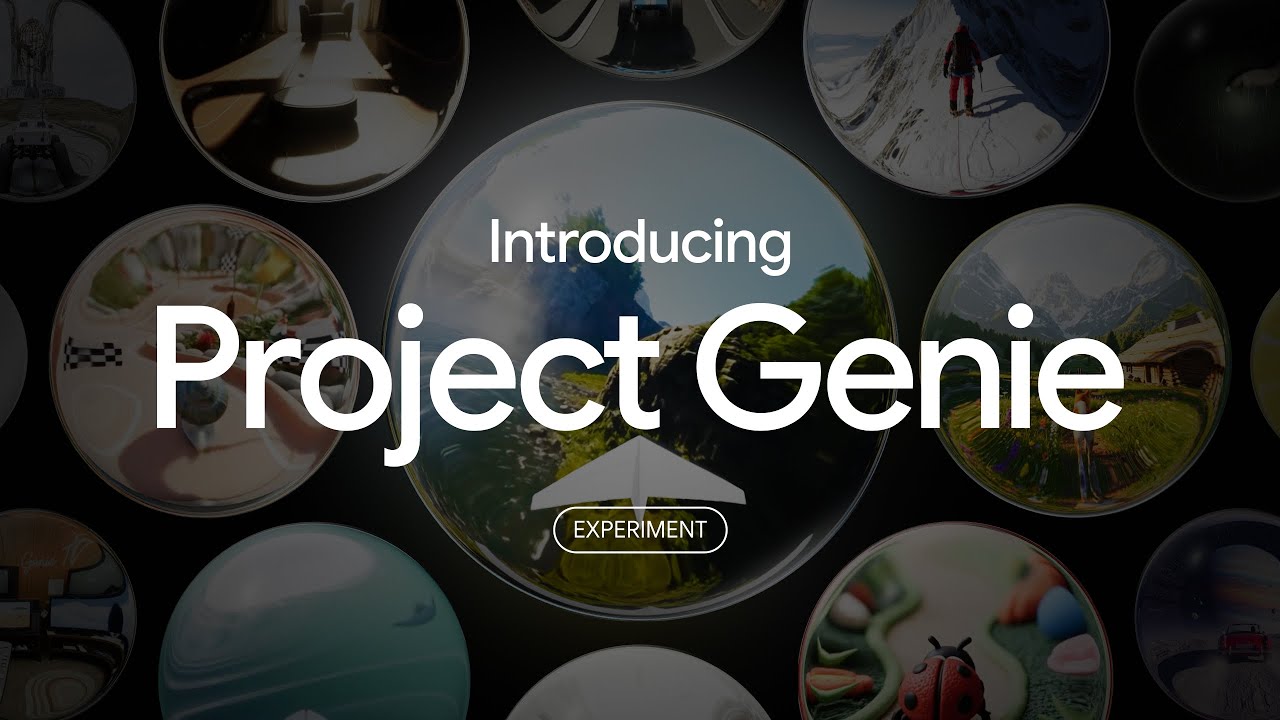
Users transformed simple text prompts into interactive, photorealistic worlds in real-time.
Google launched an interactive world-building prototype that allows users to generate and walk through photorealistic environments from text, shifting the creative paradigm from passive media consumption to active, real-time world creation.
The AI Breakthrough That Shook Wall Street
A Paradigm Shift in Real-Time Rendering
The launch of Project Genie fundamentally altered the competitive landscape for interactive media. By enabling users to generate playable environments from simple text prompts, the platform bypassed traditional game engine workflows. This capability triggered immediate market volatility, as investors reacted to the potential obsolescence of legacy development tools. Within a single trading session, Unity Software shares dropped between 21% and 24%, while Roblox Corporation saw a decline of 10% to 15%. The ripple effect extended to major publishers, with Take-Two Interactive and CD Projekt falling 9.3% and 8% respectively, signaling a massive shift in how the industry values proprietary world-building technology.
Community Driven Innovation
Beyond the technical achievement, the campaign’s success was anchored in its rapid adoption by the creative community. The primary demonstration video became the most engaged post in Google DeepMind history, amassing over 13 million views. This momentum was sustained through a dedicated Discord community, where early adopters moved beyond passive consumption to actively remix and share AI-generated worlds. This user-led ecosystem proved that the platform was not merely a research prototype but a functional creative tool.
Bridging Reality and Simulation
The project’s evolution reached a critical milestone in May 2026 with the integration of Google Maps Street View. Led by Ben Poole and Jonathan Herbert, this feature allowed the model to ground its generative capabilities in real-world geography. This transition from abstract text-to-world generation to location-based simulation solidified the campaign’s reputation as a bridge between physical reality and digital imagination, ultimately earning the praise of the Cannes Lions jury for its ability to transform raw technology into a platform for human expression.
Creative Strategy Deconstructed
Company
Google leveraged its massive AI research infrastructure and DeepMind expertise to build a real-time generative world model.
Category
The gaming and media industry typically relies on expensive, time-consuming manual development and static, pre-rendered assets.
Customer
Users craved the ability to manifest their imagination instantly without needing complex technical or artistic skills.
Culture
The rapid rise of generative AI created a cultural hunger for tools that move beyond static images into interactive experiences.
Company
Google leveraged its massive AI research infrastructure and DeepMind expertise to build a real-time generative world model.
Category
The gaming and media industry typically relies on expensive, time-consuming manual development and static, pre-rendered assets.
Strategy:
Democratize complex creative production by turning generative AI into an accessible, real-time interactive utility.
Customer
Users craved the ability to manifest their imagination instantly without needing complex technical or artistic skills.
Culture
The rapid rise of generative AI created a cultural hunger for tools that move beyond static images into interactive experiences.
Strategy:
Democratize complex creative production by turning generative AI into an accessible, real-time interactive utility.
Strategy Technique
Build an Utility, Not an Ad
By releasing the research prototype as an accessible tool, Google proved the technology's value through direct experience. The product itself became the primary vehicle for demonstrating its own revolutionary capability.
Explore Technique
Creative Technique
Create Fantasy Worlds, People and Things
The campaign showcases the technology's ability to turn simple text prompts into immersive, interactive environments. It highlights the shift from passive viewing to active, real-time world generation.
Explore Technique
Craft Breakdown
The campaign excels in its human-centric approach, translating complex AI technology into accessible, exciting concepts through engaging interviews.
The interview questions are structured to elicit concise, punchy, and highly engaging explanations of complex tech.
The cozy library setting provides a warm, intellectual backdrop that balances the high-tech subject matter.