Google Chrome: Speed Test
Google Chrome wanted to dramatically prove its superior speed to a broad audience in 2010. The challenge was to make browser speed tangible and exciting, differentiating Chrome from competitors. The client needed a campaign that visually demonstrated Chrome's instantaneous page loading, convincing users of its performance advantage and driving downloads. They sought a memorable, shareable execution that cemented Chrome as the fastest browser.
Creative Idea
Google Chrome filmed its browser loading pages against extreme real-world speeds to demonstrate its incredible, instantaneous speed.
Google Chrome created a stunning visual demonstration of its browser's speed by comparing webpage loading times to extreme scenarios like a potato gun, lightning, and sound, proving that Chrome is incredibly fast and can load web pages almost instantaneously.
Racing a Spud Gun at 2,700 Frames Per Second
The Physics of a 200 MPH Spud
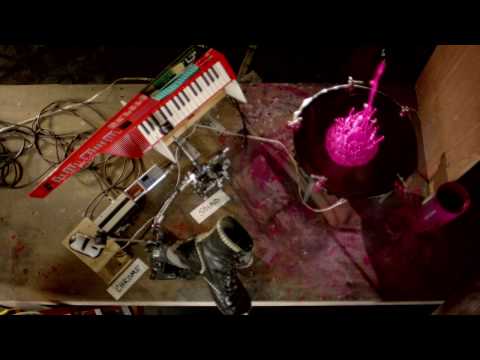
To prove that Chrome's rendering speed was 100% real, the production team at 1stAveMachine and Johannes Leonardo abandoned digital simulation for high-stakes physics. They utilized a Phantom v640 High Speed Camera to film at 2,700 frames per second. Because standard monitor backlights are too dim for such extreme frame rates, the crew had to gut the monitors, replacing internal components with massive tungsten fixtures. This required flipping the monitors upside down to avoid shadows from the driver boards, then manually rotating the OS display 180 degrees to compensate. The team even spent weeks testing various potato varieties to find the most aerodynamic "projectile" capable of hitting 200 mph.
From Underdog to Market Leader
 The impact of the "Speed Tests" was immediate and transformative. Launched in May 2010, the campaign became a viral benchmark for "Product Demos as Entertainment." At the time, Google was transitioning from a company that famously avoided advertising to a creative powerhouse under Robert Wong at Google Creative Lab. The strategy worked - by May 2012, just two years after the potato gun and Tesla coil races debuted, Google Chrome officially overtook Internet Explorer to become the world's most-used web browser.
The Analog Tech Aesthetic
While BBH New York handled simultaneous Chrome spots like "Extensions," it was Jan Jacobs and Leo Premutico who defined the "Speed Test" aesthetic. They opted for a "weird science" or MythBusters vibe to humanize complex code. As Robert Wong noted, the goal was to show that "the default mode at Google is fast." This analog approach to digital speed set a precedent for future industry hits, including Volvo’s "Epic Split."
Creative Strategy Deconstructed
Company
Google Chrome possessed a superior rendering engine and a brand identity rooted in engineering efficiency, allowing them to credibly claim the title of the world's fastest browser.
Category
Browsers typically marketed speed through technical benchmarks and bar charts that felt abstract and disconnected from the actual user experience of browsing the web.
Customer
Internet users were exhausted by lagging interfaces but lacked a meaningful way to quantify browser performance beyond vague feelings of frustration during page loads.
Culture
A growing fascination with high-speed photography and 'science-experiment' content popularized by shows like MythBusters made visceral, physical demonstrations more engaging than digital data.
Company
Google Chrome possessed a superior rendering engine and a brand identity rooted in engineering efficiency, allowing them to credibly claim the title of the world's fastest browser.
Category
Browsers typically marketed speed through technical benchmarks and bar charts that felt abstract and disconnected from the actual user experience of browsing the web.
Strategy:
Dramatize invisible digital speed through extreme physical experiments to transform technical benchmarks into a visceral, undeniable product truth.
Customer
Internet users were exhausted by lagging interfaces but lacked a meaningful way to quantify browser performance beyond vague feelings of frustration during page loads.
Culture
A growing fascination with high-speed photography and 'science-experiment' content popularized by shows like MythBusters made visceral, physical demonstrations more engaging than digital data.
Strategy:
Dramatize invisible digital speed through extreme physical experiments to transform technical benchmarks into a visceral, undeniable product truth.
Strategy Technique
Dramatize the Invisible Benefit
Browser speed is an invisible benefit. The campaign dramatically visualized this speed, making its performance advantage tangible and exciting.
Explore Technique
Creative Technique
Conduct an Experiment
Chrome staged visual experiments comparing browser loading times to extreme physical phenomena. This rigorously tested and dramatically proved its superior speed claim.
Explore Technique
Craft Breakdown
This campaign's craft is exceptional due to its innovative use of practical effects and high-speed cinematography to transform abstract digital speed into tangible, engaging physical demonstrations.
The elaborate, custom-built physical contraptions and dioramas are incredibly creative and meticulously designed, making abstract concepts of speed visually compelling and entertaining.
The high-speed camera work beautifully captures intricate details, explosions, and fluid dynamics, transforming simple experiments into stunning visual spectacles that highlight the dramatic impact of speed.
The rapid cuts and rhythmic pacing are expertly synchronized with sound design and action, maintaining high energy and making the complex sequences easy to follow and engaging.
The unique sound effects for each experiment, from whirring and crackling to explosive impacts and the operatic vocal, perfectly amplify the drama and impact of the visual demonstrations.
“The campaign's magic truly comes from the seamless integration of whimsical production design with precise high-speed cinematography and dynamic sound, translating intangible digital speed into a series of memorably impactful physical events.”