Illinois Council Against Handgun Violence: The Gun Violence History Book
The Illinois Council Against Handgun Violence tasked FCB Chicago with breaking through the public's desensitization to gun violence statistics. They needed to pressure Illinois lawmakers to pass the Fix the FOID Act and engage students in a meaningful dialogue about gun control. The goal was to move beyond traditional awareness ads and create a tangible tool that proved history doesn't have to repeat itself.
Creative Idea
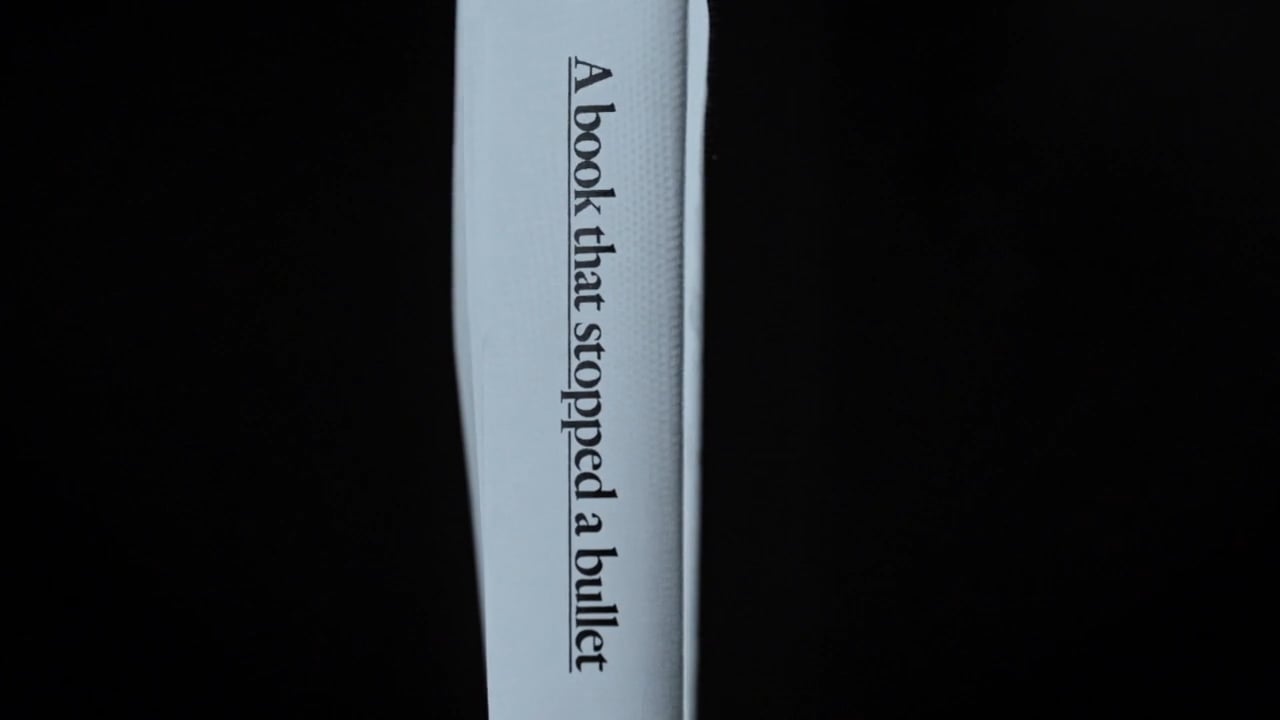
A history book of gun violence was manufactured thick enough to physically stop a bullet.
To prove that learning from the past can prevent future tragedies, ICHV created an 853-page history of American gun violence thick enough to physically stop a bullet, turning a record of failure into a literal shield for the future.
Stopping a Bullet With 228 Years of History
The physics of stopping power
To demonstrate the literal weight of history, the production team at FCB Chicago and Lord + Thomas didn't rely on Kevlar or synthetic reinforcements. Instead, they utilized the raw density of 853 pages of paper. To validate the concept, they conducted a live ballistic test, firing a .45 caliber bullet - the most common ammunition found in American street violence - directly into the book. The projectile was successfully lodged within the pages, transforming a record of past trauma into a physical shield. The design itself followed a "brutal" aesthetic, using only typography and raw imagery sourced from two centuries of newspaper archives and data reports.
From classrooms to the Senate
A forty year design drought
The project holds a unique place in industry history for its mastery of physical craft in a digital era. When it was recognized for its book design, it broke a 40-year streak at major award circuits where that specific category had been overlooked for top honors. It also served as a spiritual successor to FCB’s previous "Teddy Gun" campaign, which highlighted the irony that plush toys face stricter safety regulations than firearms in the United States.
Creative Strategy Deconstructed
Company
A long-standing advocacy group with access to centuries of tragic data and a mission to influence legislative change.
Category
Public service announcements often rely on shocking imagery or statistics that people have become desensitized to over decades.
Customer
Citizens and lawmakers feel overwhelmed by the cycle of violence and believe that history is doomed to repeat itself.
Culture
A growing youth-led movement demanding common-sense gun laws and a deeper understanding of the systemic roots of violence.
Company
A long-standing advocacy group with access to centuries of tragic data and a mission to influence legislative change.
Category
Public service announcements often rely on shocking imagery or statistics that people have become desensitized to over decades.
Strategy:
Materialize abstract historical data into a physical barrier to demonstrate the protective power of collective memory.
Customer
Citizens and lawmakers feel overwhelmed by the cycle of violence and believe that history is doomed to repeat itself.
Culture
A growing youth-led movement demanding common-sense gun laws and a deeper understanding of the systemic roots of violence.
Strategy:
Materialize abstract historical data into a physical barrier to demonstrate the protective power of collective memory.
Results
The campaign successfully reached a wide audience through various channels. The book was mailed to lawmakers to influence policy. It was displayed at the exact locations where historical gun violence occurred, such as the sites of John Lennon's and Martin Luther King Jr.'s assassinations. The book was also integrated into high school curricula, specifically at A.A. Stagg High School, to educate the next generation of voters. The campaign generated significant social media engagement and earned media coverage from outlets like NBC Chicago. US Senator Dick Durbin is shown endorsing the project, highlighting its impact on political discourse.
853
pages of documented gun violence history
228
years of American history covered
13
chapters of tragic events
Strategy Technique
Dramatize the Invisible Benefit
It takes the abstract concept of historical education and gives it a visceral, life-saving utility, proving that the weight of our past is the only thing strong enough to stop the present.
Explore Technique
Creative Technique
Turn Message into Product
By transforming a chronological record of gun violence into a physical object capable of stopping a bullet, the campaign literalized the metaphor that history can protect us if we study it.
Explore Technique
Craft Breakdown
This campaign's craft is exceptional due to its physical manifestation of a metaphor—a book literally stopping a bullet—and its meticulous archival research.
The physical creation of an 853-page book capable of stopping a bullet is a masterclass in functional and symbolic object design.
The use of the 'history repeating itself' metaphor is perfectly woven through the script and the physical product's purpose.
The high-speed photography used to capture the bullet impact provides a visceral, undeniable proof of the campaign's central claim.
The stark black, white, and red aesthetic creates a cohesive and powerful visual language across all campaign touchpoints.
“The power comes from the synergy between the physical design of the book and the cinematography that proves its resilience, turning a data-heavy object into a life-saving symbol.”