
Most social cause advertising is the equivalent of a digital sigh - well-meaning, beige, and instantly forgotten. In the world of gun violence, "thoughts and prayers" fatigue is a literal barrier to entry. To break through, you cannot simply show a tragedy; you have to engineer a trap. This collection is a masterclass in the "Trojan Horse" strategy, where the creative doesn't lead with a scream, but with a smile, a retail sale, or a sweet high school romance. By the time the audience realizes they are looking at a horror story, the hook is already set. This is a tactical strike on the cultural blind spots of a nation that has become numb to the noise of sirens.
Casting the Villain in a John Hughes Movie
The campaigns that survive the 24-hour news cycle are those that prioritize cinematic craft over piety. Look at Sandy Hook Promise: Evan. Director Henry-Alex Rubin did not just film a PSA; he meticulously choreographed a "John Hughes" coming-of-age aesthetic, hiding a shooter in plain sight with details as granular as the social media handle "Christo4k47." It works because it exploits our brain's tendency to focus on the narrative we want to see - the romance - while ignoring the warning signs. This same "bait-and-switch" technique allowed Sandy Hook Promise: Back to School to generate over $7.6 million in earned media from a modest paid media budget of "only $37,000." When you use high-end production value to mirror a Target or Walmart ad, you are weaponizing the viewer's own expectations against them.

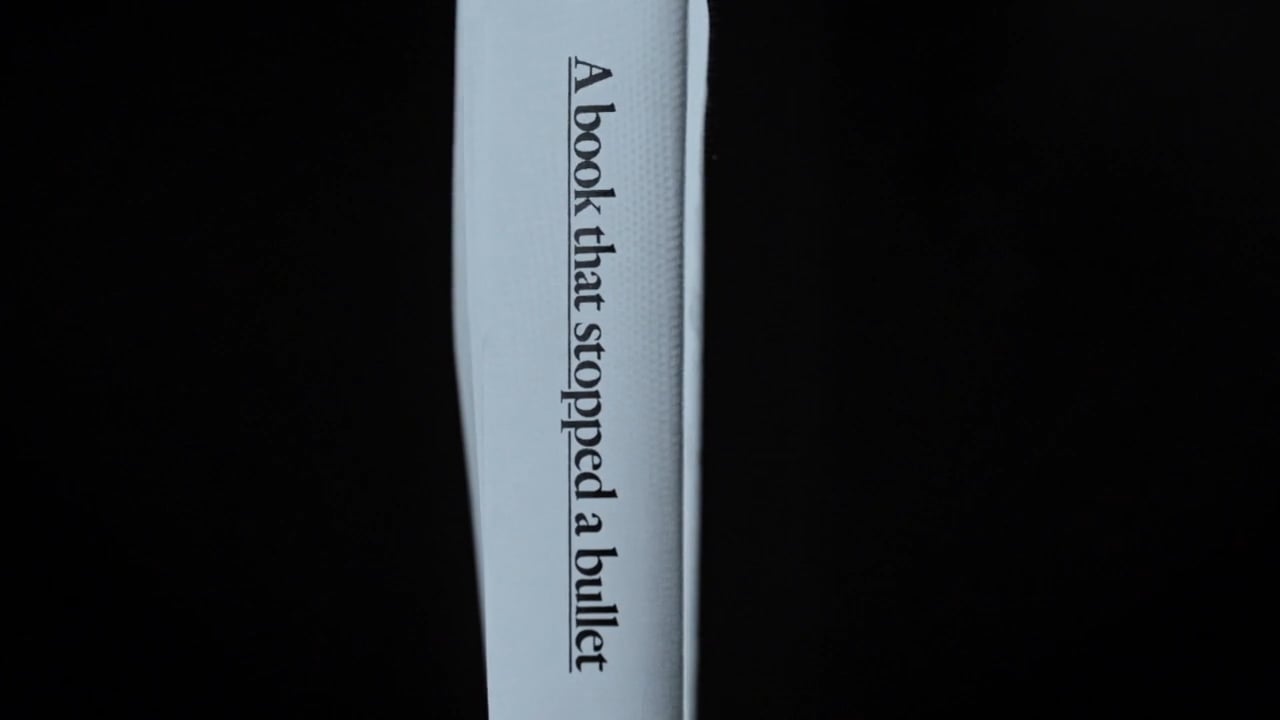
Beyond the screen, the most effective strategies in this category turn data into a physical, undeniable weight. Most brands try to explain gun violence through charts; these agencies turn those charts into objects. In Illinois Council Against Handgun Violence: The Gun Violence History Book, the strategy was not to write a report, but to manufacture a shield. Using "853 pages of paper" to stop a .45 caliber bullet transforms a metaphor into physics. Similarly, ICHV: Most Dangerous Street took the abstract math of weekly shootings and turned it into a "kinetic installation" of 38 red lasers in a Chicago alley. These are physical interventions. They force the public to physically "step up" to the data rather than scroll past it. By making the invisible visible through lasers and soundscapes, they remove the luxury of looking away.
The ROI of Authentic Deception
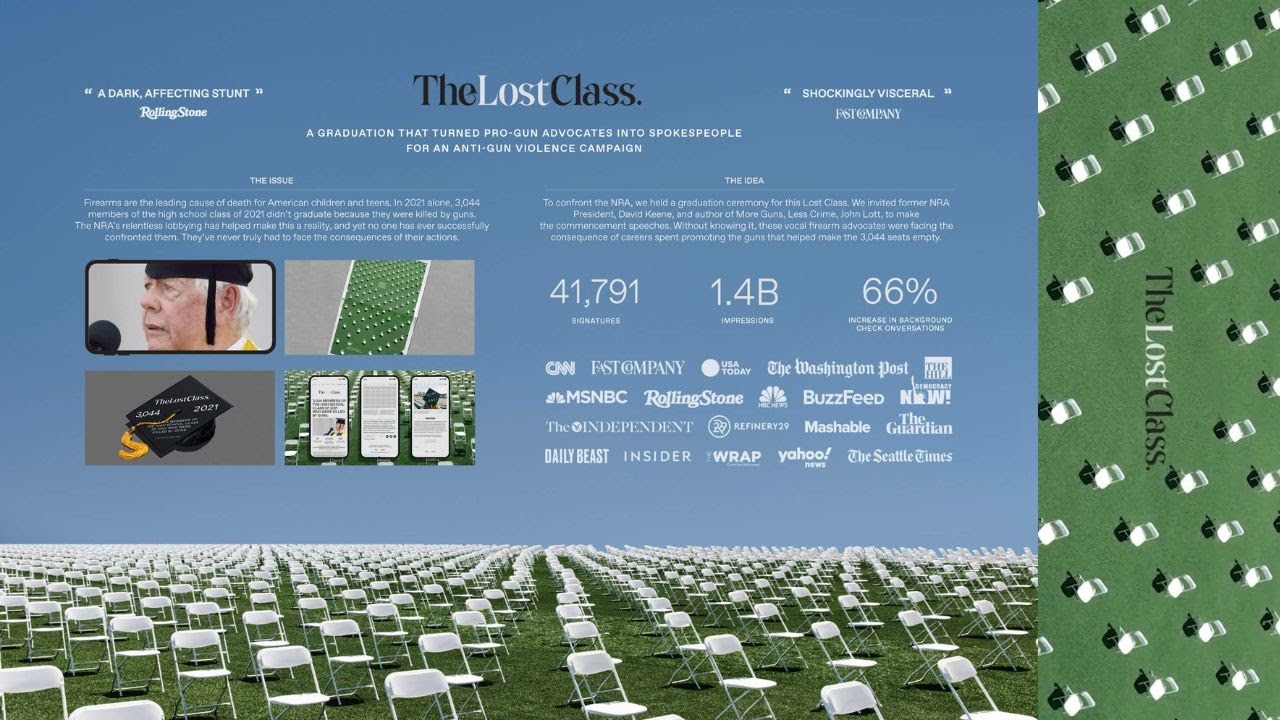
Perhaps the gutsiest move in this playbook is the "Sting." While corporate brands are terrified of controversy, these organizations lean into it with cinematic pranks that border on performance art. In Change the Ref: The Lost Class, the agency built a "James Madison Academy" facade so convincing it tricked pro-gun leaders into speaking to 3,044 empty chairs. This was not just a video; it was a "rehearsal for ghosts" that mirrored the headstones at Arlington National Cemetery. This level of commitment - from designing school crests to printing fake graduation programs - is what separates an "ad" from a cultural moment. It is the same "Trojan Horse" production strategy used for March For Our Lives: Generation Lockdown, where a real California workplace thought they were attending a standard safety seminar, only to be confronted by an 11-year-old girl teaching them how to hide.
What makes this collection distinct from other creative categories is the stakes of the "product." There is no brand safety net here. When States United to Prevent Gun Violence: Guns with History opened a fake gun shop in Manhattan, they had to have an "NYPD official" on-site for the entire two-day shoot to monitor the props. This is not about winning a Lion at Cannes; it is about legislative impact. Whether it is the "90 pages of safety vs 5 sentences of firepower" logic used in Council Against Handgun Violence: Teddy Gun or the 8,000 hours spent building a survival horror game in Change the Ref: The Final Exam, these campaigns prove that the most powerful tool for change is a sharp, well-executed creative strategy that refuses to play by the rules of polite society.
These ads do not ask for your attention; they take it by force. They remind us that in a world of infinite noise, the only way to be heard is to be impossible to ignore.