
For decades, telecom marketing was a race to the bottom of a spreadsheet - a grim tally of data caps and roaming charges that felt about as inspiring as a plumbing invoice. Then the industry hit a wall. When every provider offers five bars of signal, the signal itself becomes invisible. To survive, the giants had to stop selling the pipes and start selling the water. This collection captures the moment network providers realized that their product isn't a utility; it is the invisible tissue of modern life. They moved from counting minutes to hijacking culture, proving that a brand selling "connectivity" has a license to talk about anything from gender bias to geopolitical freedom.
What unites these campaigns is a refusal to be "background noise." Most telco ads fail because they try to make the technology the hero, showing glowing blue lines pulsing through CGI cities. The icons in this playlist do the opposite. They hide the tech to reveal the stakes. In Orange - WoMen's Football, the brand doesn't brag about its bandwidth; it uses it to execute a "manual, frame - by - frame VFX" heist on our collective prejudice. By spending five months on meticulous masking and tracking to fool two billion fans, Orange proved that the network isn't just a way to watch the game - it is a lens that can reshape how we see the world.
Breaking the Product to Save the Brand
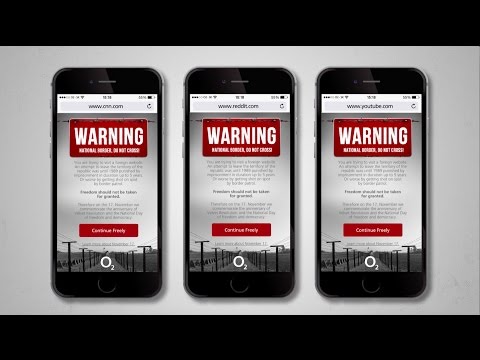
The bravest work in this category happens when a brand intentionally "breaks" its own service to prove its value. While average marketers obsess over 99% uptime, Digital Iron Curtain saw O2 Slovakia intentionally manipulate its network at the "DNS and gateway levels" to simulate state-level censorship. By blocking the very internet they sell, they made the abstract concept of freedom feel visceral for a generation that takes it for granted. This isn't just an ad; it is utility-based subversion. It works because it respects the audience's intelligence enough to cause temporary friction, reaching a third of the entire Slovak population in a single day without a cent of traditional media spend.
This "story-doing" approach separates the legends from the forgotten. Most brands want to talk about "security," but WhatsApp - We Are Ayenda turned end-to-end encryption into a cinematic protagonist. By integrating "actual WhatsApp voice notes and text messages" from a real-life escape from Afghanistan, the brand reframed a technical feature as a fundamental human right. It is a masterclass in high-stakes narrative where the product is the only thing standing between the characters and a tragedy. This is the recurring theme of the "Telco Wars" - the most successful brands stop acting like a service provider and start acting like a lifeline, a defender, or a provocateur.
Why High Craft Is Cheaper Than Boredom
In a category defined by parity, craft is the only remaining unfair advantage. These campaigns succeed because they invest in production values that most telcos would deem "unnecessary" for a utility. Take Deutsche Telekom: Bubbles, which bypassed generic CGI to enlist a two-time Academy Award-winning prosthetic mastermind to design subtle, non-human features for its lead actors. This level of detail - using physical glass panes on set to capture authentic reflections - creates an emotional resonance that a stock-footage montage can never touch. It is a reminder that in the attention economy, being "polished" is the baseline, but being "cinematic" is the strategy.

Even when the tone shifts to humor, the commitment to the bit is total. Whether it is Three UK: Phones are Good. leaning into "radical honesty" to defend our right to buy shoes on the toilet, or Vodafone: Ghita, the Social Shepherd turning a "technology virgin" into a national icon, these brands win by finding a human truth and over-delivering on the execution. They understand that people don't care about the network; they care about what the network allows them to feel. By the time a shepherd is using a smartphone to find lost sheep via GPS, the brand has already stopped being a company and started being a part of the cultural furniture. The "Telco Wars" weren't won with better coverage, but with better stories.
Ultimately, these campaigns represent a shift from selling the tool to celebrating the outcome. They prove that when you sit at the center of human connection, you don't need to shout about your features if you can make people feel the weight of their absence.