
For decades, brands treated gaming like a billboard in a digital basement, but the modern gaming ad is actually a Trojan horse made of code and culture. It is the only category where "interrupting the experience" is a death sentence, forcing marketers to stop acting like tourists and start acting like developers. To win here, you cannot just buy a placement - you have to earn a seat at the console.
What unites the heavy hitters in this collection is a refusal to just "buy" a demographic. While lazy brands slap a logo on a tournament stream and call it a day, the icons in this library - like Burger King: Stevenage Challenge - find the glitch in the matrix. By spending just £50,000 to sponsor a real-world League Two team, Burger King effectively "hacked" the image rights of Messi and Ronaldo because the FIFA engine didn't know the difference between a bottom-tier club and a global giant. This isn't just advertising; it is a tactical exploitation of the medium's physics. Most brands fail here because they bring "TV logic" to a "gameplay loop" world. They forget that gamers don't want to watch your brand - they want to use it as a power-up or a shortcut to status.
Bribing the Audience with Utility
The secret sauce of the most effective gaming campaigns is "Unexpected Utility." If you aren't solving a problem for the player, you are just lag. Heinz: "Hidden Spots" campaign succeeded because it addressed the "80 percent snack gap" - the fact that live multiplayer matches have no pause button, making eating a high-stakes gamble. By mapping safe havens where players could hide to eat a burger without getting shot, Heinz became a legitimate part of the strategy. This is a far cry from the usual "buy this snack for a chance to win" fluff. It turns the product into a survival tool. Similarly, Oreo: Cheat Cookies turned the physical product into a literal key, using machine learning with a 90% accuracy rate to decode cookie patterns into exclusive in-game rewards.

This level of commitment is what separates the legends from the forgotten banners. It requires a willingness to play the long game - or in the case of Wendy's: Keeping Fortnite Fresh, a nine-hour rampage against frozen beef. Instead of hiring a professional and buying a skin, Wendy's sent a mascot into the world to ignore the game's primary objective and focus entirely on destroying in-game freezers. This "Trojan Horse" strategy allows the brand to bypass ad-blockers by becoming the entertainment itself. It’s a high-risk move that requires trusting the creative team to actually understand the lore. When Fortnite: Astronomical launched, it wasn't just a concert; it was a technical test for new swimming mechanics, featuring a Travis Scott avatar that stood "ten stories high" to ensure every player on the map felt the scale of the moment.
If You Can't Build It, Hack the Lore
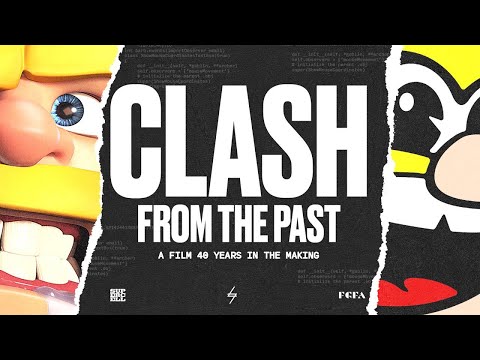
Most brands treat a game’s history as a footnote, but the best campaigns treat it as a religion. Clash of Clans: Clash from the Past is perhaps the ultimate example of this, creating a fake 40-year history that never existed. To make the "Mandela Effect" feel real, director Nalle Sjöblad shot a mockumentary using "five different era-specific cameras" to match the visual textures of the 80s and 90s. They didn't just tell a story; they built a brand myth that 170 million people chose to believe in. This is why these campaigns stand out: they offer a level of craft that feels "over-engineered" for a simple ad. Whether it's Xbox: The Birth of Gaming Tourism hiring professional in-game photographers to treat virtual vistas like real travel destinations, or Dove: Code My Crown publishing open-source code to fix the industry’s lack of diverse hair representation, these brands are doing the actual work of world-building.
Ultimately, this collection differs from others because it isn't about reach - it is about integration. In the world of Xbox: The Everyday Tactician, the brand didn't just talk about the realism of Football Manager; they hired a gamer to be a real-life professional tactician for Bromley FC, eventually helping the club secure its first-ever promotion to the English Football League. That is the ultimate proof of concept. When you stop treating gaming as a "demographic" and start treating it as a "skill set," the marketing stops feeling like an intrusion and starts feeling like an achievement. These campaigns prove that the most valuable thing a brand can do in a virtual world is stop selling and start playing. In a world where every player has an "ignore" button, the only way to win is to become the game itself.