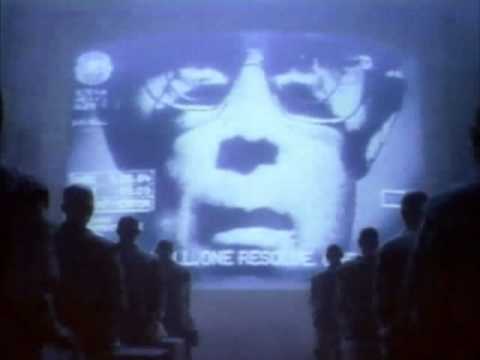
The 1980s was the last decade where a brand could legitimately claim to own the water cooler. Before the fragmentation of the internet turned our attention into a billion jagged shards, advertising functioned as a shared national liturgy. The brands in this collection didn't just reach an audience; they hijacked the cultural conversation through sheer, unadulterated audacity. While modern agencies often drown in the data of incremental gains, the architects of the 80s were busy betting their entire careers on high-stakes sixty-second films. They understood a truth we often forget: if you want to shift a culture overnight, you have to be willing to scare the hell out of your own board of directors.
When Production Budgets Outran Boardroom Logic
The defining trait of these iconic spots is a level of cinematic ambition that feels almost irresponsible by today's standards. Take Apple: 1984 Macintosh Commercial, a film so provocative that Apple’s board of directors suggested the agency be fired on the spot. It wasn't just about the message; it was about the grit. Director Ridley Scott didn't use digital drones; he hired "200 real-life skinheads" and used "actual 747 jet engines" to create an atmosphere of industrial dread. This wasn't a commercial; it was a manifesto wrapped in a blockbuster. Similarly, Danepak Lean & Low: Naturists avoided the easy route of digital trickery. In an era before post-production could hide a multitude of sins, the team used "meticulous in-camera choreography," utilizing everyday objects like a thermos flask to preserve modesty in real-time. This commitment to the craft - even for something as mundane as low-fat bacon - is exactly what separates a fleeting content piece from an enduring cultural artifact.

This era also mastered the art of the strategic pivot, where a brand’s biggest weakness was transformed into its most lethal weapon. While most marketers would try to hide a product's flaw, the best 80s campaigns leaned into the problem until it became a virtue. In Heinz: The Best Things Come to Those Who Wait, the agency turned the agonizingly slow pour of their ketchup into a masterclass in tension. It was a gamble that paid off visually and professionally, famously saving the career of a young Matt LeBlanc. Before he was a household name, LeBlanc was "living on $11" and using a "nail file to even out his own teeth" because he could not afford a dentist. The ad didn't just sell viscosity; it sold a suave, patient confidence that eventually became the blueprint for his future career. It is a reminder that the best strategy isn't always to fix the product, but to change the lens through which the consumer views the defect.

The ultimate metric of success in the 80s wasn't a like or a share, but a literal collapse of the logistics chain. When Levi's: Laundrette hit the screens, it didn't just nudge the needle; it shattered the dial. Within a year, sales of 501s surged by "800 percent," forcing the brand to pull the ad off the air because they physically could not manufacture enough denim to keep up with the demand. This is the Hegarty Effect in its purest form - where a creative choice, like switching from briefs to boxers due to "British censorship," accidentally revolutionizes an entire secondary industry. It proves that when you stop trying to appeal to everyone and start trying to make someone feel something visceral, the market responds with a ferocity that data alone can't predict. This collection captures that specific lightning in a bottle - a time when advertising was a high-contact sport where a single spot could shift culture overnight.
If Your Ad Doesn't Break the Supply Chain, It’s Just Noise
The grit wasn't reserved for the massive budgets, either. Some of the most emotionally resonant work came from cobbling together resources in ways that would make a modern procurement department weep. BASF: Dear John managed to humanize a chemical giant by recording its soundtrack in a "concrete stairwell" for natural reverb and using "silver milk bottle caps" for soldier dog tags in a New Zealand quarry. This scrappy ingenuity, contrasted with the high-octane energy of Diet Pepsi: Apartment 10G, highlights the decade's range. Whether they were using motion control photography for a soda dash or a lo-fi parody to sell cassette tapes, these brands were united by a refusal to be boring. They didn't just inhabit the culture; they built it, one sledgehammer swing at a time. By treating the audience like they had an attention span, these brands earned something much more valuable than a click: they earned a permanent place in our collective memory.