BASF: Dear John
BASF wanted an engaging campaign to highlight their audio recording technology's superior sound quality to consumers. The brand needed to differentiate its cassettes in a crowded 1980s market. The challenge was to demonstrate perfect sound capture in a memorable, entertaining way, ensuring emotional moments were perfectly reproduced. They sought to increase brand preference and sales for their audio recording products.
Creative Idea
BASF used a humorous "Dear John" song to prove its recording technology captured emotion perfectly.
BASF created a clever advertising campaign that dramatized a "Dear John" breakup letter through a humorous musical narrative, showing how their recording technology could capture emotional moments with perfect sound quality. The ad used a comedic song about betrayal to demonstrate the brand's audio recording capabilities in a memorable and entertaining way.
Silver Milk Bottle Caps and a Quarry War Zone
A Masterclass in Shoestring Production
Despite its international acclaim, the commercial was "cobbled together" on a remarkably low budget. To maximize resources, legendary director Tony Williams filmed the spot at the end of a shoot for the Bank of New Zealand, retaining the crew for one extra day. The "Korean war camp" was actually a disused quarry in Island Bay, Wellington, dressed with DIY props. In a stroke of low - budget ingenuity, the soldiers' dog tags were crafted from silver milk bottle caps.
The Stairwell Sound of Heartbreak
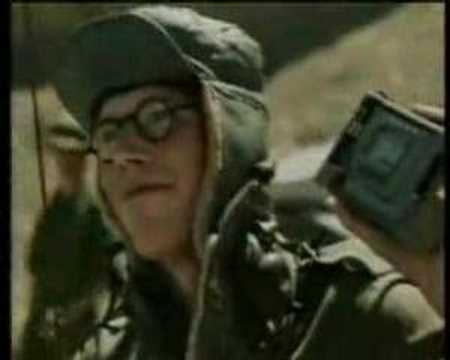 The campaign’s success hinged on its "torch song" parody of the 1953 country hit "A Dear John Letter." Musical arranger Murray Grindlay famously recorded the track in a concrete stairwell to achieve the perfect natural reverb. This acoustic choice, paired with the vocals of Jacqui Fitzgerald, created the high - fidelity clarity that made the breakup so devastatingly clear for the protagonist, John, played by Greg Bepper.
Humanizing the Chemical Giant
At the time, the cassette market was dominated by technical specifications like signal - to - noise ratios. Writer Roger Brittenden pivoted from functional marketing to emotional storytelling, parodying the aesthetic of the hit TV show M*A*S*H. This shift transformed BASF from a cold chemical company into a household name. The ad’s cultural footprint was so significant that the "Play it again, John" line - delivered by American - Australian actor Gus Mercurio - became a permanent fixture of Australasian pop culture, eventually earning the title of "Best Commercial of the Decade" in 1990.
Creative Strategy Deconstructed
Company
BASF leveraged their chemical engineering heritage to create magnetic tape with superior signal-to-noise ratios. This enabled them to promise high-fidelity audio that captured every vocal inflection and emotional nuance.
Category
The audio media segment was dominated by technical jargon, frequency response graphs, and sterile laboratory demonstrations. Most competitors treated sound as a scientific metric rather than a vessel for human storytelling.
Customer
Consumers used cassettes to record deeply personal, often awkward messages and music. They needed a medium reliable enough to convey the subtext, tone, and personality of a voice, not just the words spoken.
Culture
The 'Dear John' letter was a ubiquitous cultural trope for romantic betrayal in the 1980s. By using this relatable, high-stakes scenario, the brand turned a technical product into a source of memorable entertainment.
Company
BASF leveraged their chemical engineering heritage to create magnetic tape with superior signal-to-noise ratios. This enabled them to promise high-fidelity audio that captured every vocal inflection and emotional nuance.
Category
The audio media segment was dominated by technical jargon, frequency response graphs, and sterile laboratory demonstrations. Most competitors treated sound as a scientific metric rather than a vessel for human storytelling.
Strategy:
Dramatize technical audio superiority by capturing the raw hilarious emotion of a recorded breakup to prove sound quality matters.
Customer
Consumers used cassettes to record deeply personal, often awkward messages and music. They needed a medium reliable enough to convey the subtext, tone, and personality of a voice, not just the words spoken.
Culture
The 'Dear John' letter was a ubiquitous cultural trope for romantic betrayal in the 1980s. By using this relatable, high-stakes scenario, the brand turned a technical product into a source of memorable entertainment.
Strategy:
Dramatize technical audio superiority by capturing the raw hilarious emotion of a recorded breakup to prove sound quality matters.
Strategy Technique
Break a Category Convention
In a crowded 1980s cassette market, BASF broke category norms by using a humorous musical breakup letter. This unconventional approach effectively differentiated the brand and highlighted its superior sound quality.
Explore Technique
Creative Technique
Sing a song
The campaign used a humorous, memorable song to demonstrate the perfect sound quality of BASF's recording technology. This musical narrative effectively captured emotional moments, making the product benefit unforgettable.
Explore Technique
Craft Breakdown
This campaign's exceptional craft lies in its brilliant use of storytelling and sound design to create a memorable and darkly humorous narrative, masterfully juxtaposing serious war setting with an unexpected romantic betrayal, all underscored by a clever product message.
The core strength is the ingenious tagline 'Even the bad times sound good,' which perfectly encapsulates the ad's narrative and product benefit.
The ad tells a complete, engaging, and surprising story within a short timeframe, building anticipation for the comedic twist and devastating reveal.
The actors deliver subtle yet impactful facial expressions, particularly Soldier 2's transition from innocent joy to utter devastation, which sells the punchline.
The cuts are precisely timed to reveal character reactions and enhance the comedic and emotional beats of the story, particularly in response to the song lyrics.
“The synergy between the sharp songwriting, the precise editing that highlights character reactions, and the ultimate payoff of the tagline creates a highly effective and memorable comedic narrative.”