Food advertising is usually a sea of slow - motion steam and euphoric faces that no real human has ever made while eating a cracker. Most brands in the grocery aisle are terrified of friction, spending millions to polish away the mess, the wait, and the inherent weirdness of their products. But the campaigns in this collection take the opposite approach. They don't just accept the flaws of their products; they weaponize them. By leaning into the "problem" of the snack - whether it is the frustration of a slow - pouring sauce or the literal physical hazard of a narrow cardboard tube - these brands transform low - interest commodities into high - interest cultural artifacts.
Take Pringles: Stuck In, which turned a decades - old design complaint into a badge of honor. Instead of redesigning the can, they celebrated the fact that forty three percent of people admit to getting their hands stuck, driving a twelve percent sales lift by simply acknowledging a shared human struggle. We see this same "flaw - first" strategy in Heinz: Ketchup Fraud. Rather than suing the twenty percent of restaurants that admit to refilling iconic glass bottles with generic sludge, the brand turned the "fraud" into a high - performance lead generation tool. They understood that the transgression itself was the ultimate proof of the product's value. When a brand stops trying to be perfect and starts trying to be true, it stops being an interruption and starts being a mirror.
Weaponizing the Design Flaw
This commitment to the bit is what separates a viral moment from a lasting brand legacy. When Cadbury's: Gorilla first hit screens, executives were famously baffled by a ninety second spot that featured no chocolate and no dialogue. It only worked because of an obsessive level of craft - specifically an animatronic suit featuring twenty seven remote - controlled motors to capture subtle nostril flares and facial expressions. Most brands would have cut the build - up or forced a logo into the first five seconds, but Cadbury let the tension simmer. It is the same "anti - advertising" spirit seen in Skittles: Exclusive the Rainbow, where the brand produced a full Super Bowl commercial for an audience of exactly one teenager. They traded a five million dollar media buy for over a billion earned impressions, proving that being exclusive is often more profitable than being accessible.

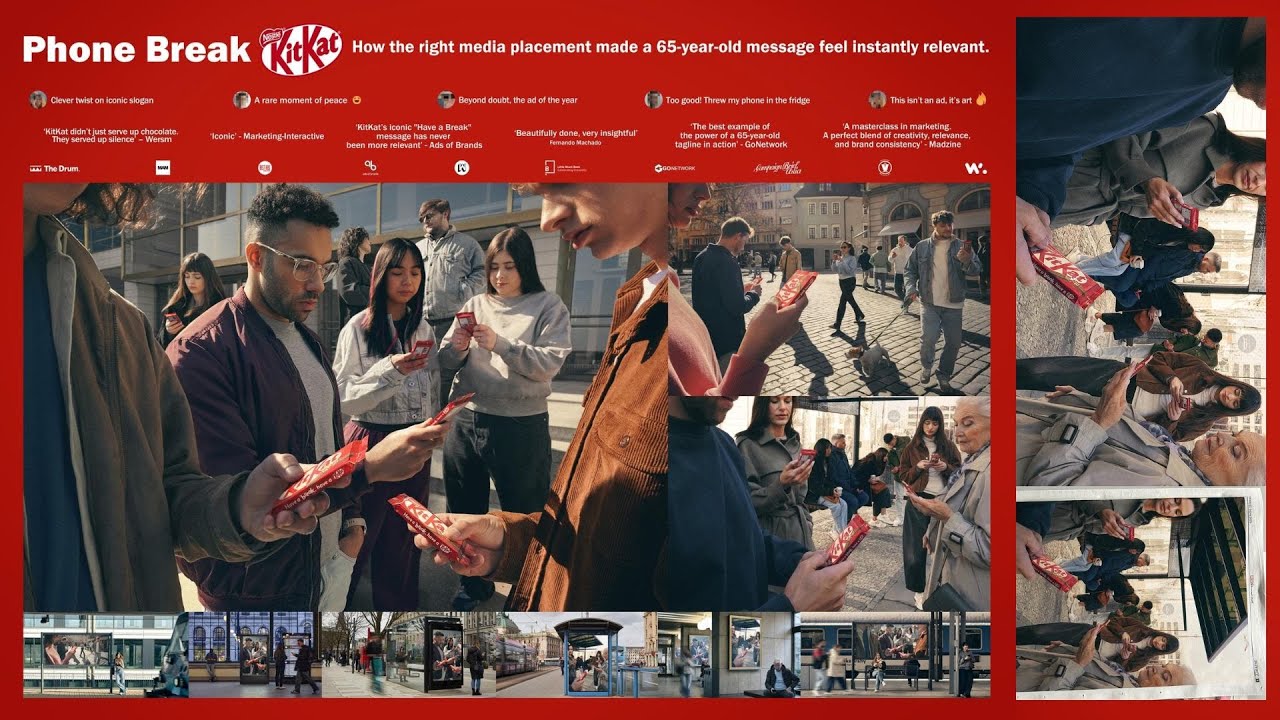
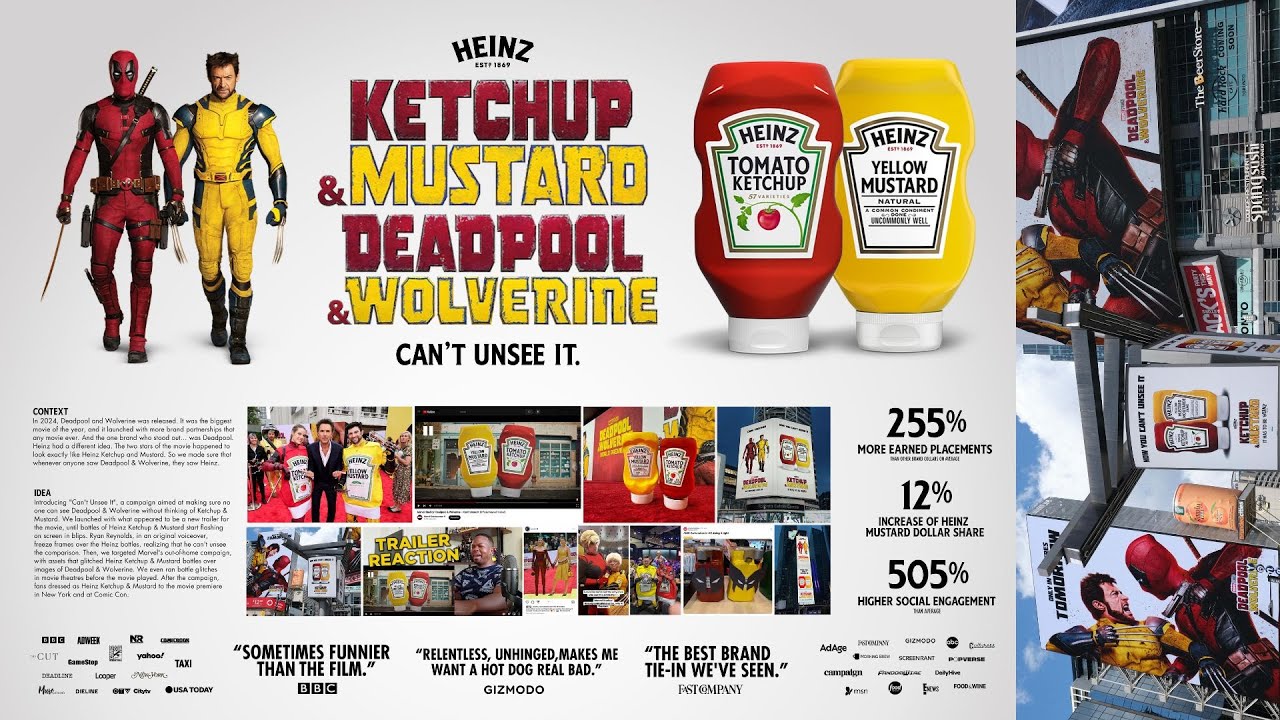
When Heinz: Can't Unsee It hijacked the biggest movie of the summer, it didn't just rely on a visual gag. It leaned into a set nickname where the film crew already called the lead actors "Ketchup and Mustard" - a move that turned a "brilliantly dumb" connection into a twelve percent jump in mustard market share. This is the same logic that makes KitKat: Phone Break so effective. It doesn't beg for your attention; it reflects your behavior. By replacing a smartphone with a chocolate bar in wordless, minimalist frames, it creates a "one - second ad" that is impossible to skip because it exists in the physical world. These brands understand that a snack isn't just a product; it is a cultural parasite that thrives by attaching itself to the things we already care about, whether that is a Marvel blockbuster or our collective screen addiction.
The final evolution of this theme is the total abandonment of "sense" in favor of "lore." Look at Nutter Butter: Nutter Butter, You Good?, which ignored every rule of traditional brand safety to create an analog horror universe on TikTok. They spent zero dollars on media and zero dollars on influencers, yet they captured forty five years of collective human attention by being genuinely, deeply unhinged. It is a far cry from the tactical precision of Snickers: Hungerithm, which used a custom engine to monitor fourteen thousand social posts a day to lower prices when the internet got angry. Both campaigns share a refusal to be "just an ad." They choose to be a utility, a game, or a fever dream. They prove that in a category defined by impulse buys, the biggest risk isn't being too strange - it is being too forgettable to notice. If your snack brand isn't making the consumer feel a little obsessed or a lot confused, you are just selling calories.