Chipotle: A Love Story
Chipotle needed to rebuild consumer trust and reinforce its commitment to real, fresh ingredients following an E. coli incident. The client sought to differentiate itself from the fast-food industry's reliance on artificiality, aiming to resonate with consumers desiring authentic food choices and cultivate a better brand perception.
Creative Idea
A love story used childhood rivalry to critique artificial fast food.
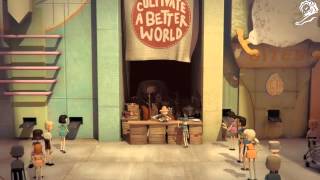
Chipotle's animated "A Love Story" campaign cleverly used a childhood rivalry escalating into a dystopian fast-food empire to dramatize the pitfalls of artificial ingredients, ultimately advocating for real food and Chipotle's commitment to fresh, simple ingredients.
The Boy Band Ballad That Rebuilt a Brand
A Pixar Pedigree and Eight Months of Craft
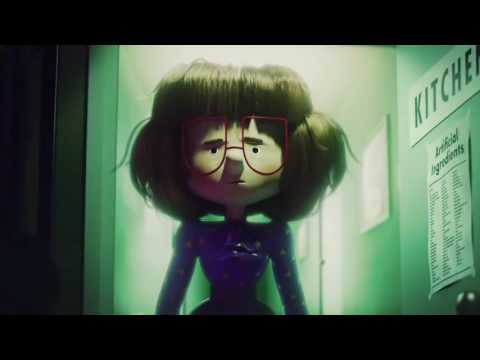
To achieve a "tactile, fuzzy, and handcrafted" aesthetic, Chipotle enlisted director Saschka Unseld, a former Pixar animator. The production at Passion Pictures in London spanned eight months, utilizing a sophisticated CGI style designed to make the digital environment feel physical and organic. In a bold move for a major brand, the film follows a wordless narrative for over four minutes, relying entirely on visual storytelling and a melancholy soundtrack. The Chipotle logo is famously withheld until the final seconds, a hallmark of the brand’s "unbranded content" strategy.
Reclaiming the Narrative After Crisis
While the film is often viewed as a direct response to the brand's 2015 food safety crisis, development actually began six months before the E. coli outbreak occurred. However, its release became the cornerstone of Chipotle's "emotional comeback" after reporting its first-ever quarterly loss. The strategy, described by brand lead William Espey as Values Integration, successfully shifted sentiment: 71% of viewers reported a higher belief in Chipotle’s ingredient quality. It also became the highest-scoring QSR ad in Ace Metrix history with a score of 708.
Hidden Jabs and Musical Reimagining
The film features a haunting cover of the Backstreet Boys’ "I Want It That Way," performed as a duet by Brittany Howard (Alabama Shakes) and Jim James (My Morning Jacket). Beyond the music, the animation contains "Easter eggs" mocking industry competitors, specifically the "Sparkle Flavor Tacos," which analysts identified as a jab at Taco Bell’s Doritos Locos Tacos. The campaign’s digital "Match Game" further drove engagement by rewarding players for identifying real ingredients while avoiding "imposters" like artificial additives.
Creative Strategy Deconstructed
Company
Chipotle could credibly deliver a message about the importance of real, fresh ingredients, leveraging its established commitment to "Food with Integrity."
Category
The fast-food category often relies on artificial ingredients, mass production, and prioritizing speed over the integrity of food.
Customer
The audience desired authenticity and simplicity in their food, feeling a growing distrust of artificial ingredients and processed options.
Culture
A cultural shift towards valuing transparency in food, health-consciousness, and a growing skepticism towards industrial food production.
Company
Chipotle could credibly deliver a message about the importance of real, fresh ingredients, leveraging its established commitment to "Food with Integrity."
Category
The fast-food category often relies on artificial ingredients, mass production, and prioritizing speed over the integrity of food.
Strategy:
Reaffirm the intrinsic value of authentic, simple choices by dramatically exposing the hollow promises of artificial complexity.
Customer
The audience desired authenticity and simplicity in their food, feeling a growing distrust of artificial ingredients and processed options.
Culture
A cultural shift towards valuing transparency in food, health-consciousness, and a growing skepticism towards industrial food production.
Strategy:
Reaffirm the intrinsic value of authentic, simple choices by dramatically exposing the hollow promises of artificial complexity.
Strategy Technique
Create Contrast
The ad dramatically contrasts the artificial, sprawling fast-food empires built on "Sparkle Flavor" with the simple, fresh food served from the protagonists' adult food truck. This highlights the brand's commitment to real ingredients versus processed alternatives.
Explore Technique
Creative Technique
Lovestory
The campaign is explicitly titled "A Love Story," following two protagonists from childhood rivalry to adult partnership. Their journey symbolizes a return to authentic food, embodying the brand's message of cultivating a better world through real ingredients.
Explore Technique
Craft Breakdown
This campaign's craft is exceptional in its seamless blend of charming stop-motion aesthetics with dynamic CGI, underscored by a brilliant reinterpretation of a classic pop song that perfectly mirrors the narrative's emotional arc.
The animation expertly transitions between a tactile, handcrafted style and a sleek, hyper-stylized CGI, effectively conveying the narrative's shifts in tone and setting.
The chosen song, a cover of 'I Want It That Way,' is brilliantly re-orchestrated to reflect each emotional phase of the story, serving as a powerful emotional anchor and narrative device.
The visual style and color palettes are meticulously crafted to underscore the narrative's themes, from wholesome beginnings to dystopian artificiality and back to natural warmth.
The narrative is compelling and well-structured, using the escalating competition between two children as an allegorical tale about the dangers of corporate greed versus the value of authenticity.
“The true magic of this campaign lies in the powerful synergy between the animation's evolving visual style, the music's dynamic reinterpretation, and the poignant narrative, all working in concert to deliver a profound message.”