KitKat: Phone Break
Nestlé challenged VML Czechia to modernize KitKat's "Have a Break" positioning for a digitally fatigued generation. They needed to reach young urbanites who habitually scroll during downtime. The goal was a high-impact, low-budget solution to prove that scrolling isn't a real break, ultimately driving brand affinity by encouraging consumers to choose a physical snack over a digital screen.
Creative Idea
Replaced smartphones with KitKat bars in wordless ads to encourage a physical break.
KitKat replaced smartphones with chocolate bars in minimalist OOH ads, capturing the "tech-neck" posture of commuters. By swapping the device for a snack, the brand visually proved that a real break requires putting the screen down and reconnecting with the physical.
The Grand Prix That Cost Zero Dollars
From 400 Ideas to One Frame
The concept originated from a massive VML global internal pitch that saw over 400 submissions from around the world. The winning execution by VML Czechia relied on the "oblong" physical similarity between a smartphone and a KitKat bar. Photographer Miro Minarovych captured actors in "frozen" scrolling poses - known as "tech-neck" - but replaced the devices with chocolate. This minimalist approach was so immediate that industry experts dubbed it the "one-second ad" because it was impossible to skip in the physical world.
The Power of Silent Branding
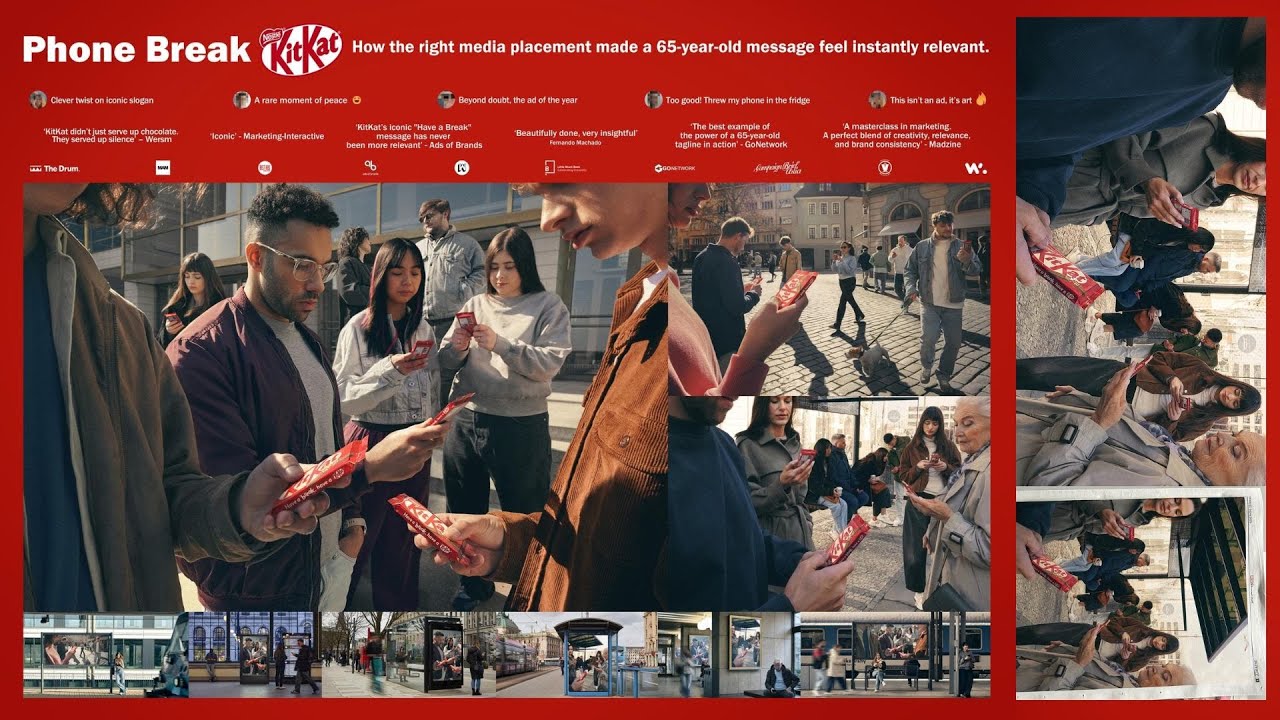 In a bold move for a global brand, the ads contained no logo, no tagline, and no copy. The only branding present was the tiny "KitKat" text on the side of the chocolate wrapper. This relied entirely on "fluent devices" - the brand's iconic red color and four-finger shape - which are so recognizable that the brand name became redundant. Keka Morelle, the Outdoor Lions Jury President, described the work as a "masterclass" for holding up a mirror to our collective screen addiction without saying a word.
Digital Detox with Zero Spend
Despite having a $0 digital media spend, the campaign reached over 2.63 million people through organic sharing and industry outlets like Adweek and Muse by Clio. The strategy was backed by research showing that 91% of people feel better after disconnecting from the internet. By launching exactly 68 years after Donald Gilles penned the original "Have a Break" line in 1957, the campaign successfully modernized a legacy asset for a generation suffering from digital fatigue. It eventually ranked in the top 10% for brand distinctiveness in Kantar’s LINK testing.
Creative Strategy Deconstructed
Company
KitKat's iconic four-finger shape and "Have a Break" tagline, which are globally recognized even without a logo.
Category
Snack brands usually shout for attention with loud packaging, complex promotions, or digital-heavy social media campaigns.
Customer
Young urbanites felt digitally fatigued and trapped in "doomscrolling" loops, yet struggled to actually disconnect during downtime.
Culture
The rise of "tech-neck" and screen addiction made people hyper-aware of their posture and the emptiness of digital breaks.
Company
KitKat's iconic four-finger shape and "Have a Break" tagline, which are globally recognized even without a logo.
Category
Snack brands usually shout for attention with loud packaging, complex promotions, or digital-heavy social media campaigns.
Strategy:
Position KitKat as the physical antidote to digital addiction by visually replacing the smartphone with a chocolate bar.
Customer
Young urbanites felt digitally fatigued and trapped in "doomscrolling" loops, yet struggled to actually disconnect during downtime.
Culture
The rise of "tech-neck" and screen addiction made people hyper-aware of their posture and the emptiness of digital breaks.
Strategy:
Position KitKat as the physical antidote to digital addiction by visually replacing the smartphone with a chocolate bar.
Strategy Technique
Make the Brand a Mirror
The ads reflect the audience's own "doomscrolling" behavior back at them in real-time. By seeing their habits mirrored, consumers are forced to acknowledge their screen addiction and the need for a physical break.
Explore Technique
Creative Technique
Show, Don't Tell
By removing all copy and logos, the campaign relies entirely on the visual metaphor of the product's shape. This forced the audience to mentally complete the "Have a Break" tagline through pure observation.
Explore Technique
Craft Breakdown
The campaign succeeds through the uncanny visual alignment of the product's dimensions with smartphone ergonomics and raw, candid photography.
Photographer Miro Minarovych captured authentic, un-staged "tech-neck" postures that make the product swap feel eerily natural and relatable.
The precise alignment of the KitKat bar's dimensions with the grip of a smartphone creates a perfect visual metaphor.
“The synergy between the specific product shape and the human posture creates a "one-second ad" that requires no text.”