Most advertising about disability runs on one fuel: pity. Soft piano, slow zoom, a voice gently asking you to imagine someone else's life. It is the genre's default setting, and it is also why most of it slides off the brain by the next ad break. The campaigns in this playlist work because they pick a fight with that default. They argue, they joke, they rename an international airport, and more than once they leave you slightly embarrassed for ever having assumed less.
What ties them together is a refusal to cast Down syndrome as the problem. The problem, these campaigns keep insisting, is everyone else's lazy assumptions - and lazy assumptions are a far better creative target than sympathy.
Make the invisible impossible to ignore
The fastest way to change a conversation is to make people physically unable to dodge it. Fondation Anne de Gaulle - 'Paris Anne de Gaulle' did exactly that at the most literal scale imaginable, temporarily renaming Charles de Gaulle Airport after a woman with a mental disability so that millions of travelers walked through her name without a vote in the matter. National Down Syndrome Society: C21 pulled the same move on a smaller, sharper stage: it sat U.S. lawmakers down in a pop-up restaurant staffed entirely by people with Down syndrome, then revealed that the laws those same lawmakers wrote made that employment a financial penalty. The syndrome was never the obstacle. The legislation was.
Hijack the moment that actually matters
Timing beats budget. Canadian Down Syndrome Society: Down Syndrome Answers understood that the most important conversation about Down syndrome happens in a search bar, late at night, run by a frightened new parent typing questions they are afraid to say out loud. So instead of buying awareness, it answered those exact Google queries with videos of people who actually have Down syndrome doing the talking. It is a small masterclass in showing up where the need already is, rather than shouting where it is convenient.
Trade pity for power
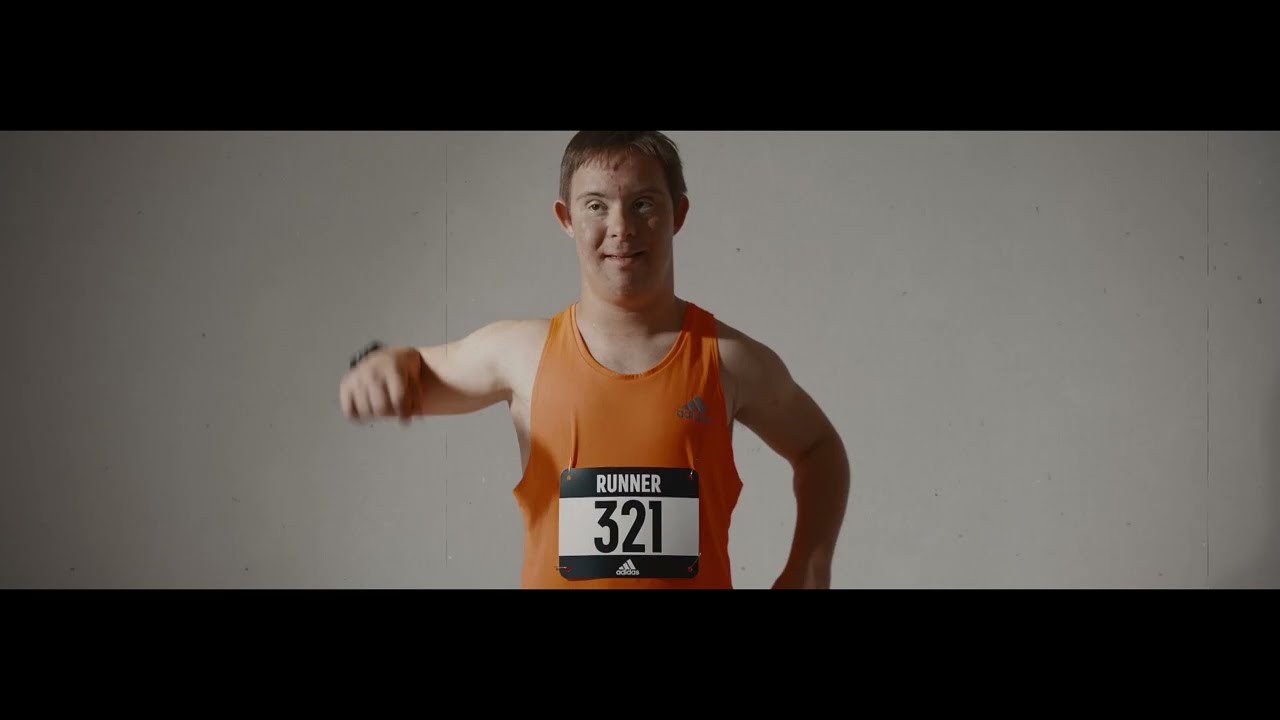
The strongest work here does not ask for a seat at the table. It demands one, loudly, in 4/4 time. CoorDown: No Decision Without Us turns systemic exclusion into a defiant Broadway musical, which is a far more memorable way to say "stop deciding things about us without us" than any policy paper. CoorDown: Just Evolve goes after the "R-word" by comparing it to outdated habits we have happily abandoned, like washing clothes in urine, letting absurd logic do the heavy lifting that finger-wagging never could. Scope: See the Person hides its talent until the reveal, betting you will respect the musician before you clock the diagnosis. And Adidas - Runner 321 quietly retires a single race bib number - 3, 2, 1, the chromosomal signature of Down syndrome - and hands it to athlete Chris Nikic, turning a logistics detail into a Cannes-winning symbol of who gets to belong in sport.
Notice what none of these do. None of them lead with sympathy. They lead with an idea sharp enough to survive the scroll, then let the humanity arrive on its own terms. That is a much harder brief than "make people feel sad for thirty seconds," and it is exactly why these ones stuck.
Watch them back to back and the pattern worth stealing shows up fast: the most inclusive advertising treats its subjects as the most interesting people in the room, not the most fragile. Hit play and see which reframing you can borrow for your own work.