Western observers often dismiss Japanese creativity as "wacky," but that’s a lazy misreading of a culture that values extreme precision over generic sentiment. What unites these campaigns is a commitment to a different logic - one where a brand doesn't just claim a benefit but builds a physical monument to it. While global agencies often hide behind CGI to save time, Japanese teams treat the production as a "creative sandbox" where they invent entirely new mediums to prove a point.
Precision Is the New Surrealism
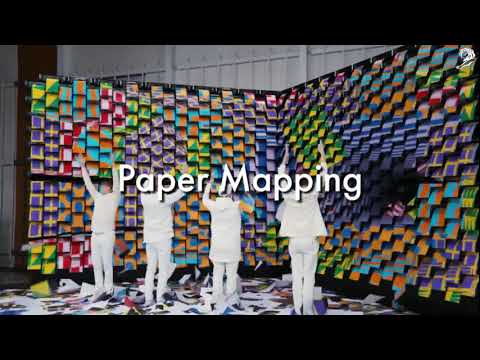
This obsession manifests as a refusal to take the easy path. In Double A: Obsession For Smoothness, the team spent three years developing "paper mapping" because the "maximum mechanical speed" of the printers dictated the song’s tempo. This isn't just an ad; it's a stress test. Most brands settle for a clever metaphor, but the best Japanese work builds a physical reality. Even the hero of this list, Japan Para Table Tennis: The Most Challenging Pingpong Table, succeeded by physicalizing "distorted spatial perceptions" into professional-grade equipment rather than just asking for sympathy.
Western strategy often treats data as a dry proof point, but Tokyo logic turns it into high drama. Look at Sound of Honda: Ayrton Senna, where engineers used a "single sheet of paper" found in a warehouse to resurrect a ghost through 5.8 kilometers of speakers and LEDs. It’s a "spacetime warp" that makes the invisible visible. Similarly, Asuniwa: Sato 2531 used mathematical modeling to predict a future where everyone shares one surname, turning a legal debate into a "national heritage" crisis. By taking a data point to its most absurd logical conclusion, these brands force an emotional reaction that logic alone could never trigger.

Even when the subject matter is clinical or corporate, the execution remains visceral. Recruit Lifestyle: The Family Way turned a smartphone into a laboratory to trigger a "structural shift in Japanese society," making male infertility as accessible as a lifestyle habit. Meanwhile, Kurashiki Central Hospital, Tokyo: Surgeon Tryouts ignored academic scores to test candidates with "5mm tall" origami cranes. These campaigns succeed because they refuse to be "quietly profound" in a way that fades into the background. They are loud, precise, and physically demanding. They prove that in a world of digital shortcuts, the most effective strategy is often the one that is the hardest to physically build.