Japan Para Table Tennis: The Most Challenging Pingpong Table
Japan Para Table Tennis faced a significant awareness gap, with only 1% of the population watching para-sports. TBWA\Hakuhodo was tasked with rebranding the association to shift public perception from pity to genuine admiration for the athletes' technical abilities. The goal was to engage the Japanese public ahead of the Tokyo 2020 Paralympics and prove that para-athletes are elite competitors.
Creative Idea
Physicalized the distorted spatial perceptions of para-athletes into playable, high-performance ping pong tables.
To bridge the gap between sympathy and admiration, the campaign physically manifested the unique spatial perceptions of para-athletes by creating distorted, high-performance ping pong tables, forcing able-bodied players to experience the immense skill required to compete.
The Table That Made the Invisible Visible
From Sketches to Professional Grade
The production process began with a series of intimate interviews where national team members like Koyo Iwabuchi and Yukimi Chada were asked to sketch how they "felt" the table during a match. These subjective, distorted drawings were then handed to SAN-EI Corporation, the official table manufacturer for the Rio 2016 and Tokyo 2020 Games. Despite their bizarre, non-rectangular shapes - such as the jagged, distorted edge of the Iwabuchi Table - every unit was built to professional standards. They utilized the same high-quality materials as Olympic-grade equipment to ensure that the bounce and surface friction remained authentic, even as the geometry defied logic.
Shifting the 1 Percent
Before the launch, a staggering 99% of the Japanese population reported no interest in watching para-sports. To combat this, the campaign moved beyond traditional media by making the tables available for rent at schools, event spaces, and commercial facilities across Japan. This experiential strategy allowed able-bodied players to physically experience the "distance" and mobility challenges athletes face. By making the game nearly impossible for the public to play, the project successfully reframed the narrative from one of "charity" to one of "extreme athletic excellence."
A Holistic Identity Overhaul
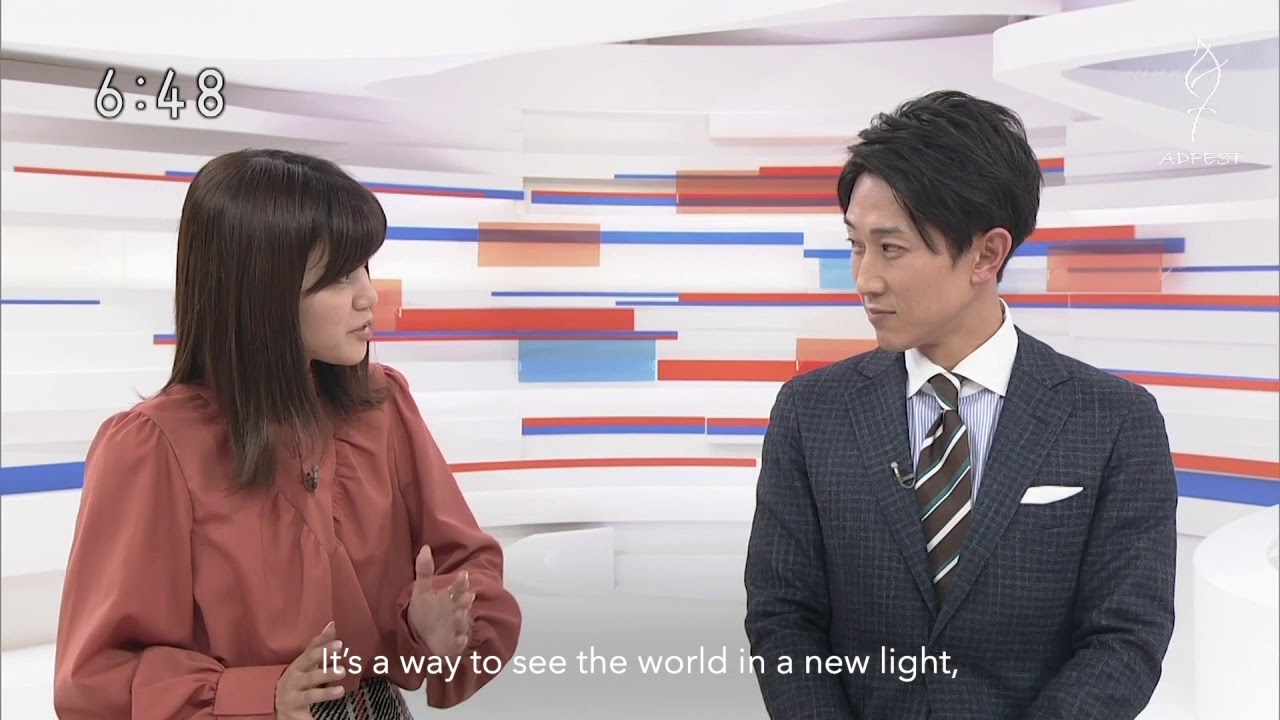
The tables were the centerpiece of a total brand transformation for the Japan Para Table Tennis Association (JPTTA). Under the leadership of Executive Creative Director Masaya Asai, the agency developed a new name, a dynamic logo, and a digital profiling tool. This tool graphically mapped a player's "perspective" of the table, helping spectators visualize the technical difficulty of every serve and return during a match. This approach is now cited as a masterclass in using Product Design as Advertising to communicate complex human experiences.
Creative Strategy Deconstructed
Company
Access to national para-athletes and the technical expertise of the official Olympic table manufacturer, SAN-EI.
Category
Para-sports marketing often relies on sympathy, focusing on the disability rather than the elite athletic skill.
Customer
A Japanese public that largely ignored para-sports, viewing them as a charitable endeavor rather than a competitive spectacle.
Culture
Growing anticipation for the Tokyo 2020 Games and a national push for a more inclusive, barrier-free society.
Company
Access to national para-athletes and the technical expertise of the official Olympic table manufacturer, SAN-EI.
Category
Para-sports marketing often relies on sympathy, focusing on the disability rather than the elite athletic skill.
Strategy:
Materialize subjective physical limitations into objective environmental obstacles to transform passive sympathy into active respect for skill.
Customer
A Japanese public that largely ignored para-sports, viewing them as a charitable endeavor rather than a competitive spectacle.
Culture
Growing anticipation for the Tokyo 2020 Games and a national push for a more inclusive, barrier-free society.
Strategy:
Materialize subjective physical limitations into objective environmental obstacles to transform passive sympathy into active respect for skill.
Results
The campaign achieved significant reach and impact, including 1.3 Billion Media Impressions and over 550 Earned Media Placements. Social media engagement saw a massive surge with a +237% increase in SNS conversation. Most importantly, the campaign successfully shifted public perception, with 92% of participants reporting an increased interest in Para Sports after experiencing the tables.
1.3B
Media Impressions
+237%
SNS Conversation
92%
Increased interest in Para Sports
Strategy Technique
Make the Invisible Visible
The campaign literalized the invisible physical and psychological barriers faced by para-athletes, turning their subjective reality into a physical challenge that the public could finally see and touch.
Explore Technique
Creative Technique
Turn Message into Product
By transforming the abstract internal struggle and distorted perspective of para-athletes into tangible, playable objects, the campaign moved beyond traditional storytelling to provide a visceral, first-hand experience of athletic excellence.
Explore Technique
Craft Breakdown
The campaign's excellence lies in its physical manifestation of an abstract concept, using high-end industrial design to bridge the empathy gap.
The creation of 20 unique, functional, and aesthetically striking tables that serve as data visualizations of physical impairment.
The campaign successfully turned a passive observation into an active, physical experience that changed participant perspectives.