Asha Ek Hope Foundation: Blink To Speak
Asha Ek Hope Foundation tasked TBWA\India Mumbai with finding a way to help MND and ALS patients communicate. High-tech eye-tracking devices were too expensive for most Indian families, leaving patients trapped in silence. The goal was to create an accessible, low-cost solution that empowered caregivers and restored a voice to those suffering from total body paralysis.
Creative Idea
Codified simple eye movements into a free, universal language for paralyzed patients to communicate.
TBWA created the world's first accessible eye language for paralyzed patients, converting simple eye movements into a functional communication system. It worked by replacing expensive, high-tech tracking software with a low-cost, intuitive guidebook that restored dignity through basic human biology.
The Eye Language Born From Personal Tragedy
From Curtains to a Global Standard
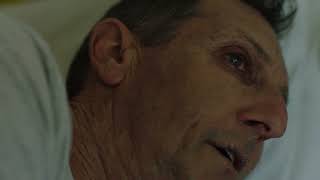
The project was fueled by a deeply personal loss. Design Director Geet Rathi conceived the idea after her uncle was diagnosed with ALS. Watching him attempt to communicate by pointing his eyes at messages she had written on curtains, she realized the need for a codified system. Alongside Dr. Alok Sharma and Dr. Hemangi Sane, the team spent months researching with neurologists to distill human ocular capability into eight "alphabets" of the eye: Shut, Blink, Left, Right, Up, Down, Roll, and Wink.
An Analogue Solution for a Digital World
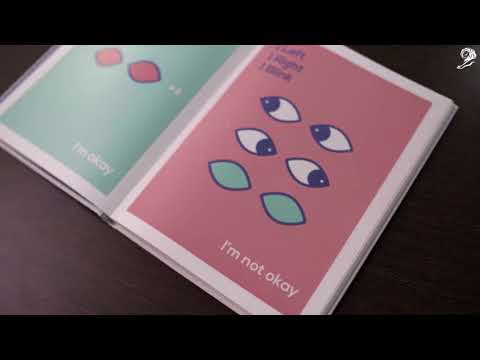 While the industry trended toward AI and expensive eye-tracking software costing over ₹1 lakh ($1,200), TBWA\India intentionally chose an analogue format. By creating a physical guidebook, they ensured the system remained functional in power-deprived or low-income regions. The book uses high-contrast, medical-style illustrations designed to be understood by caregivers with minimal literacy. This "Creative Product Design" approach allowed the language to be distributed for free, reaching an estimated 60 million patients worldwide.
Scaling Beyond the Page
Launched in April 2018 to coincide with Global MND/ALS Awareness Day, the system was translated into seven languages, including Bengali, Telugu, and Kannada. Beyond its initial use as a book, the initiative has been integrated into Indian nursing college curriculums and recognized by the United Nations Foundation for its alignment with Sustainable Development Goals. It has even served as the scientific foundation for "Blink-To-Live," a tech-based research project that uses computer vision to automate the translation of these specific eye movements into synthesized speech.
Creative Strategy Deconstructed
Company
Expertise in neuro-rehabilitation and a deep commitment to improving the lives of ALS and MND patients.
Category
Healthcare NGOs typically focus on awareness films or fundraising drives rather than developing functional medical communication tools.
Customer
Paralyzed patients and their caregivers felt isolated and frustrated by the high cost of assistive speech technology.
Culture
A global shift toward democratizing healthcare technology through low-tech, high-impact design solutions for underserved populations.
Company
Expertise in neuro-rehabilitation and a deep commitment to improving the lives of ALS and MND patients.
Category
Healthcare NGOs typically focus on awareness films or fundraising drives rather than developing functional medical communication tools.
Strategy:
Democratize essential communication by transforming existing biological capabilities into a standardized, low-cost functional utility.
Customer
Paralyzed patients and their caregivers felt isolated and frustrated by the high cost of assistive speech technology.
Culture
A global shift toward democratizing healthcare technology through low-tech, high-impact design solutions for underserved populations.
Strategy:
Democratize essential communication by transforming existing biological capabilities into a standardized, low-cost functional utility.
Results
The campaign reached an estimated 60 million patients worldwide living with neuro-paralytic conditions. It was launched in 7 languages (English, Hindi, Marathi, Bengali, Telugu, Tamil, and Kannada) to ensure global accessibility. While high-tech assistive devices cost over ₹1 lakh ($1,200+), 'Blink to Speak' was distributed as a free-to-download or low-cost physical book. The system was integrated into the curriculum of multiple nursing colleges in India and featured in medical journals. It won the Lions Health Grand Prix for Good, a Gold Lion in Pharma, and a Silver Lion in Product Design at Cannes 2018, marking the first time an Indian agency won that specific Grand Prix. It was also recognized by the United Nations Foundation for alignment with Sustainable Development Goals and served as the foundation for the 'Blink-To-Live' computer vision research project.
60M
Patients reached worldwide
0
Cost to download vs $1,200 tech
7
Languages launched
Strategy Technique
Build an Utility, Not an Ad
The foundation moved beyond traditional awareness campaigns by providing a free, scalable solution for 60 million patients. This utility-first approach established the brand as a practical innovator in neuro-rehabilitation rather than just a charity.
Explore Technique
Creative Technique
Turn Message into Product
Instead of just raising awareness about ALS, the agency designed a tangible, life-changing tool. By codifying eye movements into a language, the advertisement became a functional medical product that solved the very problem it highlighted.
Explore Technique
Craft Breakdown
The campaign's brilliance lies in its 'Creative Product Design,' transforming a complex medical challenge into a simple, analogue language system that bypasses the need for expensive technology.
The creation of a codified 'eye alphabet' consisting of 8 movements and 50 commands is a masterclass in functional communication design.
High-contrast, medical-style illustrations were meticulously crafted to ensure caregivers with minimal literacy could easily interpret and teach the system.
The project designed a complete end-to-end communication service that integrates into nursing curriculums and daily patient care.
By intentionally choosing an analogue format over digital, the campaign utilized 'low-tech' as a strategic advantage for accessibility in power-deprived regions.
“The magic occurs where medical research meets minimalist graphic design, turning biological movements into a universal tool for human dignity.”