Asuniwa: Sato 2531
Asuniwa Association tasked Dentsu Digital Tokyo with pressuring the Japanese government to reform the law requiring married couples to share a surname. Despite 95% of women being affected, the male-dominated legislature remained indifferent. The goal was to mobilize public support and international pressure by making the consequences of the law feel personal and unavoidable for the entire population, not just women.
Creative Idea
Projected a future where everyone shares one surname to expose the absurdity of marriage laws.
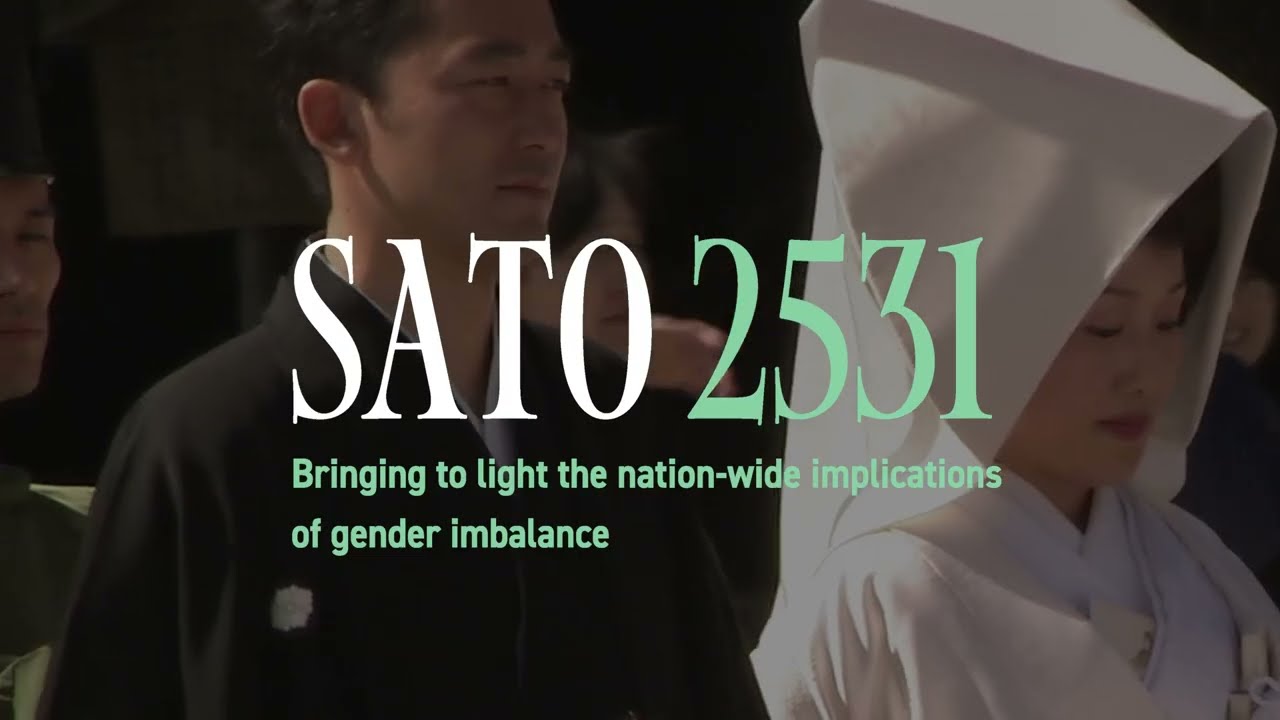
Asuniwa used mathematical modeling to project that Japan's mandatory same-surname law would result in every citizen being named 'Sato' by 2531, turning a dry legal debate into a provocative national identity crisis through a mass corporate rebranding event.
The Mathematical Extinction of the Japanese Identity
The 500 Year Countdown
The campaign centered on a startling discovery by Professor Hiroshi Yoshida of Tohoku University. Using mathematical modeling, he proved that because Sato is Japan's most common surname, the current law combined with a declining birth rate would result in a 100% Sato population by the year 2531. This data - driven approach shifted the narrative from a "women's rights" issue to a "national heritage" crisis, suggesting the total erasure of individuality.
A Glitch in the National Matrix
To visualize this "Sato-fication," the team executed a massive "dystopian" takeover on April 1, 2024. Over 40 entities participated, including professional 3x3 basketball team Tokyo BB, who replaced every player's name on their jerseys with "Sato." Singer - songwriter AI Kawashima temporarily rebranded herself as Sato AI, while major corporations teased logo changes. Creative Director Kei Ishizuka noted a specific Easter egg: while brands like Toyota, Honda, and Suzuki would become "Sato" because they are family names, Nissan would be the sole survivor as its name is an abbreviation of *Nippon Sangyo* (Japan Industries).
Global Pressure and Policy Shifts
The "eerie" aesthetic of the campaign films, directed by Youdai, reached 102 countries and generated 330 million impressions. The impact moved beyond awareness into tangible political change; public support for separate surnames hit a record 73%, and the United Nations issued a formal recommendation for Japan to revise the law within two years. The project even influenced the national curriculum, where it is now used to teach students about the intersection of data, diversity, and identity.
Creative Strategy Deconstructed
Company
Asuniwa leveraged academic partnerships and data modeling to provide a scientific foundation for their social advocacy efforts.
Category
Gender equality campaigns often rely on emotional pleas or moral arguments which are easily dismissed by conservative lawmakers.
Customer
Japanese citizens felt the surname law was outdated but lacked a personal or urgent reason to demand legislative change.
Culture
Growing global pressure for gender parity collided with Japan's deep cultural pride in its diverse family lineages and history.
Company
Asuniwa leveraged academic partnerships and data modeling to provide a scientific foundation for their social advocacy efforts.
Category
Gender equality campaigns often rely on emotional pleas or moral arguments which are easily dismissed by conservative lawmakers.
Strategy:
Weaponize statistical inevitability to transform a slow-moving social injustice into an immediate threat to national identity.
Customer
Japanese citizens felt the surname law was outdated but lacked a personal or urgent reason to demand legislative change.
Culture
Growing global pressure for gender parity collided with Japan's deep cultural pride in its diverse family lineages and history.
Strategy:
Weaponize statistical inevitability to transform a slow-moving social injustice into an immediate threat to national identity.
Results
The campaign achieved massive global reach, being covered in 102 countries. It generated over 1,500 media coverage pieces and more than 330 million impressions. The movement sparked a national debate that reached the highest levels of government, with the issue being discussed in the Japanese Diet and scheduled for review at the United Nations in October. Public sentiment shifted significantly, with a record 73% of the population now supporting the introduction of optional separate last names. Additionally, 40 prominent companies participated in the rebranding activation.
330M+
Total Impressions
73%
Public support for separate surnames
102
Countries with media coverage
Strategy Technique
Turn Data Into Drama
It transforms a dry statistic about surname prevalence into a shocking narrative about the extinction of Japanese diversity. This reframes a gender equality issue as a threat to national heritage.
Explore Technique
Creative Technique
Show the Future
The campaign uses a data-driven mathematical projection to visualize a dystopian future where individuality is erased. By showing the logical extreme of the current law, it makes an abstract legal issue tangible and urgent.
Explore Technique
Craft Breakdown
The campaign's brilliance lies in its use of data visualization and creative technology to turn a dry legal issue into a shocking, relatable prophecy. By calculating a specific date for the 'extinction' of Japanese surnames, it created a tangible hook for global media.
The mathematical projection of the 'Sato' surname creates a powerful, easy-to-understand metaphor for the loss of cultural diversity.
The visual identity of the campaign, from the minimalist icons to the 'Sato' rebrands of famous logos, is cohesive and striking.
The framing of the argument shifts the conversation from 'tradition' to 'extinction,' which is a masterclass in persuasive messaging.
Strategically launching at a government press conference and coordinating 40 brand rebrands ensured maximum cultural impact.
“The synergy between the academic data and the bold visual design transformed a complex social issue into a viral global news story.”